
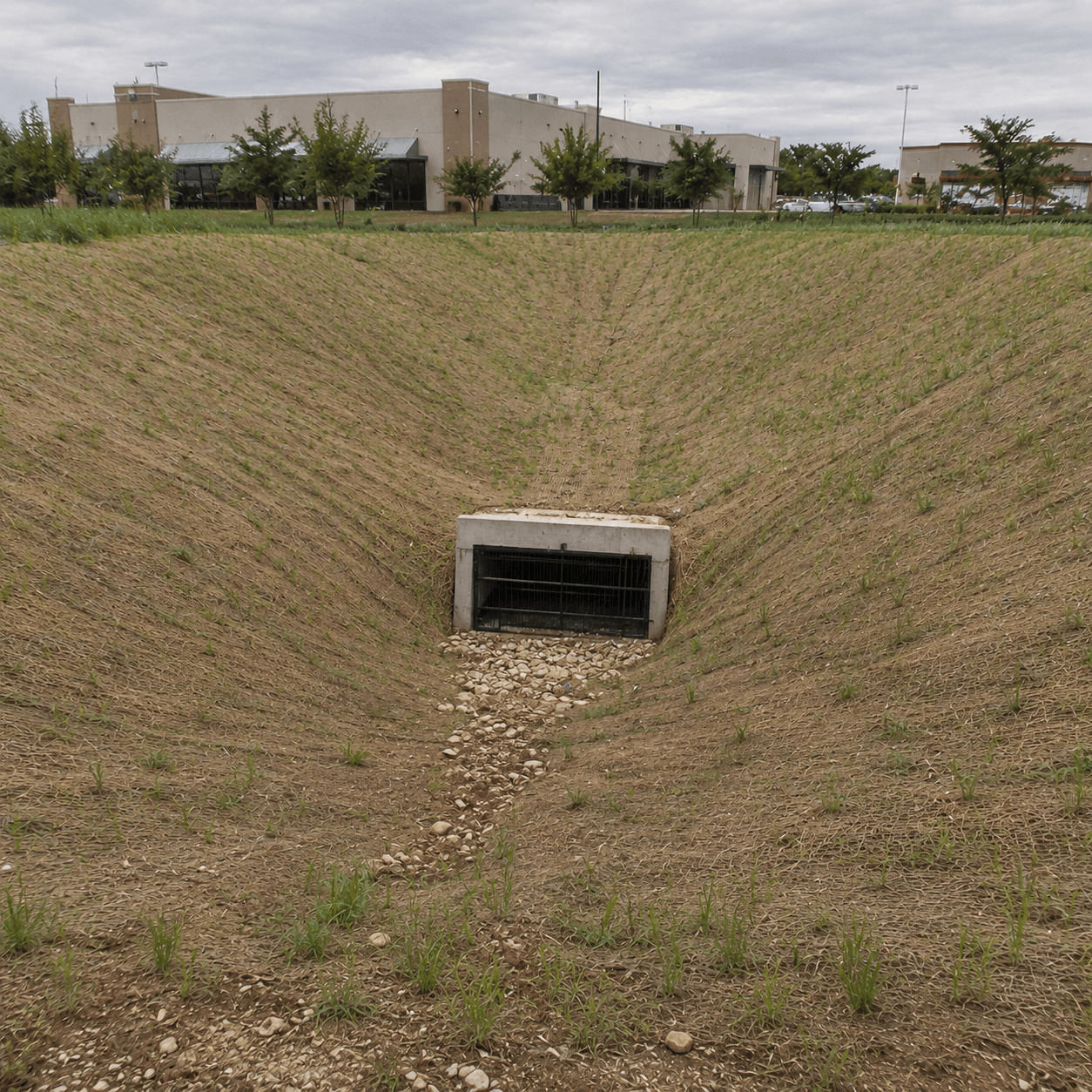
Detention pond and retention basin repair in San Antonio. Drainage restored to the original design volume.
Bathymetric survey, sediment removal, regrading, and outlet rebuild for detention ponds and retention basins that have silted in, washed out, or stopped draining the way the design drawing said they would.
Most Texas detention ponds lose a quarter of their design volume in the first decade.
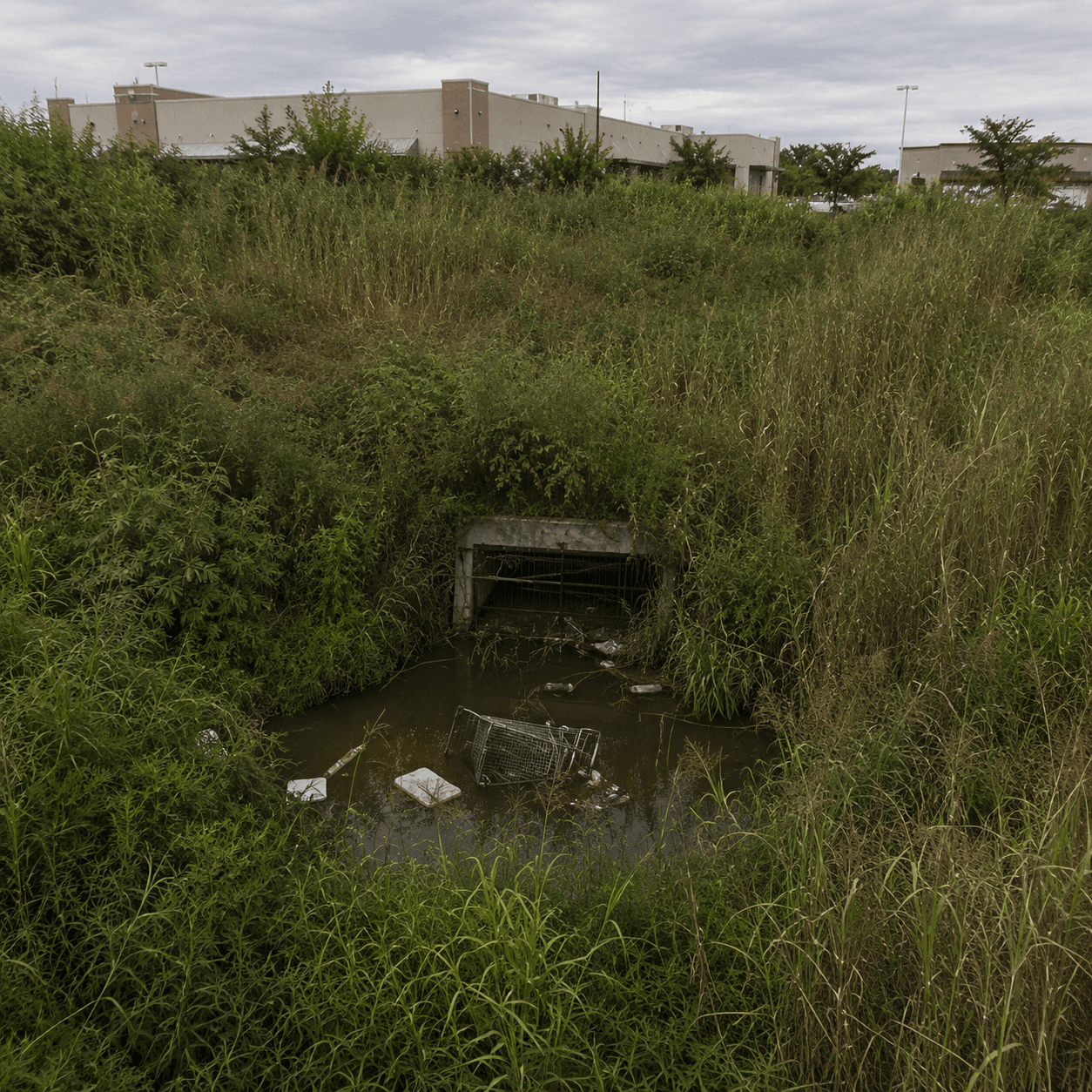
A Texas detention or retention basin typically loses 15 to 25 percent of its design volume to sediment in the first ten years. By year fifteen, side-slope erosion and embankment settlement have usually taken another slice. The lost capacity is invisible until the storm event that overtops the basin sends water into the buildings, the parking lot, or the property line behind it.
Full restoration for detention ponds, retention basins, drainage ponds, and infiltration basins across Bexar County and the I-35 corridor. We survey what you have, restore it to what the original drawing called for, and file the documentation with the municipality so the asset is back on the books.
Every detention pond, retention basin, and infiltration basin on a Texas commercial site (the drainage pond behind the building, whatever the plat happens to call it) was built to a specific design volume: a number on a drawing the original civil engineer stamped, tied to a 25-year or 100-year storm calculation that the city accepted at platting. That number is the basin's job. Sediment accumulation, vegetative overgrowth, slope failure, and outlet damage all chip away at it, and nothing on the property is measuring the loss until an inspector or a flood does. The pond looks like a pond right up until the day it stops draining.
Most of the basins we get called to had something visible go wrong first. An HOA board notices the back pond looks half full of cattails. A property manager opens a Notice of Violation from the city after a routine MS4 audit. A buyer's due-diligence team flags the basin behind Building C during a sale. Whatever the trigger, the underlying problem is almost always the same: the basin has been quietly losing capacity for a decade and nobody owned the maintenance. Which repair it needs depends on what kind of basin it is, and a surprising number of owners have never been told.
Landscaping crews can mow the slopes and pull the woody growth. They cannot tell you how much storage volume the basin has left, and they cannot restore it. That requires a bathymetric survey to measure current bottom elevation against the design drawing, a sediment-removal plan with legal off-site disposal, slope regrading back to the engineered cross-section, and a post-construction survey to prove the restored volume matches the original number. That documentation is what gets filed with the city and what closes the compliance loop.
From bathymetric survey to design-volume sign-off.
- Step 01
Survey
Bathymetric survey of the existing basin floor and slopes, compared point-for-point against the original civil drawing. You see exactly how many cubic yards of capacity have been lost and where.
- Step 02
Permit
Scope coordinated with the City of San Antonio (or applicable MS4), watershed authority, and a project SWPPP for the work itself. No surprises with the inspector mid-dig.
- Step 03
Restore
Sediment excavated and hauled under manifest, side slopes regraded to the design cross-section, outlet structure rebuilt or replaced where it has failed, native seed and erosion-control blanket installed.
- Step 04
Verify
Post-construction survey confirms restored volume matches the design drawing. Documentation is filed with the municipality and added to your post-construction stormwater file.
What a full detention pond and basin restoration includes.
- Pre-work bathymetric survey with cubic-yard capacity-loss report
- Sediment removal with off-site disposal manifests
- Side-slope regrading to original engineered cross-section
- Outlet structure rehabilitation or full replacement
- Native seeding and erosion-control blanket, plus filed post-construction survey
Detention pond and basin repair questions from Texas owners.
Related stormwater services.
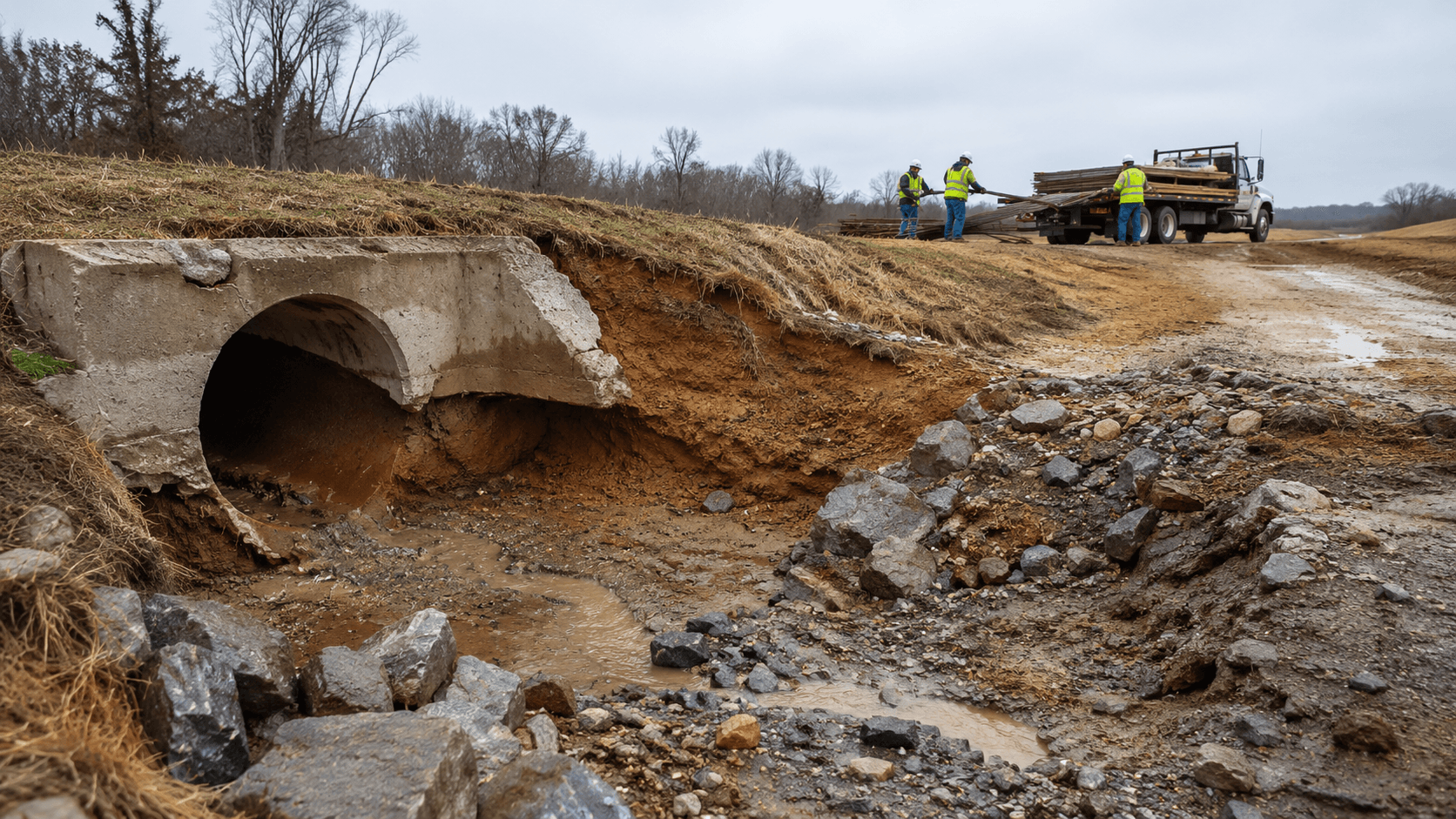
Stormwater Basin and BMP Maintenance
A Texas stormwater maintenance company that runs your basins and ponds on a calendar instead of on emergencies. Mowing, vegetation, sediment, trash racks, and inlets on the scheduled visit, and crews on site within 72 hours when a control is failing between them.
Learn more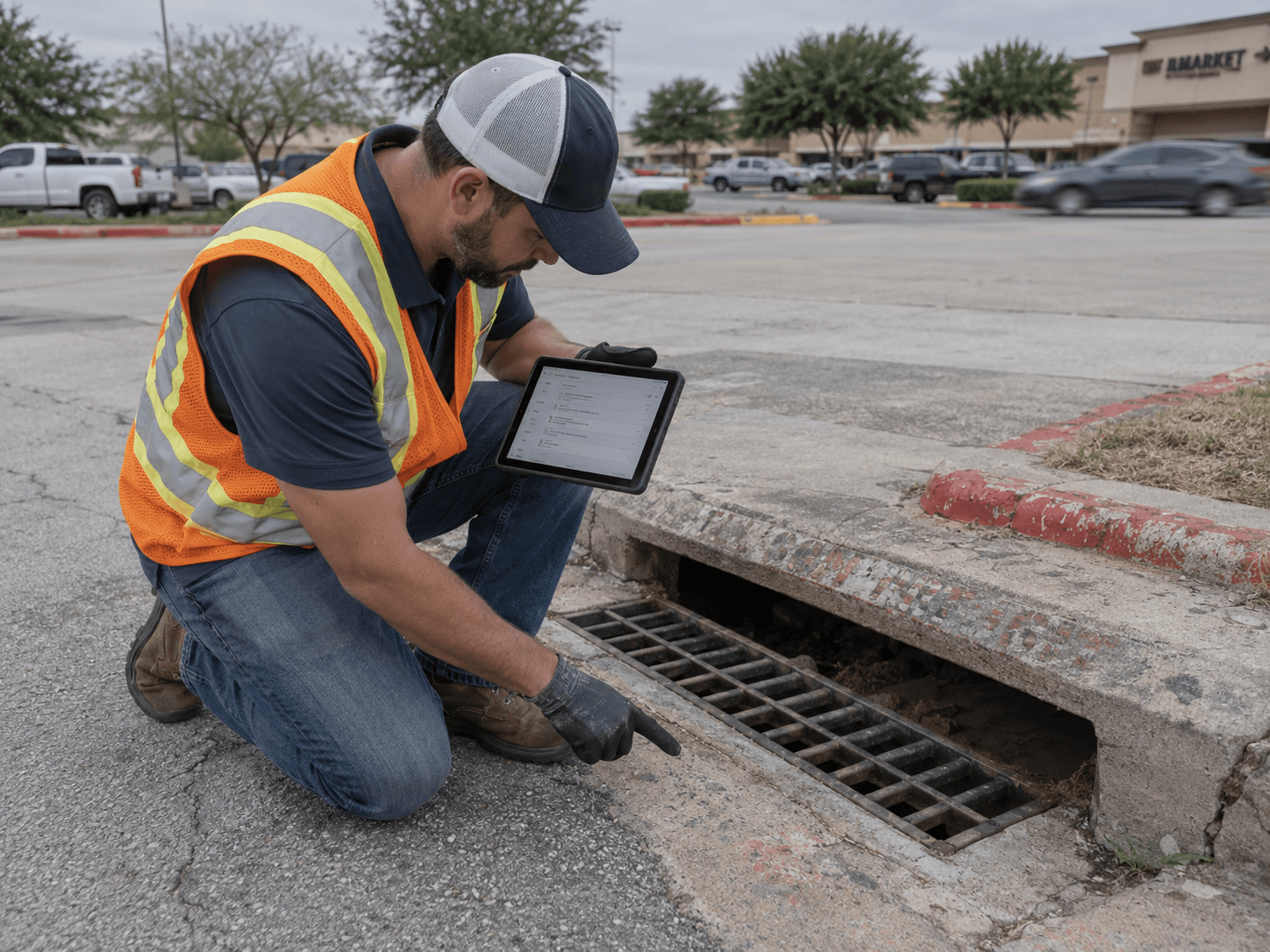
Stormwater Inspection Services
CISEC and CESSWI inspectors, on your site every seven days while the job is live and on your MS4's schedule once it is not. One inspector, one tablet, forty checkpoints, and the report before the truck leaves the property.
Learn more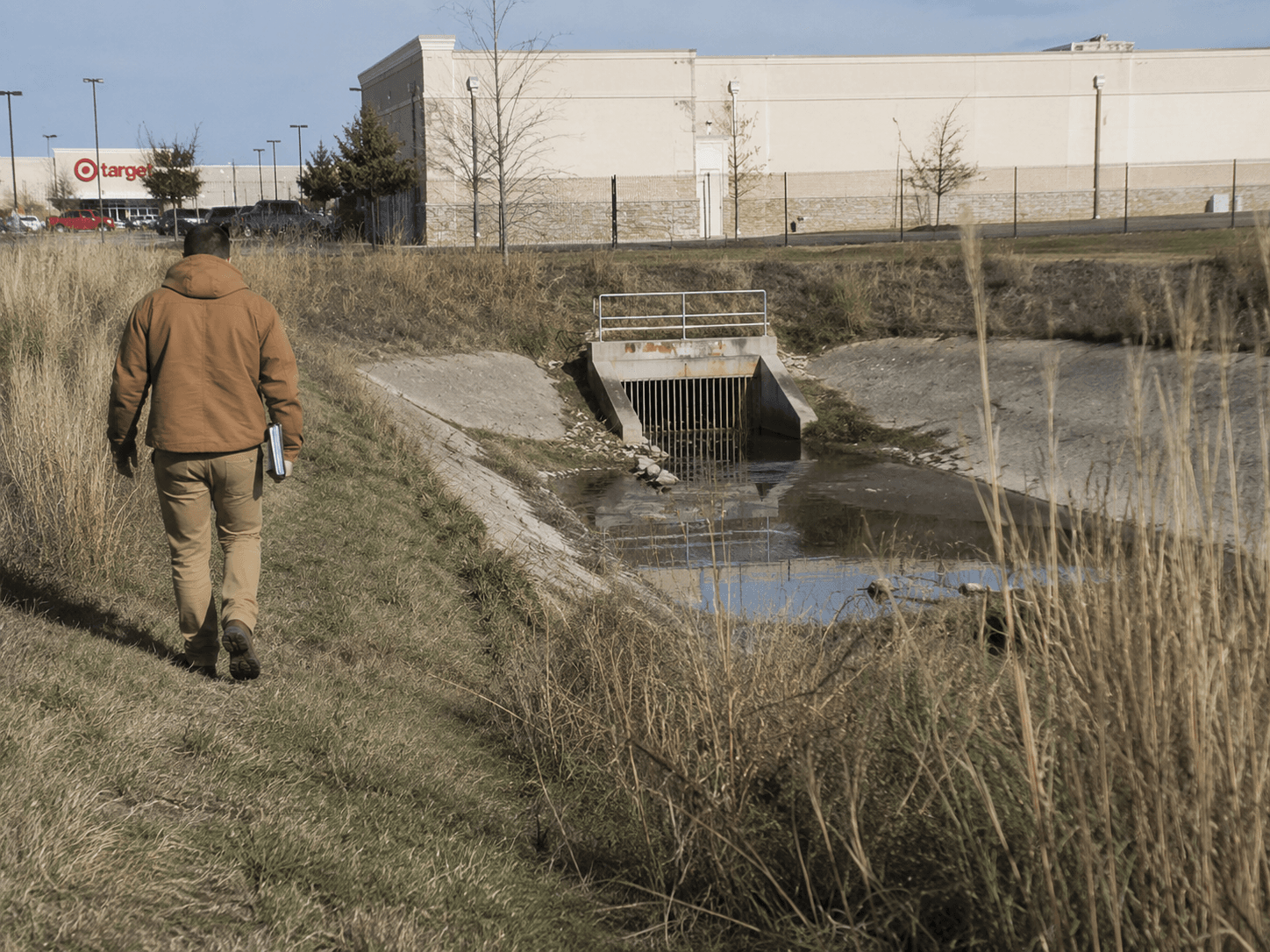
Post-Construction Stormwater
An annual program that keeps your basins, vaults, and conveyance systems documented, inspected, and in regulatory good standing.
Learn more
Get a stormwater
compliance quote.
Free site walk, written scope of work, fixed-price quote. Usually back to you within 48 hours.