
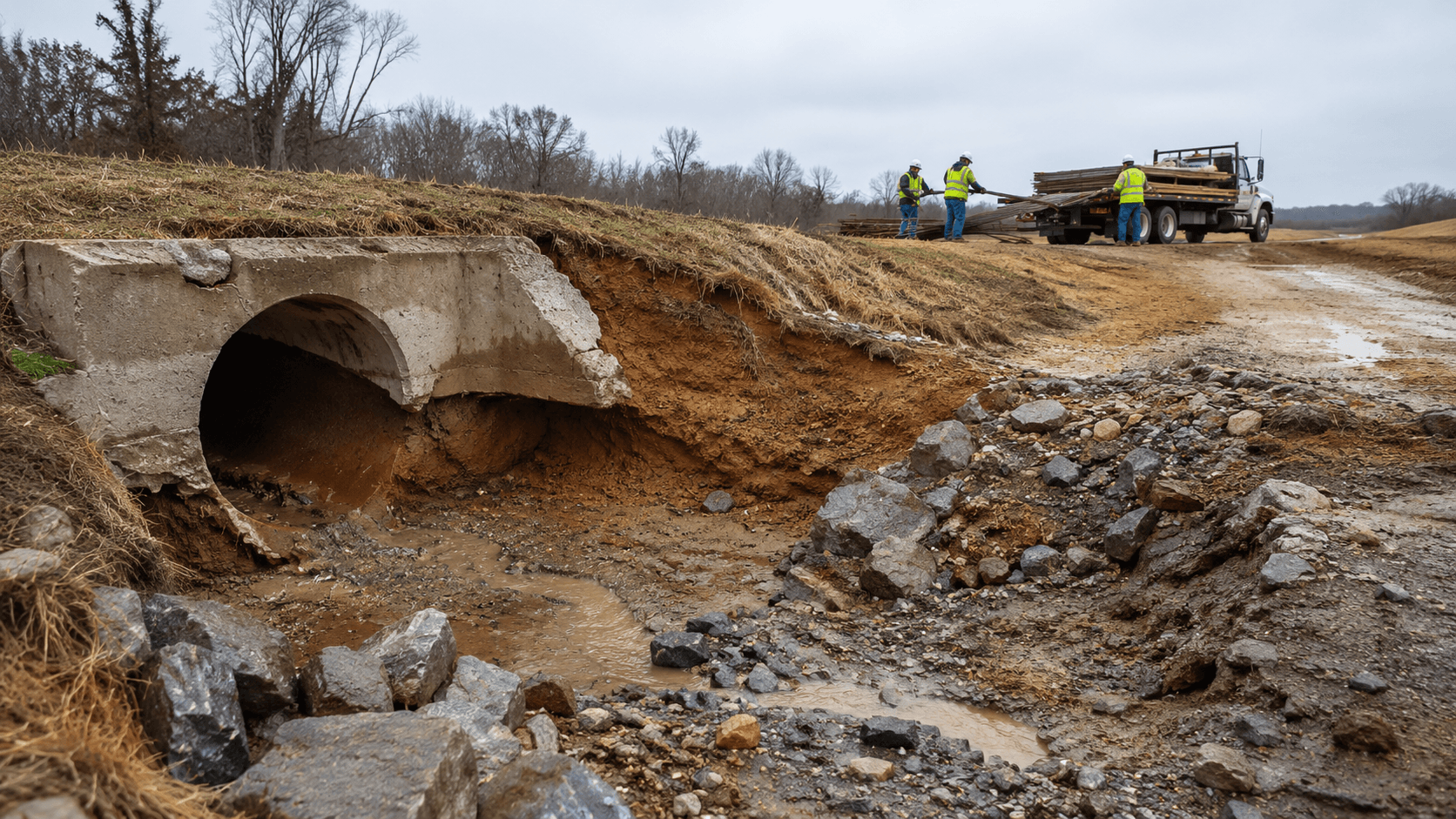
Detention pond and stormwater basin maintenance in San Antonio. On a schedule, with a crew inside 72 hours when something fails.
A Texas stormwater maintenance company that runs your basins and ponds on a calendar instead of on emergencies. Mowing, vegetation, sediment, trash racks, and inlets on the scheduled visit, and crews on site within 72 hours when a control is failing between them.
Almost every basin failure we get called to was a maintenance item eighteen months earlier.
Almost every basin failure we get called to was a maintenance item eighteen months earlier. Cattails in the forebay, a trash rack nobody cleared, a side slope that started rilling after one wet spring. Maintained on a calendar, that work is mowing and a skid steer. Left alone, it becomes a breached embankment, a reportable discharge, and a Notice of Violation, and the repair costs twenty times the visits that would have prevented it.
Scheduled maintenance for detention ponds, retention basins, swales, inlets, and structural BMPs across the San Antonio metro, plus emergency repair when something breaks between visits. Closed out with photo documentation, as-built revisions, and city sign-off.
Basin and pond maintenance is dull work, and almost entirely predictable. Side slopes need mowing on a cycle so woody growth never establishes. Forebays and inlets collect sediment and have to be cleared before the storage volume behind them starts dropping. Trash racks bend out of plane after a heavy debris event. Outlet orifices plug. Vegetated swales lose grade. We put all of it on a written schedule sized to your site, usually six to eight visits a year in Bexar County, and each visit closes with a photo log that goes straight into your compliance file. A landscaping crew can cut the grass. What they cannot do is tell you the forebay has silted level with the main cell, which is the thing that actually costs money later. We wrote up what basin maintenance actually covers, and what neglect costs if you want the long version.
Between the scheduled visits, things still break, and that is the other half of this work. Concrete outfalls and masonry headwalls crack and spall at the joint. Energy dissipators undermine. Riprap channels migrate. Earthen embankments seep, settle, and then breach. Our crews are on site within 72 hours, and same day for anything actively discharging offsite. When the failure is reportable under the TCEQ MS4 program or a local stormwater ordinance, we coordinate the notification directly with the regulator so your owner is not drafting that email at 11 p.m. We rebuild each component to the geometry and capacity it was designed for instead of layering patch over patch until the next inspection cycle catches it.
The work runs across the whole spectrum. On the emergency end: basin breach, washed-out outfall, downstream sediment release, an inlet that collapsed under traffic. Our crews are on site within 72 hours, and when the failure is reportable under the TCEQ MS4 program or local stormwater ordinance, we coordinate the notification directly with the regulator so your owner isn't writing that email at 11 p.m. On the scheduled end: slope stabilization, trash-rack rebuild, concrete repair, re-vegetation, all quoted from a site walk and built into a maintenance budget that replaces year after year of patchwork.
Every repair closes out the same way: photo documentation tied to GPS, as-built revisions when the geometry changed, and municipal sign-off where the original permit requires it. If the failure later becomes a legal question (a downstream property owner, an insurance carrier, a TCEQ follow-up), the file holds up.
How a detention pond and basin maintenance program runs across a year.
- Step 01
Site walk
We walk every basin, pond, inlet, and outfall against the original approval, and tell you what has been maintained, what has not, and what has already crossed from maintenance into repair.
- Step 02
Schedule
A written visit calendar sized to the site and a flat annual number. Six to eight visits a year covers most Bexar County properties.
- Step 03
Scheduled visits
Mowing, woody growth, forebay and inlet sediment, trash racks, outlet orifices, debris haul-off. Photo log filed the same day.
- Step 04
72-hour response
Something fails between visits and a crew is on site within 72 hours, same day if it is discharging offsite. Concrete, masonry, earthwork, and re-vegetation in one mobilization.
What a scheduled basin and pond maintenance visit covers.
- Written maintenance schedule sized to your site, typically six to eight visits a year in Bexar County
- Side-slope mowing, woody growth removal, and native vegetation management on the scheduled cycle
- Forebay and inlet sediment clearing, trash-rack and outlet-orifice cleaning, debris haul-off
- Photo log filed to your compliance record after every visit, so the maintenance history exists on paper
- 72-hour emergency response for basin breach, outfall scour, and downstream sediment release
- Concrete and masonry repair on outfalls, headwalls, junction boxes, and energy dissipators
- Slope stabilization, erosion-control blanket, and native re-vegetation
- TCEQ and municipal coordination on reportable failures, with as-built drawings and city sign-off at close out
Stormwater basin and detention pond maintenance questions.
Related stormwater services.
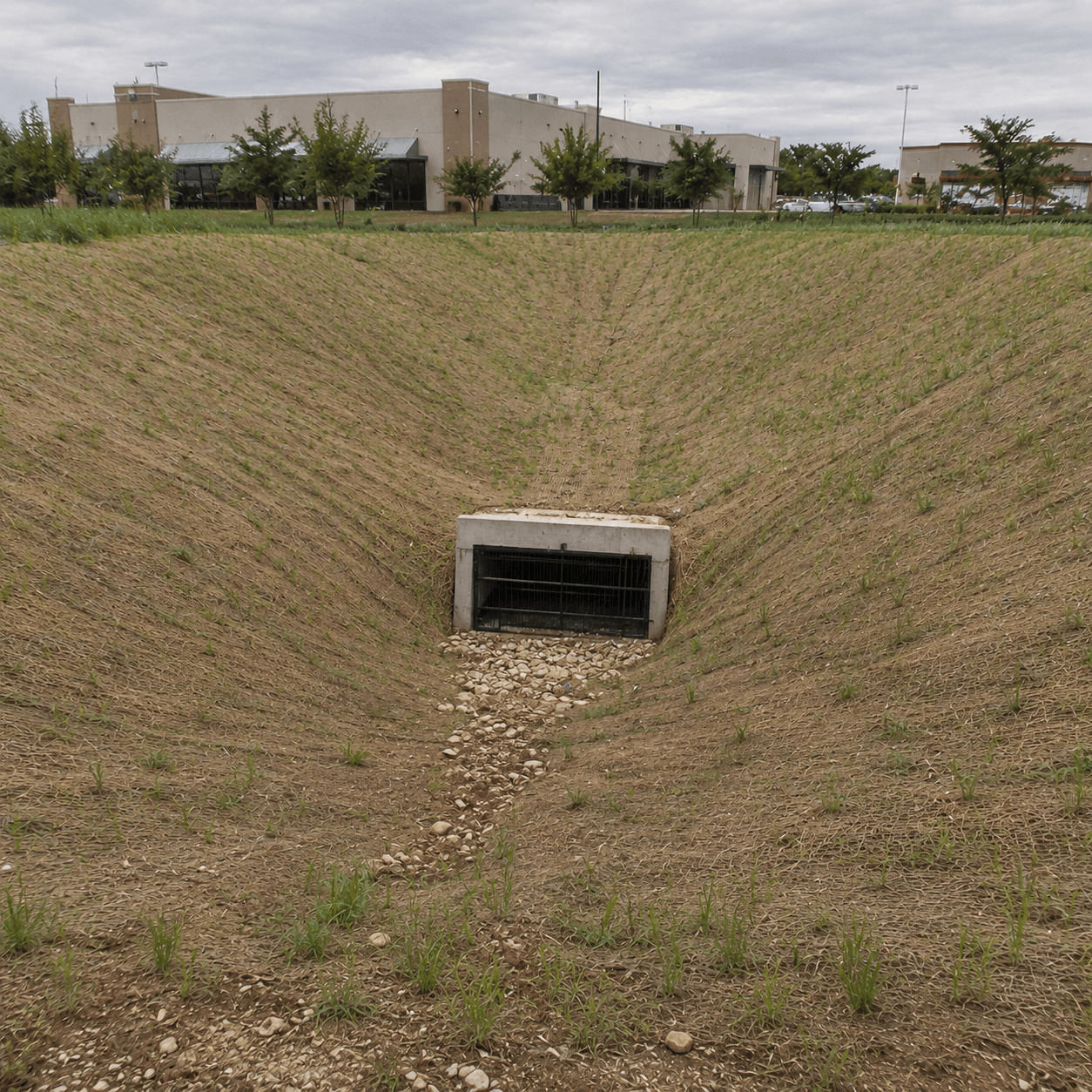
Detention Pond and Basin Repair
Bathymetric survey, sediment removal, regrading, and outlet rebuild for detention ponds and retention basins that have silted in, washed out, or stopped draining the way the design drawing said they would.
Learn more
Stormwater Inspection Services
CISEC and CESSWI inspectors, on your site every seven days while the job is live and on your MS4's schedule once it is not. One inspector, one tablet, forty checkpoints, and the report before the truck leaves the property.
Learn more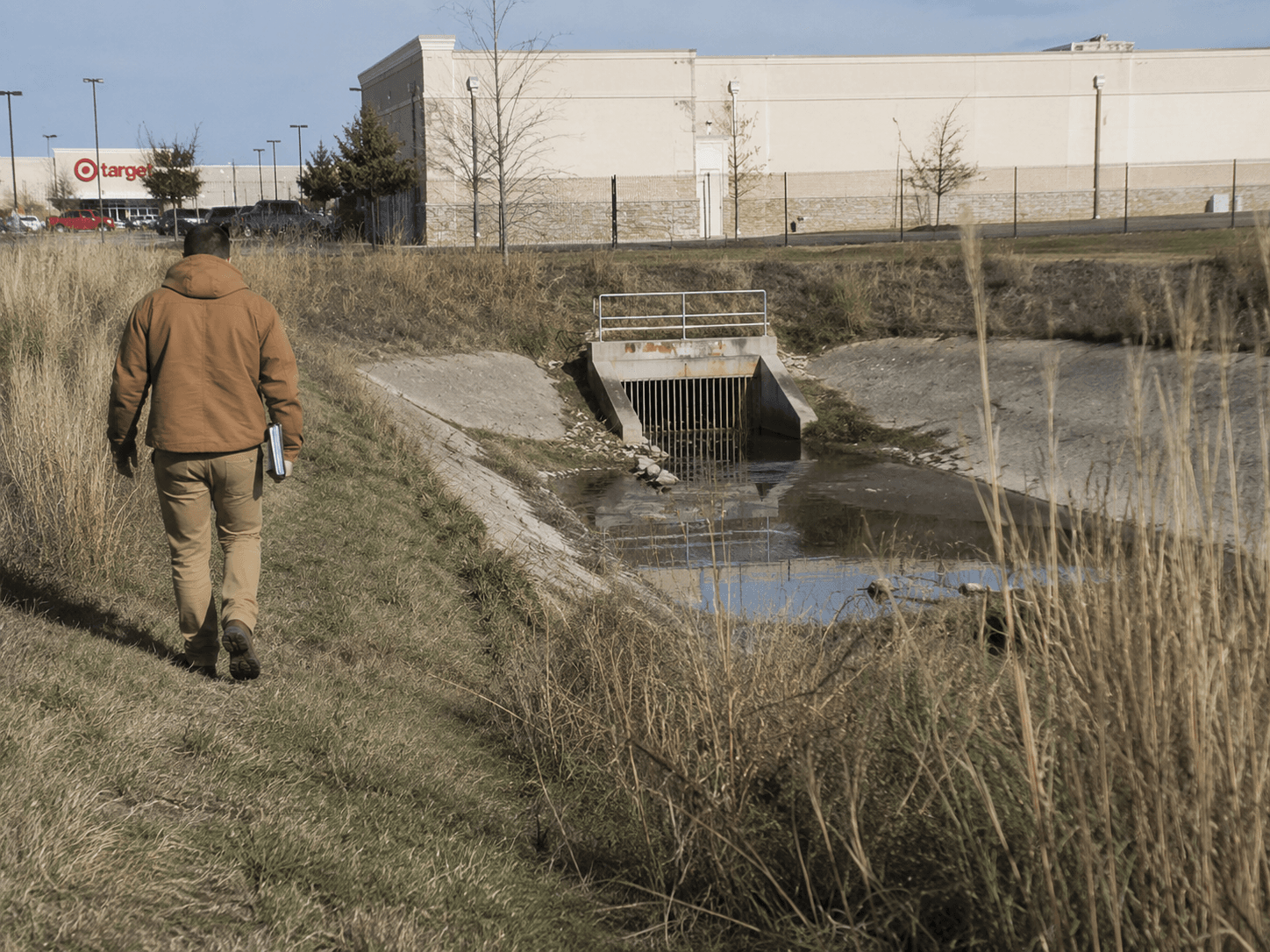
Post-Construction Stormwater
An annual program that keeps your basins, vaults, and conveyance systems documented, inspected, and in regulatory good standing.
Learn more
Get a stormwater
compliance quote.
Free site walk, written scope of work, fixed-price quote. Usually back to you within 48 hours.