
Stormwater basin maintenance in San Antonio: what it actually covers.
Detention ponds fail quietly. Vegetation thins, inlets clog, walls start to slump, and the first sign is usually water in a parking lot. Here's what basin maintenance covers in San Antonio, how to spot trouble early, and what a neglected pond costs to rebuild.
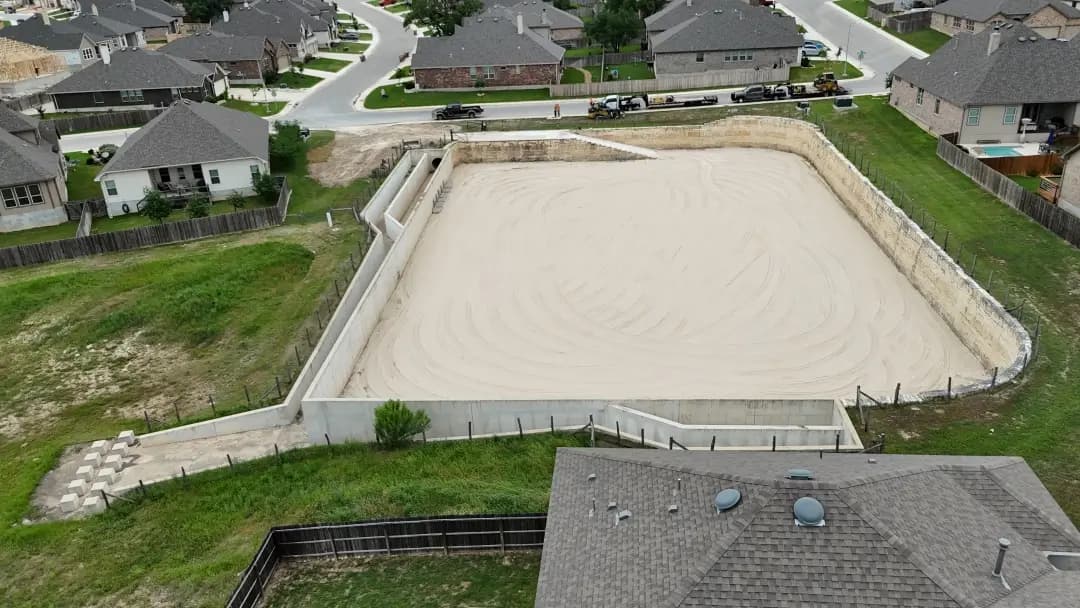
Most of the detention ponds we get called to fix in San Antonio failed quietly. The vegetation thinned, the inlet stayed plugged after a heavy rain, the trash rack bent the first time a 2x4 came down the channel, and by the time anyone in the building noticed, the basin had lost a quarter of its design volume and the parking lot was holding water after every storm. Basin maintenance is the boring, scheduled work that prevents that. Done right, it is six or eight visits a year and a written log. Done wrong, it ends in a regrade quote, an angry city engineer, or both.
What a maintenance visit actually covers
A detention basin has four things working at once: an inlet, a basin floor with side-slopes, an outlet structure, and the vegetation that holds the dirt in place between them. Maintenance is the work of keeping each one inside the geometry the civil engineer drew.
Inlet desilting. The inlet is where construction silt, parking-lot grit, and trash collect first. On a typical Bexar County commercial pad we shovel or vacuum it twice a year, more often if the basin sits below a steep approach or a recently disturbed slope.
Trash and debris. Picked up on every visit. The trash rack and any orifice plates get cleared by hand, photographed before and after, and logged. If the rack is bent out of plane, that goes on the next quote, not the next visit.
Vegetation management. The side-slopes need a continuous grass stand. Bare patches are where the next storm starts an erosion gully. We mow at a height that protects the root system (typically four to six inches in Texas turf), keep woody growth off the embankment, and reseed bare ground in the same visit instead of waiting for the next mowing rotation.
Outlet structure inspection. The riser, weir, and any trash rack are walked every visit. Hairline cracks at the joint, settlement around the riser base, and rust at the trash-rack welds are the early signs of the failure that costs five figures to fix.
Sediment depth check. Once a year on a routine schedule, more often after a 25-year storm. When accumulated sediment exceeds the depth flagged in the original O&M manual (commonly the first 18 to 24 inches of basin floor), it is no longer maintenance; it is a sediment-removal project that needs survey work and disposal manifests.
What gets cited when maintenance is skipped
The City of San Antonio MS4 program, Bexar County, and TCEQ all look at the same basins through slightly different windows, and the cited deficiencies are usually the same handful: vegetation under 70 percent coverage, sediment accumulation past the O&M trigger depth, a trash rack obviously bent, an outlet structure with visible deterioration, a basin floor that no longer drains within 72 hours after a storm. Any one of those is enough to start a written notice. Two or three together is how an NOV gets opened.
What neglected basins cost to bring back
The cost curve is steep. A basin caught at the maintenance stage (say, a year of sediment buildup at the inlet and a 30 percent vegetation gap on the south slope) runs four figures and a half day on site. The same basin three years later, with eight inches of accumulated sediment across the floor and a back slope rilled out from runoff, becomes a regrade-and-haul-off project: bathymetric survey, sediment volume calculation, off-site disposal under manifest, slope reshape, and a post-construction survey filed with the City. That is the project we quote at five figures and four to six weeks of work, and we quote three or four of them every year in San Antonio. If the city has already issued an NOV on the property, the clock is on. Getting your stormwater NOV response in San Antonio right means answering every cited deficiency with photos and a schedule.
A maintenance program that actually gets done
The owners who do not end up on that quote share a habit. They run the basin on a calendar: quarterly visits, an annual sediment check, an inspection report filed back to the property manager and the compliance binder, and a budget line that does not vary by season. Half the calls we get start with someone digging through a property file looking for the last service record and finding nothing newer than 2019. Those are the basins that have already lost capacity. The fix is the program, not another emergency.
Where these requirements come from
If you want to read the rules yourself rather than take our word for it:
- TCEQ Construction General Permit TXR150000 is the state permit that governs the site while it is under construction. It stops applying once the site is stabilized and the Notice of Termination is accepted.
- Bexar County post-construction stormwater permits is what picks up after that in unincorporated Bexar County: quarterly maintenance reports, an annual permit renewal, and a certified maintenance provider.
- SAWS construction stormwater FAQs explains the co-permittee arrangement between SAWS, the City of San Antonio, and TxDOT that decides which inspector shows up at your gate.
In this series
- Types of stormwater basins, compared
Detention, retention, infiltration, bioretention, constructed wetlands. What each basin type does, how it's built, and where it earns its keep in Texas, including the two detention variants used over the Edwards Aquifer.
The work behind this article
- Detention Pond and Basin Repair
Bathymetric survey, sediment removal, regrading, and outlet rebuild for detention ponds and retention basins that have silted in, washed out, or stopped draining the way the design drawing said they would.
- Stormwater Inspection Services
CISEC and CESSWI inspectors, on your site every seven days while the job is live and on your MS4's schedule once it is not. One inspector, one tablet, forty checkpoints, and the report before the truck leaves the property.
- Post-Construction Stormwater
An annual program that keeps your basins, vaults, and conveyance systems documented, inspected, and in regulatory good standing.
Need help with stormwater compliance on a San Antonio property? We do site walks at no charge.
Request a fixed-price quoteMore field notes from the watershed.
 Field guide · 5 min
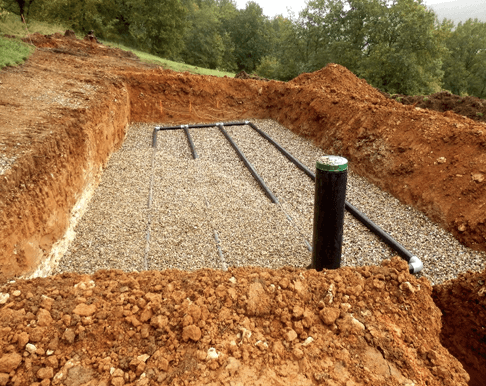
Types of stormwater basins, compared
Detention, retention, infiltration, bioretention, constructed wetlands. What each basin type does, how it's built, and where it earns its keep in Texas, including the two detention variants used over the Edwards Aquifer.
 Compliance · 4 min
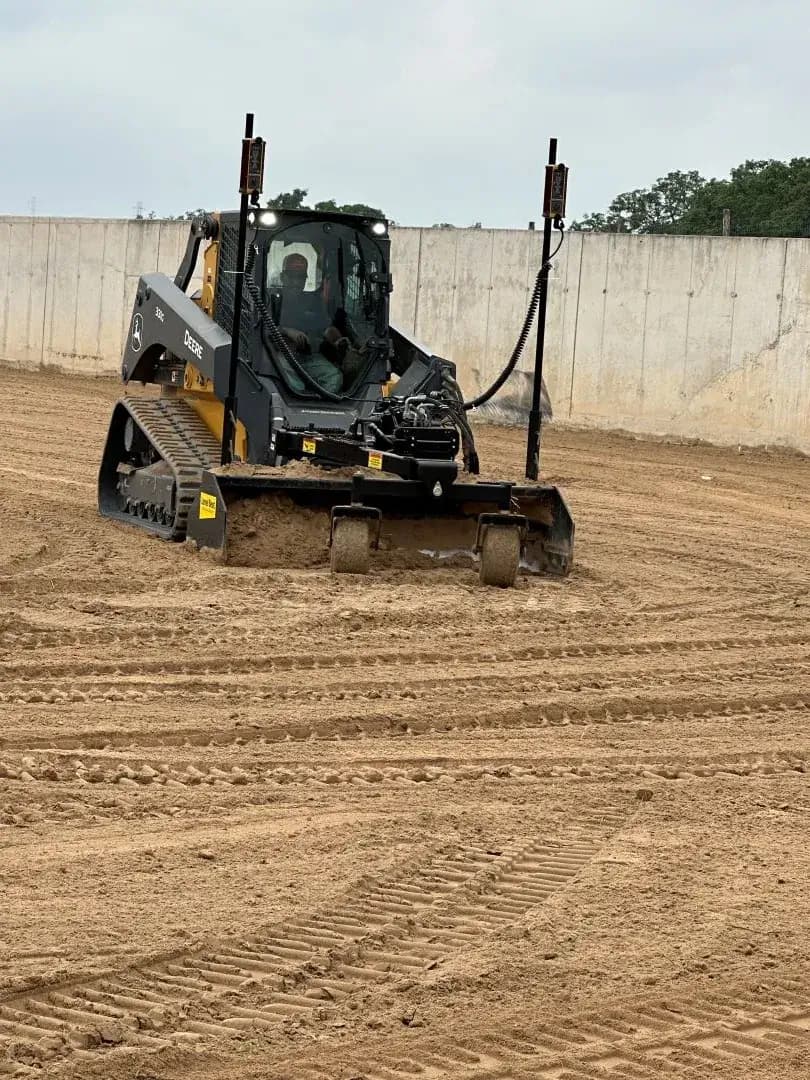
You got a stormwater NOV in San Antonio. Here's the 30-day response.
The 30-day clock on a stormwater NOV starts the day the city issues it, not the day you decide to deal with it. What the notice means, the three things that usually trigger one, and how to put together a response the inspector will accept.
Get a stormwater
compliance quote.
Free site walk, written scope of work, fixed-price quote. Usually back to you within 48 hours.