
Stormwater compliance in Austin and the I-35 corridor. SWPPPs, inspections, and pond work, run out of San Antonio.
A San Antonio stormwater firm that works the corridor. SWPPPs and TCEQ filings for Travis and Hays County jobs, inspectors and equipment on site, and no pretending there is an Austin office.
The scope, and where each piece of it travels.
SWPPP preparation and TCEQ filing
Site-specific plans written to TXR150000 and to whichever reviewer holds the job, with the Notice of Intent filed and coverage confirmed before you break ground.
Weekly and post-rain SWPPP inspections
A qualified inspector on the site every seven days and after every half-inch rain, signed, dated, and in your inbox the same day. Travis, Hays, and Comal counties.
Detention pond repair and drainage restoration
Bathymetric survey, sediment removal, slope regrading, and outlet rebuild on ponds that have stopped holding their design volume. Equipment comes up the corridor with the crew.
Post-construction compliance programs
The inspection calendar, the maintenance cycle, and the filings your MS4 wants, run as a flat annual program rather than a scramble when the audit letter lands.
Notice of Violation response
Same-day site assessment, a written response to the city, and a corrective action plan inside 72 hours. The corridor's enforcement letters read differently from Bexar County's and we read them first.
We are based in far north Bexar County, which puts parts of Austin closer to the yard than parts of the San Antonio metro are. The I-35 corridor between the two cities is really one market for this work: the same TCEQ Construction General Permit, the same Edwards Aquifer running underneath both ends of it, and the same detention ponds silting in behind the same kind of retail pad. We have worked up the corridor for years. What we did not have was a page saying so, which is most of the reason this one exists.
What changes north of the county line is the reviewer. The City of Austin runs its own drainage criteria and its own environmental review, Hays County has its own, and a site inside the Barton Springs Zone carries requirements a San Antonio job never sees. We pull the local criteria before drafting rather than sending a Bexar County plan with the city name swapped, which is the reliable way to get a submittal kicked back and lose three weeks.
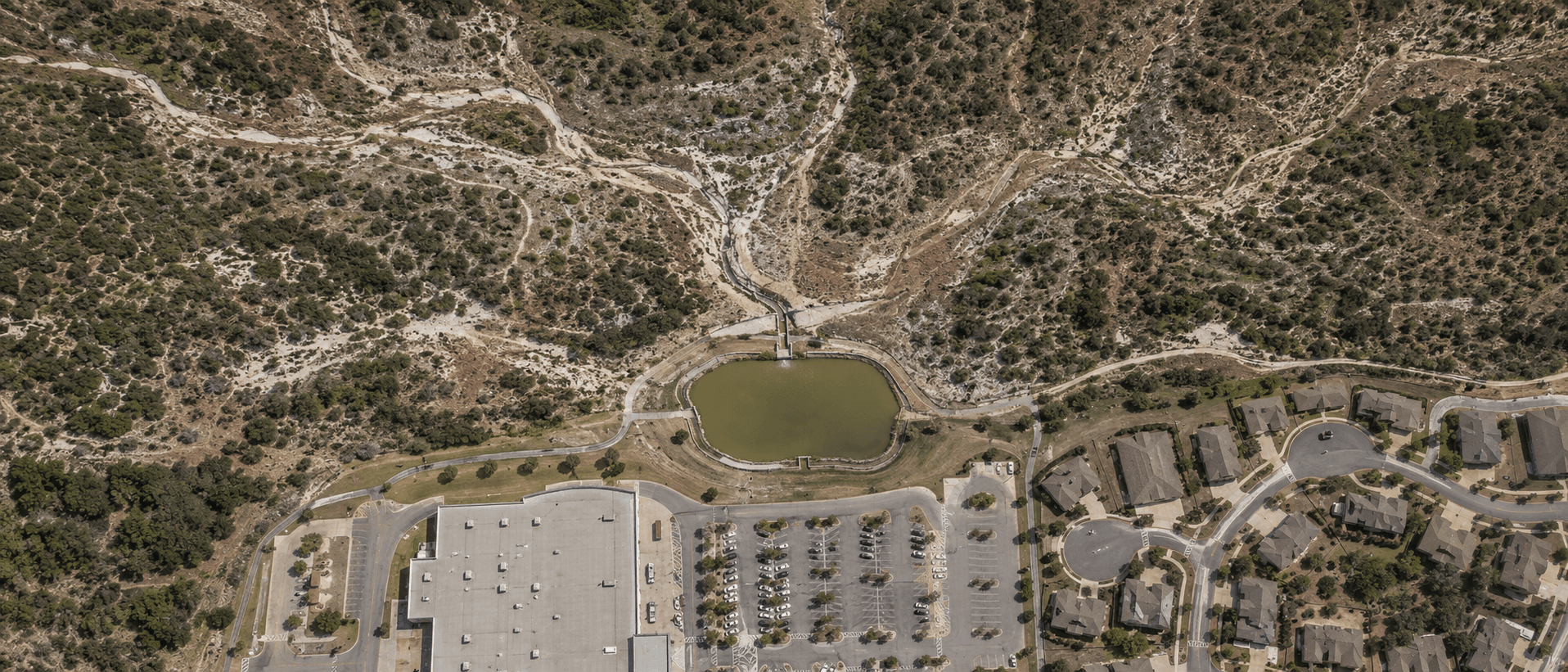
The other half of the corridor work is post-construction. Detention ponds built through the 2000s boom along I-35 are fifteen to twenty years old now, which is exactly when sediment, slope erosion, and a plugged outlet orifice have taken enough design volume that the pond stops draining the way the drawing said it would. That work is the same on a San Marcos pad as on a Stone Oak one: survey, sediment removal, regrade, outlet rebuild. It needs equipment on site, and the corridor is short of firms that will bring it.
We drive the corridor, we do not pretend to live on it. Crews run out of San Antonio, which makes Austin, San Marcos, Kyle, Buda, and New Braunfels routine. Anything past Georgetown or out toward Dripping Springs is a conversation rather than an automatic yes.
The services behind this work.
Stormwater Pollution Prevention Plan (SWPPP)
A San Antonio SWPPP company that writes the plan, files the NOI, and walks the binder with your superintendent. Site-specific to your grading plan, written to TXR150000, not a template with somebody else's logo taken off.
Read moreStormwater Inspection Services
CISEC and CESSWI inspectors, on your site every seven days while the job is live and on your MS4's schedule once it is not. One inspector, one tablet, forty checkpoints, and the report before the truck leaves the property.
Read moreDetention Pond and Basin Repair
Bathymetric survey, sediment removal, regrading, and outlet rebuild for detention ponds and retention basins that have silted in, washed out, or stopped draining the way the design drawing said they would.
Read moreWhat Austin and corridor clients ask first.
Get a stormwater
compliance quote.
Free site walk, written scope of work, fixed-price quote. Usually back to you within 48 hours.