
The Most Common SWPPP Violations on San Antonio Job Sites
The violations we write most often are not exotic. They cluster in two groups: documentation that was never completed, and controls that were installed incorrectly rather than not installed at all. Roughly half of what gets cited on a well-run site is paperwork, which is the part contractors
Published September 10, 2026. Last reviewed September 10, 2026. Written by Jim Price, CISEC, CESSWI. Founder, Stormwater Compliant LLC. 21 years inspecting construction sites across the San Antonio metro.
The violations we write most often are not exotic. They cluster in two groups: documentation that was never completed, and controls that were installed incorrectly rather than not installed at all. Roughly half of what gets cited on a well-run site is paperwork, which is the part contractors consistently underestimate.
This is what we actually find, in the order we find it, on sites across Bexar County and the surrounding metro.
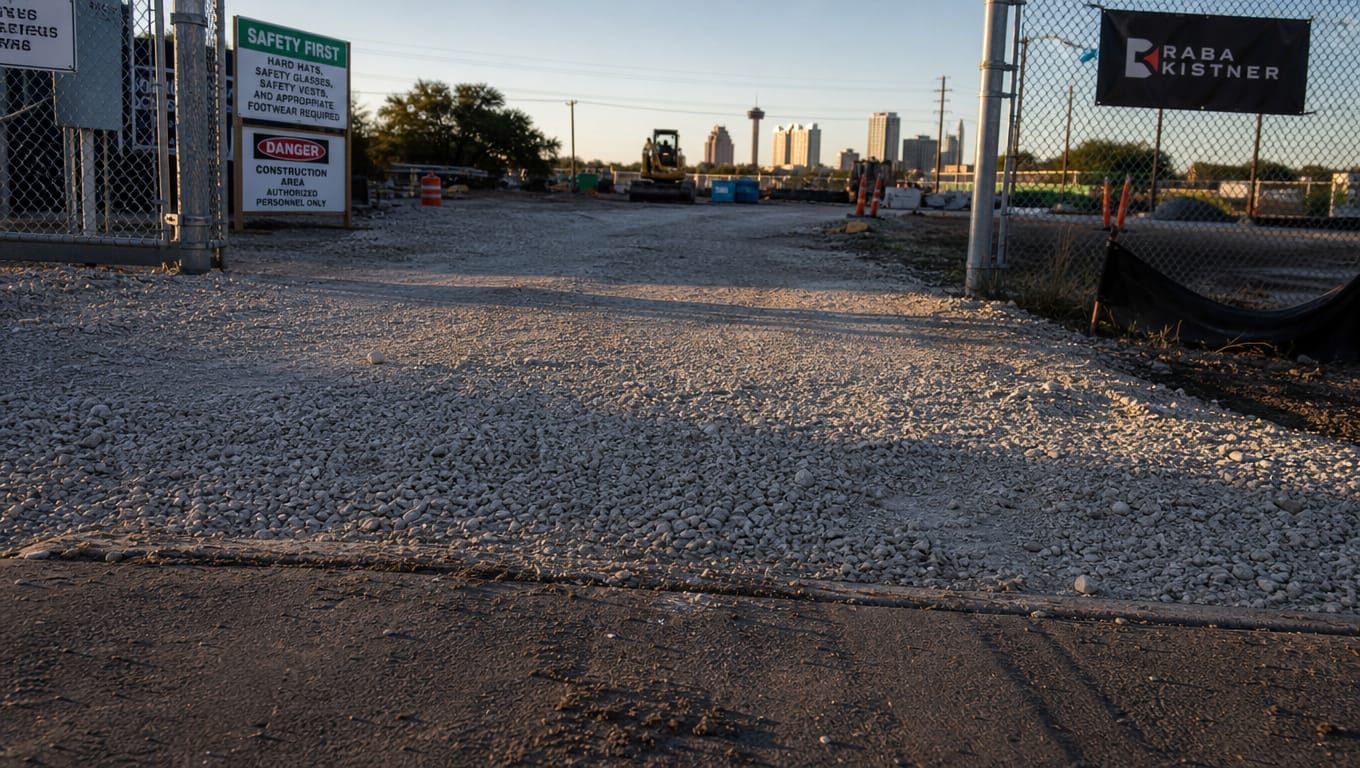
What an inspector looks at first
Before anyone walks the site, they look at three things at the entrance.
The site notice. Is it posted, is it signed, is it readable from outside the fence, and for large construction is the first page of the NOI with it? This takes four seconds and it sets the tone.
The stabilized construction exit. Is there one, is it the right length, is the rock still rock or has it filled with fines, and is there tracked mud on the public road leading away from it?
The SWP3. Is it on site, and when it opens, does the site map look like the site?
Those three tell an experienced inspector roughly how the rest of the visit will go. A site that fails all three rarely improves on the walk.
The documentation violations
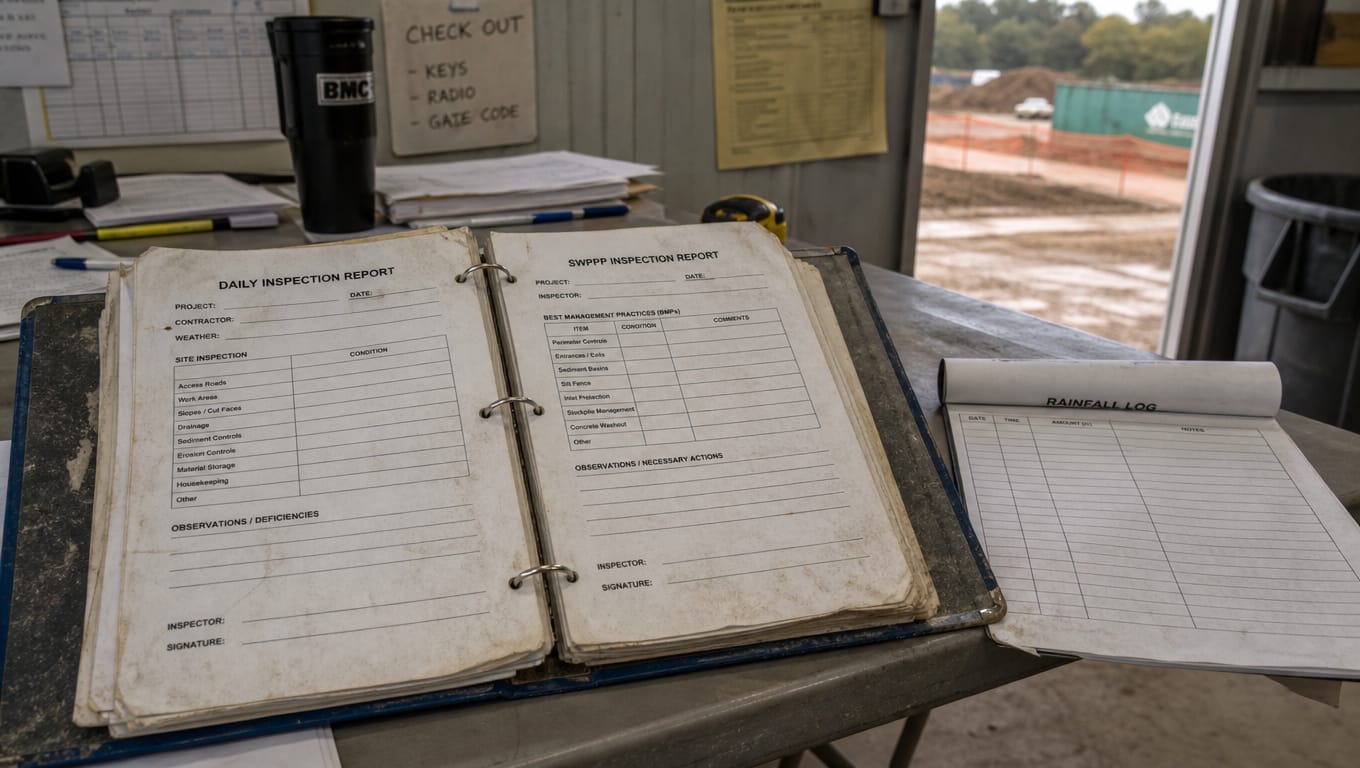
Contractors expect the citation to be about a control. Frequently it is about a record.
Missing or incomplete corrective action documentation. This is the most-failed requirement we encounter. The crew finds the problem, physically fixes it, and never writes down that they fixed it. On the next inspection the same item appears again, and now the record shows a repeat finding with no evidence of response. The physical site is fine. The file is not.
Inspection gaps. Missing entries during holidays, vacations, and turnover. Post-storm inspections missed because nobody was tracking rainfall. Both are visible immediately when the reports are laid out by date against a rainfall record.
The SWP3 never amended. A binder with no revisions on a project running eight months. Controls have moved, phases have changed, inlets have been built, and the plan describes a site that stopped existing in month two. The permit requires the plan updated within seven calendar days when BMPs are modified or added.
No stabilization initiation dates. The permit requires recording the dates stabilization measures are initiated. Without them you cannot demonstrate you met either the initiation or completion deadline, so the finding writes itself.
Site notice not posted, or posted wrong. Inside a locked gate, on the trailer door, faded past legibility, or taken down at substantial completion instead of at final stabilization.
No record of the MS4 copy. The permit requires providing a copy of the notice or NOI to the operator of any MS4 receiving the discharge, with those operators listed in the SWP3. Asked who they notified, most sites cannot say.
Unsigned certifications. Reports with no signature, or signed by someone without authority.
The physical control violations
These are ordered by how often we write them. Almost none are "the control was missing." Nearly all are installation and maintenance defects.
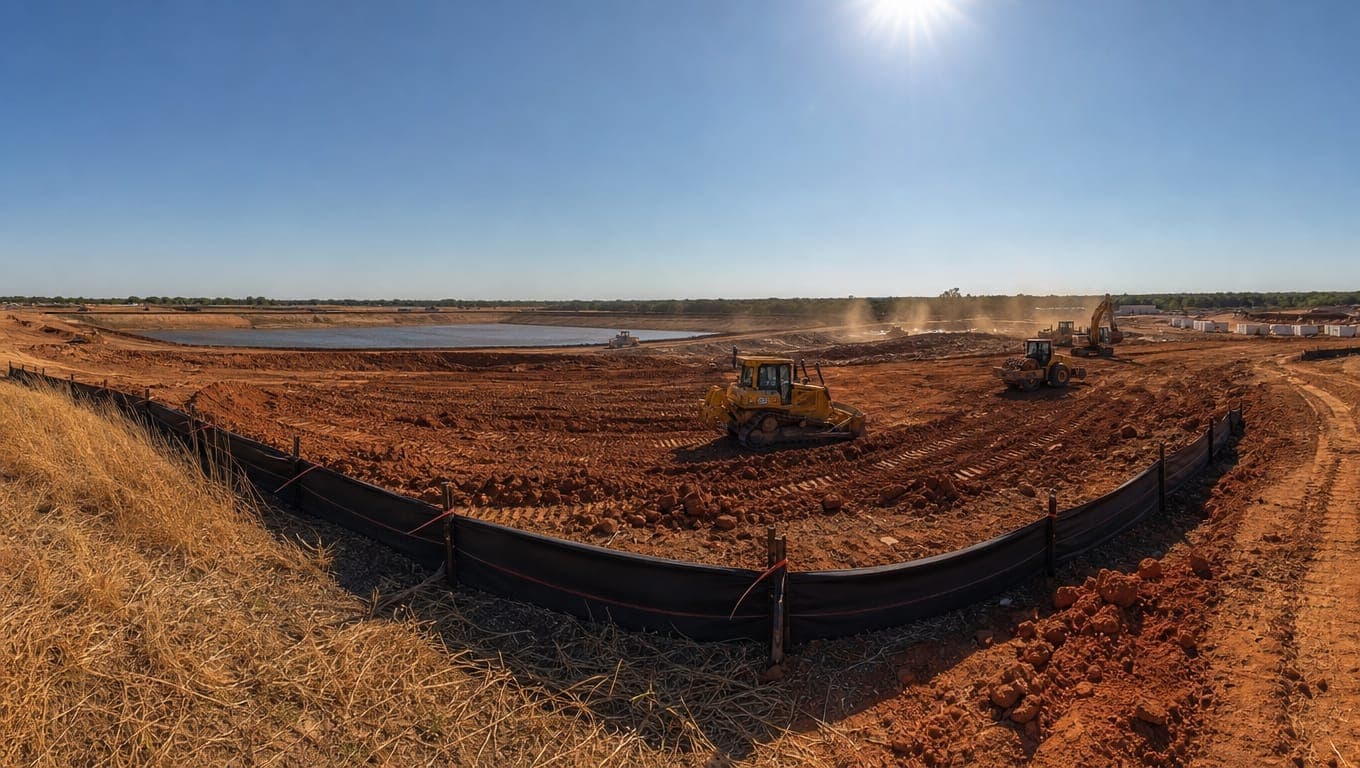
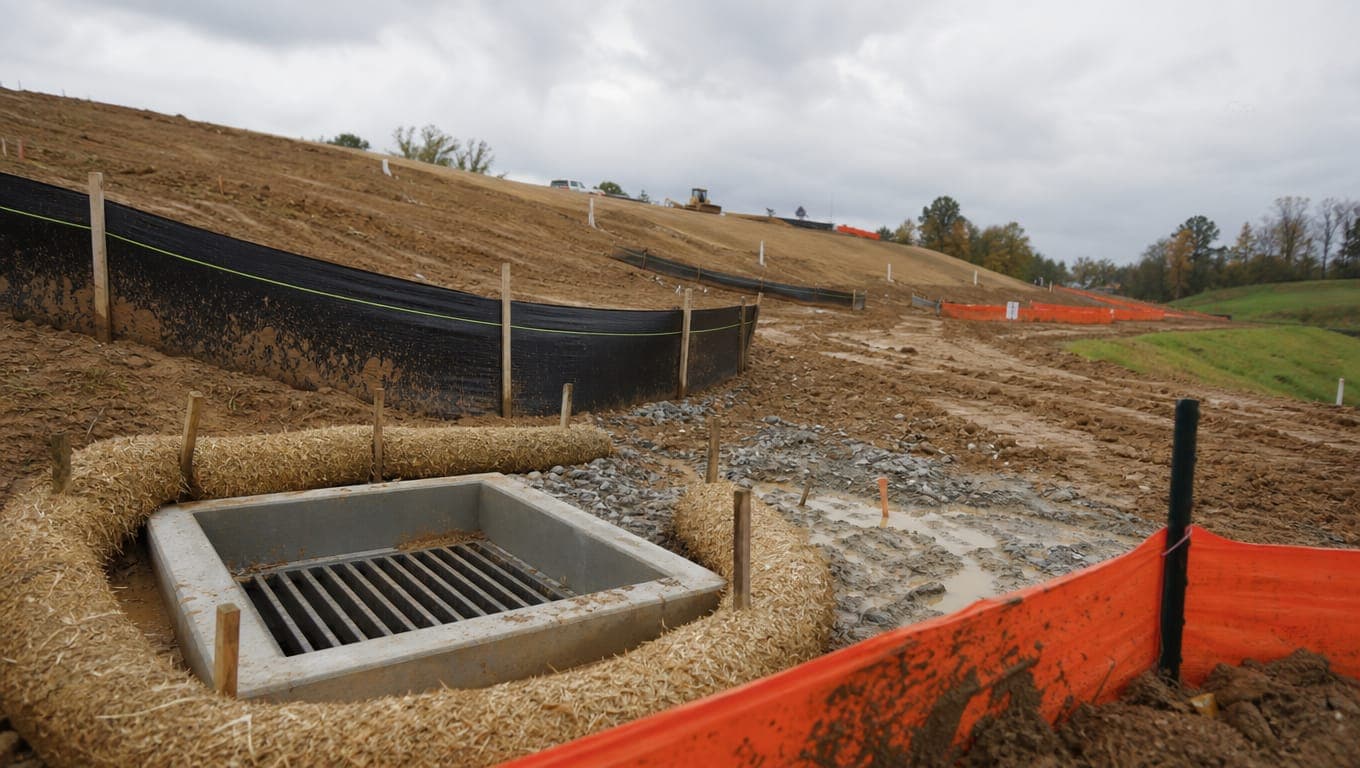
Silt fence installed but not trenched in. The single most common physical defect. Fabric stapled to posts and laid on the ground instead of keyed into a trench and backfilled. Water goes under it. In Bexar County's clay, a properly keyed fence holds and an unkeyed one is decoration. Related defects: joints not wrapped or overlapped, posts on the downhill side instead of the uphill side, and ends not turned upslope so flow runs around the terminus.
Inlet protection missing on new inlets. Existing inlets get protected at mobilization. Inlets built during the project routinely go unprotected for weeks, because protecting them is nobody's assigned task. A new storm drain with no protection is a direct conveyance to the receiving water.
Stabilized construction exit failed or undersized. The rock fills with fines and stops working, or the exit is too short to shake a loaded truck. The evidence is on the public road, and tracked sediment leaving the site is one of the most visible violations there is. Anyone can see it, including the neighbor who calls it in.
Dormant areas never stabilized. Areas that stopped weeks ago with nothing done. Under the permit, stabilization must be initiated by the end of the next work day where activity has ceased and will not resume within 14 days, and completed within 14 days of initiation. See stabilization deadlines contractors get wrong.
Concrete washout inadequate or overflowing. No designated washout, an unlined pit, or a container full to the rim with nobody scheduled to service it. Washout is high-pH and highly visible in a discharge.
Perimeter controls not maintained. Sediment accumulated to more than half the fence height, fabric torn, posts leaning, sections buried. Installed correctly a year ago and never touched since.
Sediment basin full. Storage volume consumed by accumulated sediment, so the basin no longer performs its design function while still appearing to exist.
Stockpiles uncontrolled. Soil stockpiles with no perimeter control and no cover, usually placed near the site edge for convenience, which is the worst position for them.
Controls that do not match the plan. The plan says silt fence, the site has wattles. Even where the substitution performs better, the mismatch is a violation because the plan is the enforceable document. Amend the plan and it is compliance. See SWPPP site maps and BMP sequencing.
The San Antonio-specific ones
Four patterns show up here that would not rank as highly elsewhere.
No SAWS notification. Under the City of San Antonio construction stormwater ordinance (2014-06-19-0472), a copy of the NOI or Construction Site Notice must go to stormwaterconstruction@saws.org at least 48 hours before construction-related activities begin. It is a two-minute email and it is missed constantly, especially by contractors coming in from Houston or Austin who do not know it exists.
Construction commenced before Edwards Aquifer plan approval. Part II.C.5 of the permit bars commencement of construction at a site regulated under 30 TAC Chapter 213 until the applicable Water Pollution Abatement Plan or Contributing Zone Plan has been approved by TCEQ. Holding valid CGP coverage does not cure this. It is the most serious violation on this list because the remedy is a stop-work order, not a corrective action.
Waiting out the drought. Bare slopes left unstabilized on the theory that seeding will happen when the rain returns. The permit's arid and drought provision does not permit waiting. It requires non-vegetative measures as soon as practicable. Then the drought breaks with a four-inch storm and every bare slope moves at once. This is the most predictable failure sequence in this region.
Controls sized for ordinary rain. San Antonio sits in Flash Flood Alley. Rainfall arrives as short violent bursts against the Balcones Escarpment, and clay soils shed nearly all of it. Controls that would hold in a flatter market get overwhelmed here, and a control that failed under load still reads as a failed control.
The 15-minute pre-inspection walk
Do this before your inspector arrives, in this order, because it is the order they will use.
At the entrance
- Site notice posted, signed, readable from outside, NOI first page attached for large sites
- Stabilized construction exit intact, rock still clean
- No tracked sediment on the public road
- SWP3 binder on site and accessible
In the binder
- Inspection reports current, no date gaps
- Every finding has a corrective action with a completion date
- Site map matches the site today
- Amendments dated and filed
- Stabilization initiation dates recorded
On the perimeter
- Silt fence keyed in, joints wrapped, ends turned upslope
- Sediment less than half the fence height
- No gaps at access points
Through the site
- Every inlet protected, including ones built last week
- Concrete washout designated, lined, and not full
- Stockpiles controlled
- Sediment basin has storage volume remaining
- Dormant areas stabilized or documented as resuming within 14 days
Anything you cannot fix today
- Write it down, with a date you will fix it by
That last line matters more than it looks. A documented plan to fix a known deficiency is a materially better position than an undocumented one, because it demonstrates the program is functioning.
What happens after a finding
Most findings resolve as corrective actions. Fix it, document it with dated photographs, and move on.
Escalation follows a path. A Notice of Violation from TCEQ or a local authority, then potentially agreed orders, stop-work orders, and penalties. TCEQ administrative penalties reach a statutory maximum of up to $25,000 per day per violation, and industry sources commonly cite up to $32,500 per day for TPDES CGP non-compliance.
In practice the penalty is rarely what hurts. The stop-work order is. A week of standstill on a commercial build, with crews idle and a contractual completion date, costs more than the fine attached to it. And a repeat finding on the same item, with no documented corrective action between visits, is what turns a routine inspection into an enforcement matter.
The single best predictor of how an inspection goes is not the condition of the controls. It is whether the paperwork shows somebody has been paying attention.
Want to find these before an inspector does?
We run scheduled inspection programs across San Antonio, Bexar County, Boerne, New Braunfels, and Seguin. Photo-documented, GPS and timestamp on every shot, report the same day, findings graded cosmetic, functional, or immediate so you know what needs attention this week versus this quarter.
And because we run repair crews as well as inspectors, the fix does not require a second vendor and a second mobilization.
Free site walk, written scope, fixed price, typically inside 48 hours.
Request a quote or call (210) 776-6515. See our 40-point stormwater inspection, BMP maintenance and repair, or the full permit walkthrough in our field guide to the TCEQ Construction General Permit.
Sources
Common questions
- What is the most common SWPPP violation?
- Incomplete corrective action documentation. Sites fix the physical problem and never record the fix, which produces repeat findings with no evidence of response.
- Why did my site fail when all the controls were installed?
- Usually installation defects rather than absence. Silt fence not trenched in is the most common. Documentation gaps account for a large share of the rest.
- Do inspectors check paperwork or the site?
- Both, and the paperwork first. The SWP3 and the inspection records are what an audit actually reviews.
- What is the most serious violation on this list?
- Commencing construction before Edwards Aquifer plan approval, because the remedy is a stop-work order rather than a corrective action.
- Can I be cited for a control that works better than the plan specifies?
- Yes, until you amend the plan. The plan is the enforceable document.
- How much are the penalties?
- TCEQ administrative penalties reach a statutory maximum of up to $25,000 per day per violation. The schedule impact of a stop-work order is usually the larger cost.
The work behind this article
- Stormwater Pollution Prevention Plan (SWPPP)
A San Antonio SWPPP company that writes the plan, files the NOI, and walks the binder with your superintendent. Site-specific to your grading plan, written to TXR150000, not a template with somebody else's logo taken off.
- Stormwater Inspection Services
CISEC and CESSWI inspectors, on your site every seven days while the job is live and on your MS4's schedule once it is not. One inspector, one tablet, forty checkpoints, and the report before the truck leaves the property.
- Stormwater Basin and BMP Maintenance
A Texas stormwater maintenance company that runs your basins and ponds on a calendar instead of on emergencies. Mowing, vegetation, sediment, trash racks, and inlets on the scheduled visit, and crews on site within 72 hours when a control is failing between them.
Need help with stormwater compliance on a San Antonio property? We do site walks at no charge.
Request a fixed-price quoteMore field notes from the watershed.
 Compliance · 14 min
Texas SWPPP Requirements: A Field Guide to the TCEQ Construction General Permit
If your project will disturb one acre or more of soil in Texas, you need coverage under the TCEQ Construction General Permit, TXR150000, and a Stormwater Pollution Prevention Plan in place before construction begins. Sites of five acres or more must also file a Notice of Intent. Smaller sites
 Field guide · 7 min
SWPPP Site Maps and BMP Sequencing
A compliant SWPPP site map shows your actual drainage areas, flow directions, discharge points, receiving waters, and the location of every control, tied to a construction sequence that describes when each control goes in and comes out. A map that does not change as the site changes is the most
Get a stormwater
compliance quote.
Free site walk, written scope of work, fixed-price quote. Usually back to you within 48 hours.