
Stabilization Deadlines Contractors Get Wrong
Under TXR150000, stabilization must be initiated immediately, meaning no later than the end of the next work day, wherever earth-disturbing activity has permanently ceased or has temporarily ceased and will not resume within 14 calendar days. Once initiated, it must be completed within 14 calendar
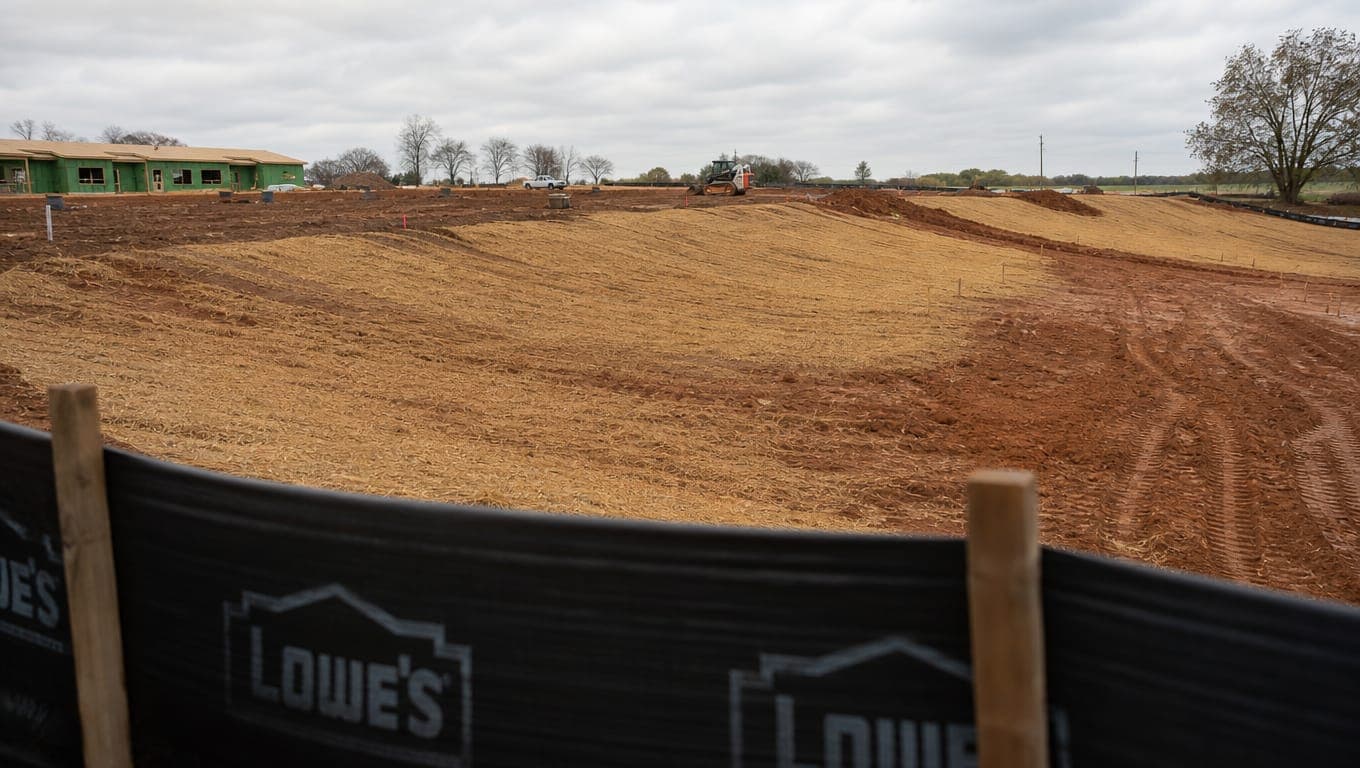
Published August 27, 2026. Last reviewed August 27, 2026. Technical review: Jim Price, CISEC, CESSWI. Founder, Stormwater Compliant LLC.
Under TXR150000, stabilization must be initiated immediately, meaning no later than the end of the next work day, wherever earth-disturbing activity has permanently ceased or has temporarily ceased and will not resume within 14 calendar days. Once initiated, it must be completed within 14 calendar days.
Next work day to start. Fourteen days to finish. That is the whole structure, and it is not what most contractors think the rule says.
First, the correction: There is no 7-day impaired waters deadline
A widely repeated claim is wrong. Multiple guides state that Texas construction sites discharging to impaired waters must complete stabilization within 7 days. That deadline does not appear in the 2023 TXR150000. Contractors have accelerated schedules and spent money meeting a requirement that does not exist.
We are correcting this in public because it keeps costing people money, and because the correction is easy to verify. Here is the actual language, from Part III.F.2(b)iii of the 2023 Construction General Permit:
Erosion control and stabilization measures must be initiated immediately in portions of the site where construction activities have temporarily ceased and will not resume for a period exceeding fourteen (14) calendar days. Stabilization measures that provide a protective cover must be initiated immediately in portions of the site where construction activities have permanently ceased. The term "immediately" is used to define the deadline for initiating stabilization measures. In the context of this requirement, "immediately" means as soon as practicable, but no later than the end of the next work day, following the day when the earth-disturbing activities have temporarily or permanently ceased. Except as provided in (A) through (D) below, these measures must be completed as soon as practicable, but no more than fourteen (14) calendar days after the initiation of soil stabilization measures.
Part IV, Section B restates the same structure. No seven-day clock, for impaired waters or anything else.
Where the confusion probably originates: some other jurisdictions and some editions of the federal EPA Construction General Permit have used a 7-day figure, and content written for a national audience gets localized by swapping the state name without checking the state permit. It is a copy-paste error that acquired authority through repetition.
If someone tells you your site is on a 7-day clock, ask them for the section number.
The actual rule, in two stages
The rule has two separate deadlines and people collapse them into one. Keep them apart.
Stage 1: Initiation. You must initiate stabilization immediately where earth-disturbing activity has:
- permanently ceased on any portion of the site, or
- temporarily ceased on any portion and will not resume for a period exceeding 14 calendar days.
Stage 2: Completion. Once initiated, measures must be completed as soon as practicable, and no more than 14 calendar days after initiation.
What "immediately" means
The permit defines it, which removes the argument: as soon as practicable, but no later than the end of the next work day, following the day the earth-disturbing activity ceased.
A worked example. Grading on the north pad finishes Tuesday, and nothing else is scheduled there for a month.
- Wednesday, end of day: stabilization must be initiated. Seeding started, blankets going down, whatever the plan calls for.
- Wednesday plus 14 calendar days: stabilization must be complete.
Note what triggers the clock. Not the rain. Not the inspection. The day work stopped. If your crew moved off that pad three weeks ago and nothing has been done, you were late two weeks ago, and the inspection that discovers it is not the start of the problem.
The 14-day trigger for temporary cessation also cuts the other way, usefully: if activity will resume within 14 days, the obligation has not fired. A pad sitting idle for eight days between trades does not require stabilization. Document the schedule that supports that.
Temporary vs. final stabilization
These are different obligations at different points in the project, and conflating them is why people cannot close out permits.
Temporary stabilization protects a disturbed area that is dormant but not finished. Seeding with a quick-establishing cover, erosion control blankets, mulch, hydromulch, or non-vegetative cover. It satisfies the 14-day completion deadline. It does not end anything.
Final stabilization is the condition that lets you terminate permit coverage. Per Part I.B, it means all soil-disturbing activity is complete and a uniform perennial vegetative cover with a density of at least 70% of the native background vegetative cover has been established on all unpaved areas not covered by permanent structures, or equivalent permanent measures such as riprap or gabions are in place. The permit defines "uniform" as evenly distributed, without large bare areas.
A site can be fully temporarily stabilized and nowhere near final stabilization. Full close-out detail is in filing the Notice of Termination.
The exceptions that matter in Texas
The permit's exceptions to the 14-day completion deadline exist because sometimes vegetation cannot establish.
Frozen conditions. Where immediate initiation of vegetative measures is infeasible because the ground is frozen, non-vegetative controls must be implemented until thawing conditions arrive, at which point vegetative measures begin as soon as practicable. Relevant a few days a year here, and genuinely relevant on Hill Country work.
Arid, semi-arid, and drought-stricken areas. Where initiating vegetative stabilization immediately is infeasible, alternative non-vegetative stabilization measures must be employed as soon as practicable.
That second one governs a real portion of the San Antonio calendar, and it is where we write findings constantly.
The exception is not a pause button. It does not say wait for rain. It says install something else, now. "We will seed it when the weather turns" is not a stabilization measure. Erosion control blankets, hydromulch with a tackifier, crimped straw, rock, or matting are stabilization measures.
The practical version: if it is too dry to establish grass, your obligation converts from vegetative to non-vegetative. It does not disappear. And when the drought breaks, the first heavy storm hits every slope that was left bare on the theory that seeding would happen eventually. That is the single most predictable failure pattern in this region.
The permit also notes that in limited circumstances stabilization may not be required if the intended function of a specific area necessitates that it remain disturbed. That is narrow. Document it in the SWP3 if you rely on it.
Why stabilizing early saves you inspection work
Here is the argument that actually moves schedules, because it is a cost argument rather than a compliance one.
Under Part III.F.8(c)ii, areas that have reached final or temporary stabilization drop to an inspection frequency of at least once per month, instead of every 14 calendar days plus every qualifying storm.
On a phased project with several completed areas, that is a substantial reduction in recurring labor. Stabilizing a dormant pad is a one-time cost. Inspecting it on the full schedule for the next eight months is a recurring one.
The catch is documentation. The reduced frequency depends on the stabilization being real and recorded. Photograph it, date it, note it in the SWP3, and the reduction is defensible. Skip that and monthly inspections look like missed inspections. More on the schedules in how often SWPPP inspections are required.
What actually counts as stabilization
Anything that provides protective cover and holds soil in place.
Vegetative: seeding with an appropriate mix, sod, hydroseeding, and hydromulch. Select for the season and for the site's exposure. A cool-season mix installed in July is a line item, not a stabilization measure.
Non-vegetative: erosion control blankets and turf reinforcement mats, crimped straw mulch, hydromulch with tackifier, rock or riprap, gravel, and permanent structures.
Not stabilization: perimeter silt fence, inlet protection, or a sediment trap. Those are sediment controls. They capture what has already eroded. Stabilization prevents the erosion in the first place, and inspectors treat the distinction seriously. A dormant slope ringed with silt fence and otherwise bare is an unstabilized slope.
The findings we write most often
Dormant area never initiated. A pad that stopped six weeks ago with nothing done. The most common stabilization finding by a wide margin.
Initiated but never completed. Seed went down, nothing established, nobody went back. The 14-day completion deadline is a real deadline, and germination failure is not compliance.
No initiation dates recorded. The permit requires the SWP3 to record the dates stabilization measures are initiated. Without those dates, you cannot demonstrate you met either deadline, so the finding writes itself.
Waiting for rain during drought. Covered above. Convert to non-vegetative.
Silt fence treated as stabilization. A sediment control is not a stabilization measure.
Stabilization on the plan, not on the ground. The SWP3 says blankets, the slope has bare soil. Even where an alternative would have worked, the mismatch is its own violation. See SWPPP site maps and BMP sequencing.
Need areas stabilized before the next inspection?
We run stabilization and BMP repair crews across San Antonio, Bexar County, Boerne, New Braunfels, and Seguin. Seeding, blankets, matting, riprap, and slope repair, closed out with photo documentation and dated records that match your SWP3.
If you have dormant areas that should have been stabilized weeks ago, that is a fixable problem and it is cheaper to fix before an inspector writes it up. Free site walk, written scope, fixed price, typically inside 48 hours.
Request a quote or call (210) 776-6515. See BMP maintenance and repair, our SWPPP services, or the full permit walkthrough in our field guide to the TCEQ Construction General Permit.
Sources
- TCEQ, 2023 Construction General Permit TXR150000 (PDF), Part III.F.2(b)iii and Part IV, Section B
- TCEQ, Stormwater General Permit for Construction Activities
Common questions
- How long do I have to stabilize a disturbed area?
- Initiate by the end of the next work day after activity ceases, if it will not resume within 14 calendar days. Complete within 14 calendar days of initiation.
- Is there a 7-day stabilization rule for impaired waters in Texas?
- No. It is not in the 2023 TXR150000. The deadlines are initiation by the next work day and completion within 14 days.
- Does the clock start when it rains?
- No. It starts the day earth-disturbing activity temporarily or permanently ceased.
- What if the area will be worked again next week?
- If activity resumes within 14 calendar days, the obligation has not triggered. Keep the schedule that supports that.
- What if it is too dry to establish vegetation?
- Install non-vegetative measures as soon as practicable. The obligation converts, it does not pause.
- Does stabilizing reduce my inspections?
- Yes. Documented final or temporary stabilization drops those areas to at least monthly.
- Is temporary stabilization enough to close the permit?
- No. Termination requires final stabilization, generally 70% of native background vegetative cover.
The work behind this article
- Stormwater Pollution Prevention Plan (SWPPP)
A San Antonio SWPPP company that writes the plan, files the NOI, and walks the binder with your superintendent. Site-specific to your grading plan, written to TXR150000, not a template with somebody else's logo taken off.
- Stormwater Basin and BMP Maintenance
A Texas stormwater maintenance company that runs your basins and ponds on a calendar instead of on emergencies. Mowing, vegetation, sediment, trash racks, and inlets on the scheduled visit, and crews on site within 72 hours when a control is failing between them.
- Stormwater Inspection Services
CISEC and CESSWI inspectors, on your site every seven days while the job is live and on your MS4's schedule once it is not. One inspector, one tablet, forty checkpoints, and the report before the truck leaves the property.
Need help with stormwater compliance on a San Antonio property? We do site walks at no charge.
Request a fixed-price quoteMore field notes from the watershed.
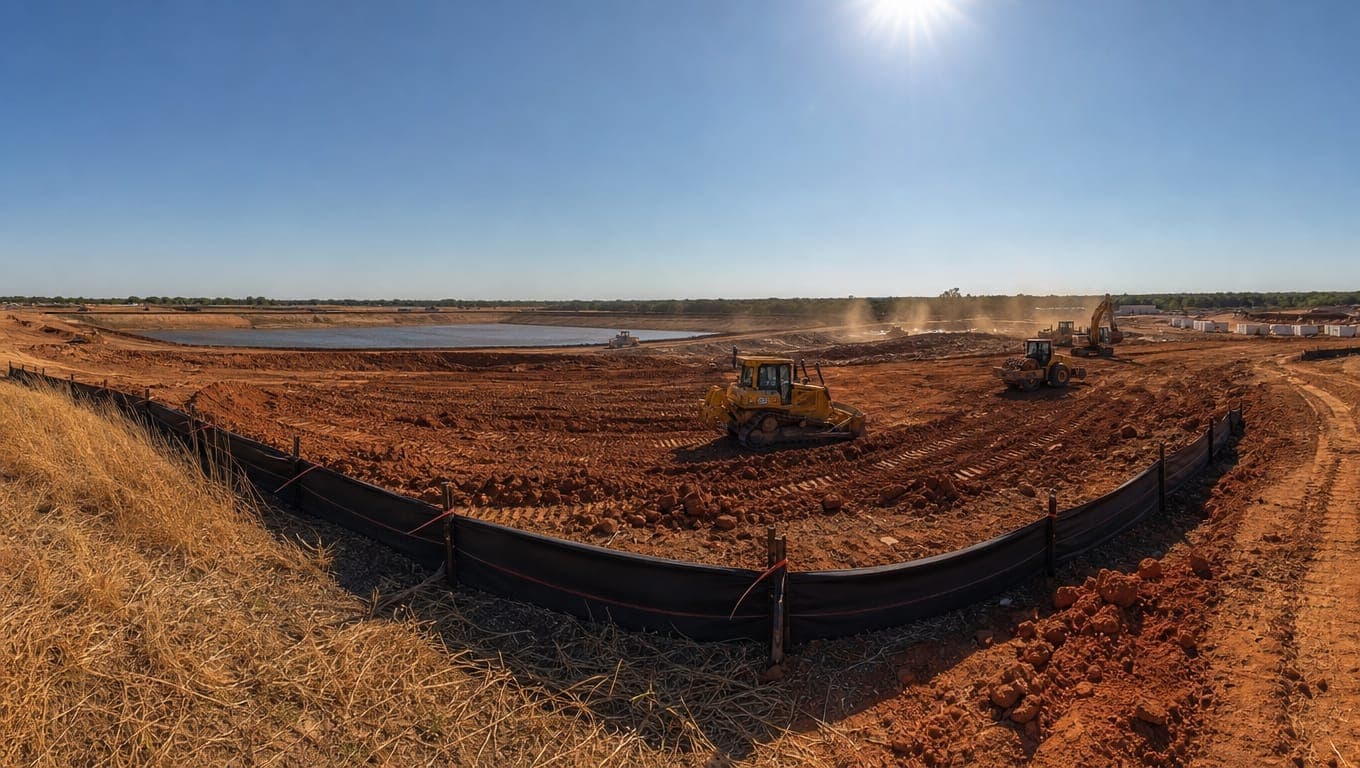 Compliance · 14 min
Texas SWPPP Requirements: A Field Guide to the TCEQ Construction General Permit
If your project will disturb one acre or more of soil in Texas, you need coverage under the TCEQ Construction General Permit, TXR150000, and a Stormwater Pollution Prevention Plan in place before construction begins. Sites of five acres or more must also file a Notice of Intent. Smaller sites
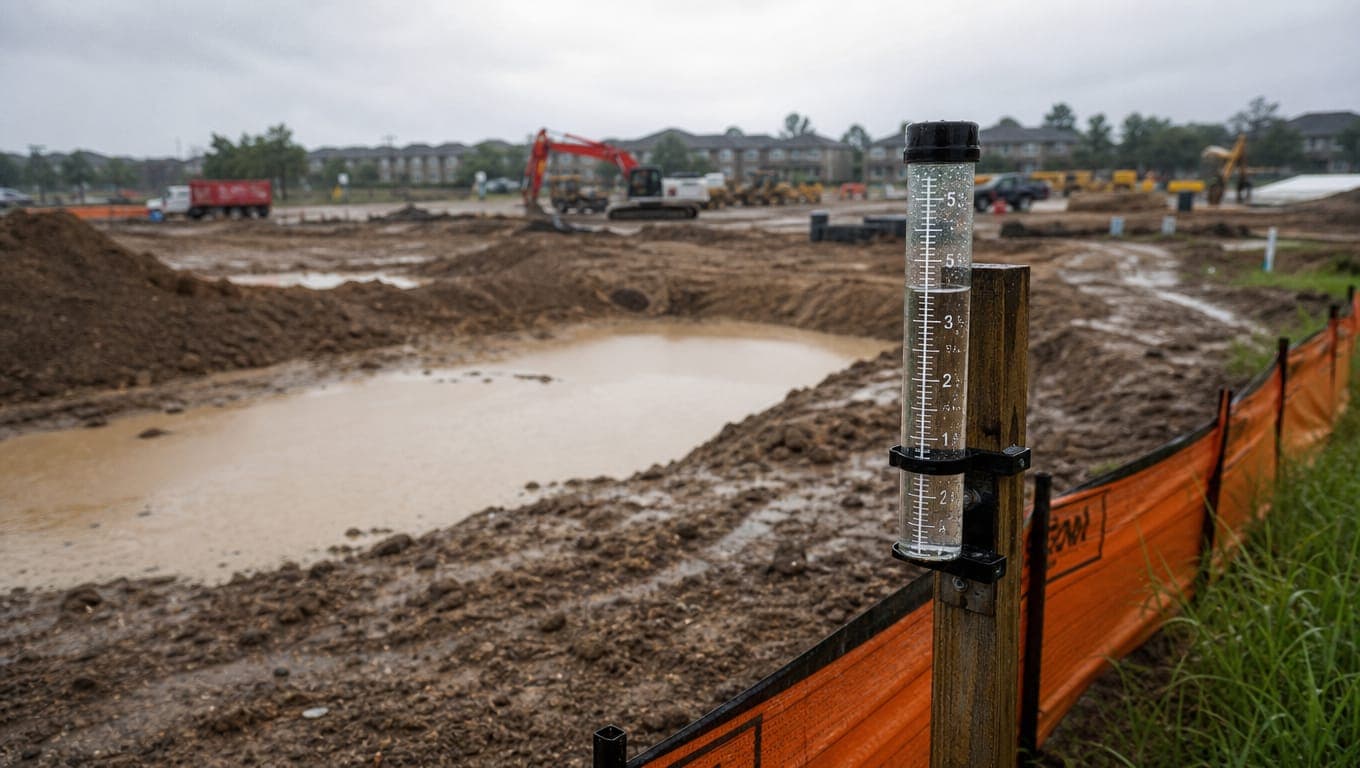 Compliance · 7 min
How Often Are SWPPP Inspections Required in Texas?
Texas construction sites must be inspected at least once every 14 calendar days and within 24 hours of the end of a storm event of 0.5 inches or greater. The permit also allows an elective schedule of once every 7 calendar days regardless of rainfall, plus reduced monthly frequencies for
Get a stormwater
compliance quote.
Free site walk, written scope of work, fixed-price quote. Usually back to you within 48 hours.