
Bexar County Post-Construction Permits: The Two-Part Process
Projects in unincorporated Bexar County disturbing one acre or more, or less than an acre as part of a larger common plan, need a post-construction storm water control measure permit. The process runs in two parts, a pre-construction review and a post-construction review, with engineer
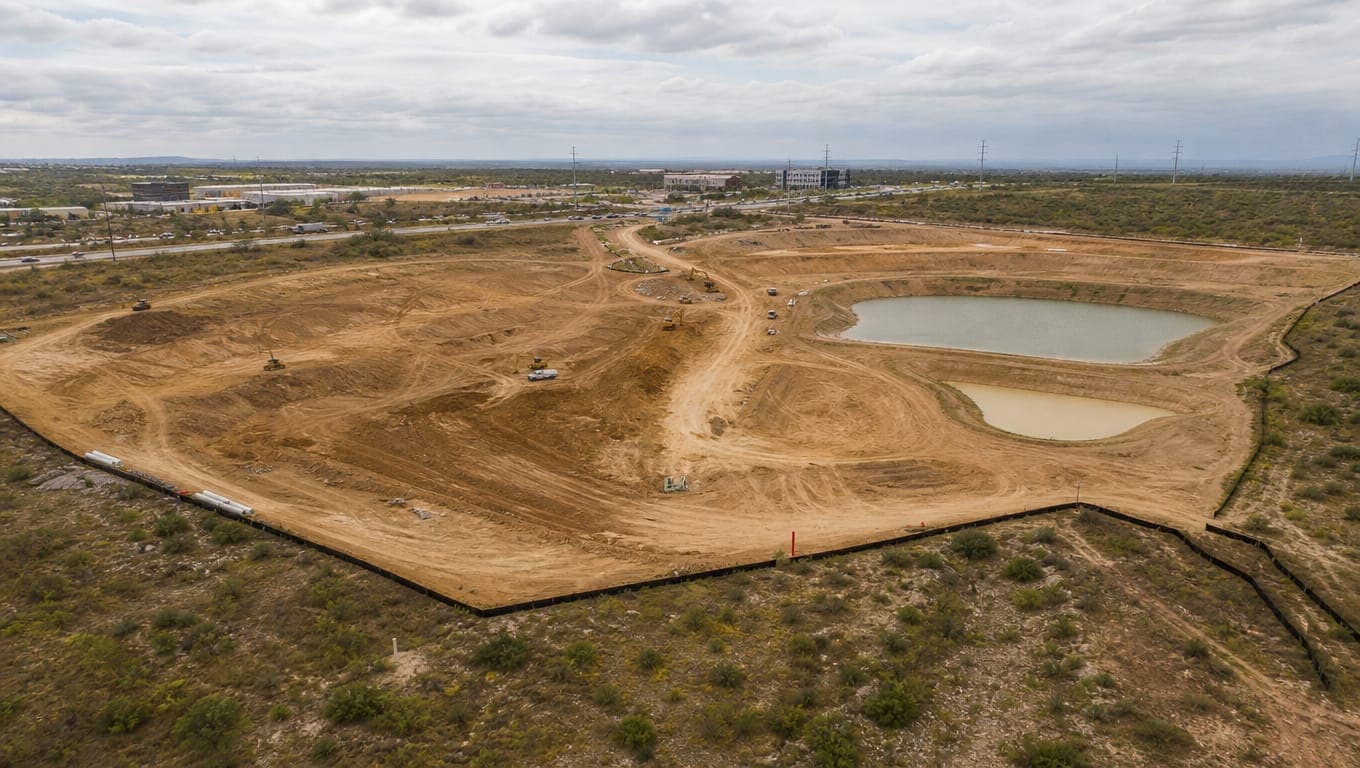
Published October 8, 2026. Last reviewed October 8, 2026. Technical review: Jim Price, CISEC, CESSWI. Founder, Stormwater Compliant LLC.
Projects in unincorporated Bexar County disturbing one acre or more, or less than an acre as part of a larger common plan, need a post-construction storm water control measure permit. The process runs in two parts, a pre-construction review and a post-construction review, with engineer certification of the BMPs at completion. Total fees are $250.
This is a county program. It does not apply inside the City of San Antonio, and it does not end when your project does.
Does this apply to you?
Three questions, in order.
Are you in unincorporated Bexar County? This is the one people get wrong. A San Antonio mailing address does not mean you are inside the city limits. Large areas of the county carry San Antonio addresses and are unincorporated, and the county's program applies there while the City's UDC does not. Check the parcel against the city limits and ETJ rather than the mail.
Will you disturb one acre or more? Count all soil disturbance, not the building footprint.
Or is the project part of a larger common plan of development? If so, the county's trigger reaches projects under an acre, the same way the state permit does. A pad inside a larger county development is regulated.
If you answered yes to the first and to either the second or third, you need the permit.
Note this is separate from, and additional to, your TCEQ construction permit. The state permit covers construction-phase discharge. The county permit covers the permanent controls that remain afterward. See our field guide to the TCEQ Construction General Permit.
What it costs
| Situation | Application fee | Review fee | Total |
|---|---|---|---|
| Standard project | $50 | $200 | $250 |
| Site over the Edwards Aquifer with an approved WPAP or CZP | $50 | Waived | $50 |
The Edwards Aquifer exception is worth understanding rather than just noting. If TCEQ's Edwards Aquifer Protection Program has already approved your Water Pollution Abatement Plan or Contributing Zone Plan, that plan has been through a technical review of the permanent water quality controls. The county does not duplicate it, so the $200 review fee falls away and you pay the $50 application fee.
That is a genuine saving, and it also tells you something about sequencing: getting the Edwards Aquifer plan approved first is worth doing anyway, and it makes the county step cheaper and simpler. See Edwards Aquifer Protection Plans: WPAP and CZP basics.
Fees change. Confirm current amounts with Bexar County Public Works before you budget.
Part one: Pre-construction review
This happens before you build, and it establishes what the permanent controls will be.
You submit the application with the project information, the proposed land uses and acreages, and the proposed impervious cover. The county runs a mitigation calculation comparing your proposed impervious cover against target percentages by land use, and where you exceed the composite target, the difference becomes mitigation points you have to earn back through structural and non-structural BMPs.
Practically, that means the design of your permanent stormwater controls has to be resolved before construction, not discovered during it. The full mechanics are in Bexar County target impervious cover, explained.
What you should have ready:
- Gross project acreage and existing impervious cover
- Proposed impervious cover, broken out by land use category
- The permanent BMPs you intend to install, with design detail
- Any non-structural measures you intend to claim
- Whether the site sits over the Edwards Aquifer and whether a plan is approved
The output of part one is an approved approach. Build to it.
Part two: Post-construction review and engineer certification
This happens at completion, and it is where projects stall.
Engineer certification of the BMPs is required. A licensed engineer certifies that the permanent stormwater control measures were built as approved and function as designed. That is not a formality signed off from a desk. It means the BMPs have to actually match the approved plan, and where the field deviated, the deviation has to be reconciled.
The common failure sequence looks like this. A basin gets built slightly differently from the plan for practical reasons during construction, nobody updates the drawings, the contractor demobilizes, and then months later an engineer is asked to certify something that does not match the approved design. Now somebody is paying to survey what was actually built, revise the as-builts, and possibly correct the work.
Two things prevent it:
Keep the as-builts current as you build. Deviations documented at the time are a paperwork exercise. Deviations discovered at certification are a construction exercise.
Walk the BMPs before you demobilize. The equipment needed to correct a grading or outlet issue is on site now and expensive to bring back later.
The mitigation framework, in brief
The county publishes target impervious cover percentages by land use, set equal to the limitations for Category 2 properties under City of San Antonio Ordinance 81491 concerning development over the Edwards Recharge Zone.
These are targets, not limits. The county says so directly in its own manual: the levels "are not limits for the purpose of this calculation sheet and are only established as targets to establish a need for potential mitigation." You are not capped at them. Exceeding them creates a mitigation obligation.
Mitigation points are earned through both structural BMPs and non-structural measures. Non-structural options include things like distributing the county's standardized public outreach flyer and marking storm drain inlets, each carrying defined point values. Fee-in-lieu participation in the regional program is capped at 50% of your required mitigation points, so you cannot buy your way entirely out.
Full mechanics, including the point calculation, in Bexar County target impervious cover, explained.
What happens after the permit issues
Here is the part almost nobody plans for. The permit is not a close-out document. It is the start of a recurring obligation.
Once your permanent BMPs are certified and the permit is in place, the property carries ongoing responsibilities for as long as those controls exist. That includes maintaining them, keeping records, and holding a maintenance arrangement the county accepts.
For an owner, that means a permanent line item. For a developer selling the property, it means an obligation that transfers with the deed and that the buyer should be told about. For a buyer, it means a due diligence question that is rarely asked and frequently expensive to answer late.
We cover the ownership-phase obligations in our post-construction service, and Pillar 4 of this blog will go deeper on the recurring reporting and renewal mechanics.
The certified maintenance provider requirement
This one is under-known and it directly affects who you can hire.
Bexar County requires that parties providing maintenance on permitted post-construction BMPs hold a certification. The certification the county currently accepts is issued through the San Antonio River Authority.
SARA administers a training program in partnership with the county covering permanent on-site stormwater BMPs, including Low Impact Development practices and detention ponds. The program runs as a series of courses, several of which carry an exam credential, including LID construction inspection, LID annual inspection and maintenance, and detention pond routine inspection and maintenance.
Two practical consequences:
Your landscape contractor probably does not qualify. Mowing a detention pond is not the same as being a certified maintenance provider on a permitted BMP, and an owner who assumes their grounds crew satisfies the requirement has a gap.
Check before you contract. If you are engaging a maintenance provider for a permitted BMP in unincorporated Bexar County, ask what certification they hold. It is a fair question and the answer should be immediate.
Lapses and ownership changes
Two situations that generate calls to us.
A lapse in maintenance reporting. Where a property falls out of compliance with its ongoing obligations, the county's process can involve a violation letter and a renewal requiring engineer certification. Re-establishing compliance is more work than maintaining it, because you are now certifying the current condition of BMPs that may have degraded in the interim.
A change of ownership. Stormwater obligations transfer with the property. A new owner generally needs the permit updated into their name and a maintenance arrangement in place under their control. Buyers who did not ask about this during diligence inherit both the obligation and any accumulated deferred maintenance.
If you have just bought commercial property in unincorporated Bexar County and there is a basin or vault on it, finding out its permit status is worth doing in the first month rather than the first violation letter.
We run the post-construction side
We manage permitted BMPs across unincorporated Bexar County: the inspection calendar, the maintenance, the documentation, the county filings, and preventative repair scheduled ahead of inspection cycles rather than after a failure. Flat annual billing.
If you are a developer approaching close-out and need the BMPs walked before your engineer certifies, or an owner who has just discovered the property carries an obligation nobody mentioned, both are ordinary work for us.
Free site walk, written scope, fixed price, typically inside 48 hours.
Request a quote or call (210) 776-6515. See post-construction stormwater programs, BMP maintenance and repair, or the full local picture in San Antonio, Bexar County, and Edwards Aquifer stormwater rules.
Sources
Common questions
- Do I need a Bexar County post-construction permit?
- If your project is in unincorporated Bexar County and disturbs one acre or more, or is under an acre but part of a larger common plan of development, yes.
- Does this apply inside the City of San Antonio?
- No. Inside the city, the UDC and the City's requirements govern. This is a county program for the unincorporated area.
- What does it cost?
- $50 application plus $200 review, so $250 total. Sites over the Edwards Aquifer with an approved WPAP or CZP pay the $50 application fee only.
- What is engineer certification?
- A licensed engineer certifies at completion that the permanent BMPs were built as approved and function as designed.
- Are the impervious cover percentages limits?
- No. The county states they are targets used to establish whether mitigation is needed, not caps on development.
- Who can maintain a permitted BMP?
- A provider holding the certification the county accepts, currently issued through the San Antonio River Authority.
- What happens when the property sells?
- The obligation transfers with the property, and the permit and maintenance arrangement need updating into the new owner's name.
The work behind this article
- Post-Construction Stormwater
An annual program that keeps your basins, vaults, and conveyance systems documented, inspected, and in regulatory good standing.
- Detention Pond and Basin Repair
Bathymetric survey, sediment removal, regrading, and outlet rebuild for detention ponds and retention basins that have silted in, washed out, or stopped draining the way the design drawing said they would.
- Stormwater Inspection Services
CISEC and CESSWI inspectors, on your site every seven days while the job is live and on your MS4's schedule once it is not. One inspector, one tablet, forty checkpoints, and the report before the truck leaves the property.
Need help with stormwater compliance on a San Antonio property? We do site walks at no charge.
Request a fixed-price quoteMore field notes from the watershed.
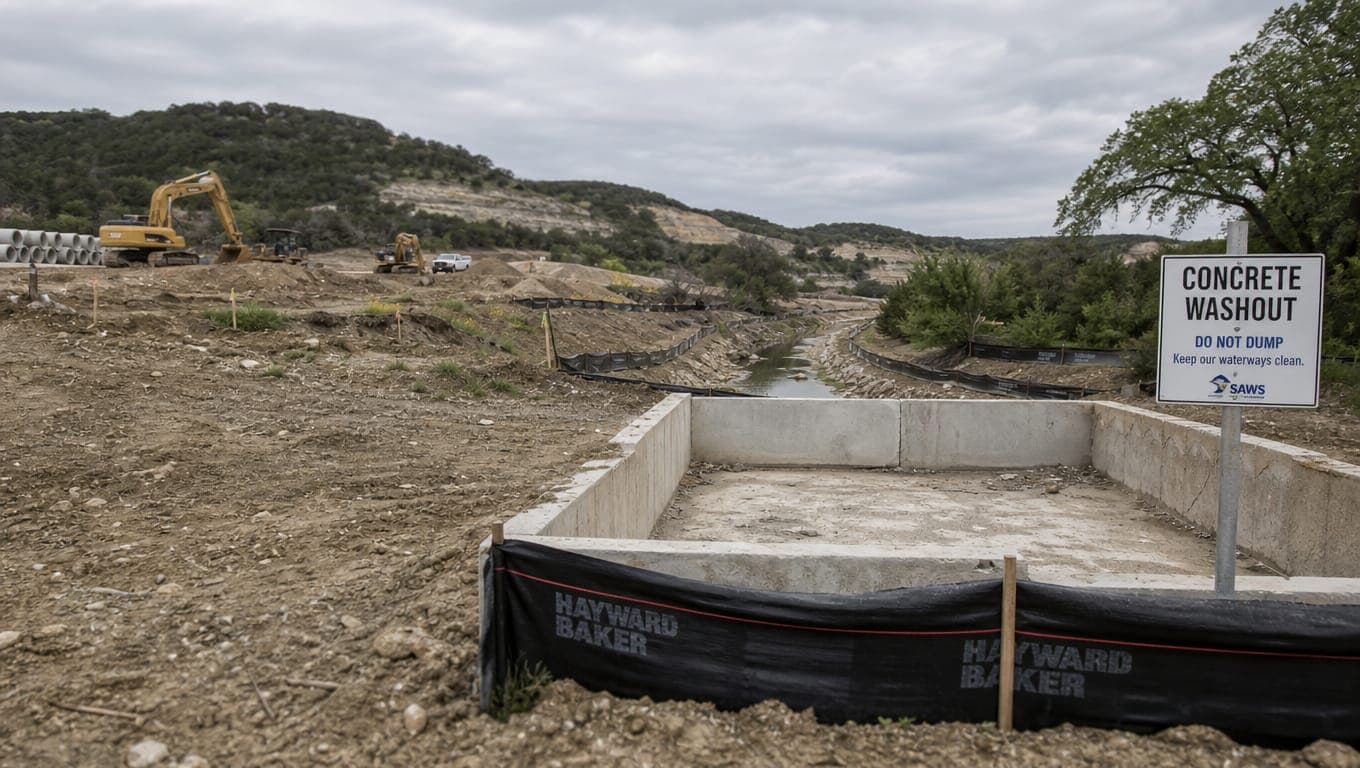 Compliance · 11 min
San Antonio, Bexar County, and Edwards Aquifer Stormwater Rules
A San Antonio construction site can sit under five separate stormwater authorities at once: TCEQ for the state permit, TCEQ's Edwards Aquifer Protection Program for the aquifer overlay, SAWS and the City of San Antonio inside city limits, and Bexar County Public Works in the unincorporated area
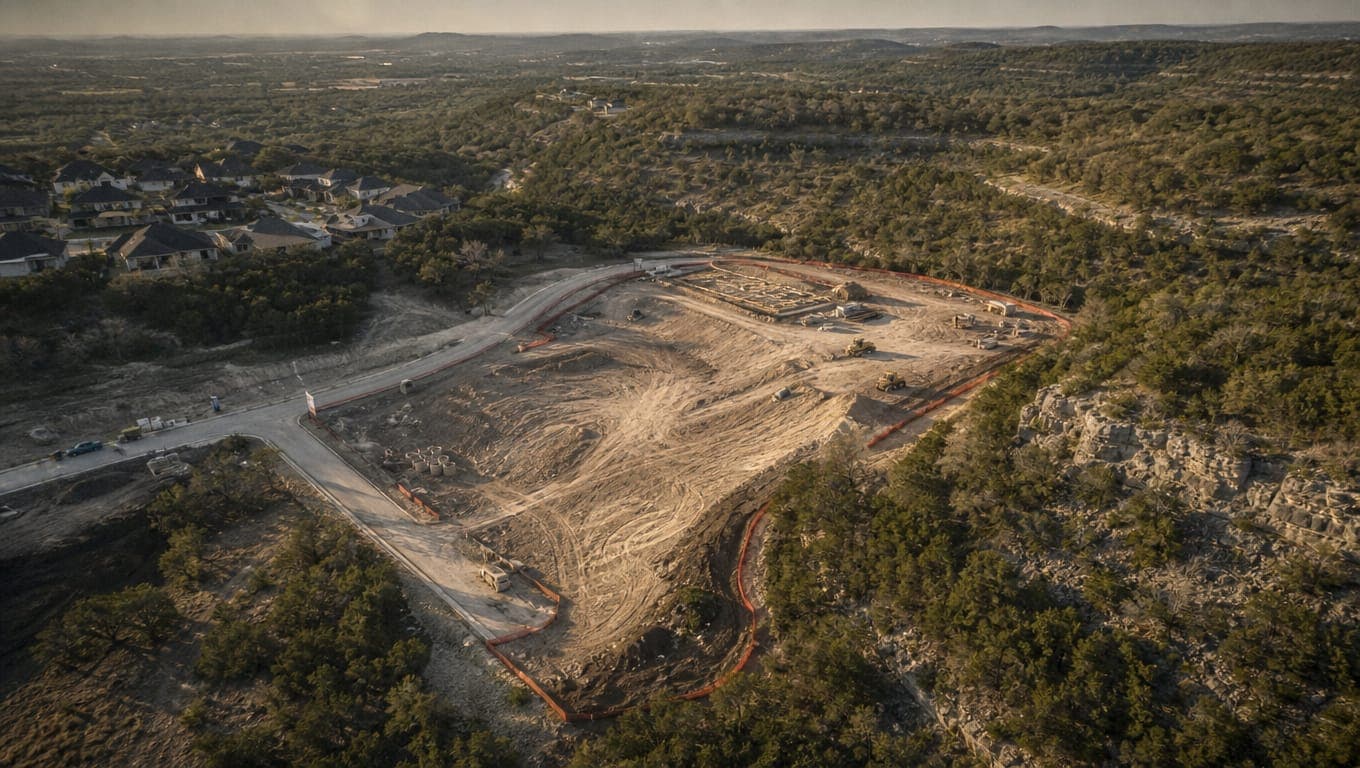 Compliance · 7 min
Edwards Aquifer Protection Plans: WPAP and CZP Basics
A Water Pollution Abatement Plan is required for regulated activity over the Edwards Aquifer Recharge Zone. A Contributing Zone Plan is required for regulated activity over the Contributing Zone disturbing five or more acres. Both are reviewed and approved by TCEQ under 30 TAC Chapter 213, and
Get a stormwater
compliance quote.
Free site walk, written scope of work, fixed-price quote. Usually back to you within 48 hours.