
Edwards Aquifer Protection Plans: WPAP and CZP Basics
A Water Pollution Abatement Plan is required for regulated activity over the Edwards Aquifer Recharge Zone. A Contributing Zone Plan is required for regulated activity over the Contributing Zone disturbing five or more acres. Both are reviewed and approved by TCEQ under 30 TAC Chapter 213, and
Published October 1, 2026. Last reviewed October 1, 2026. Technical review: Jim Price, CISEC, CESSWI. Founder, Stormwater Compliant LLC.
A Water Pollution Abatement Plan is required for regulated activity over the Edwards Aquifer Recharge Zone. A Contributing Zone Plan is required for regulated activity over the Contributing Zone disturbing five or more acres. Both are reviewed and approved by TCEQ under 30 TAC Chapter 213, and construction may not commence until approval.
If you are planning a San Antonio project and have not scheduled this, stop and read the timeline section. It can add a quarter.
Your SWPPP does not cover this
The single most expensive misunderstanding in this market, so it goes first.
Your Stormwater Pollution Prevention Plan satisfies the TCEQ stormwater program, under the construction general permit TXR150000. The Edwards Aquifer Protection Plan satisfies the TCEQ Edwards Aquifer Protection Program, under 30 TAC Chapter 213.
Different program. Different rule. Different review. Different reviewers.
They are both TCEQ, which is exactly why people assume one covers the other. It does not, and the construction general permit says so itself at Part II.C.5:
Discharges cannot be authorized by this general permit where prohibited by 30 TAC Chapter 213 (relating to Edwards Aquifer). In addition, commencement of construction at a site regulated under 30 TAC Chapter 213, may not begin until the appropriate Edwards Aquifer Protection Plan (EAPP) has been approved by the TCEQ's Edwards Aquifer Protection Program.
You can hold valid CGP coverage, a filed NOI, a complete SWP3, and a posted site notice, and still be legally barred from breaking ground.
The three zones
Your obligations depend on which zone your site sits in, and these are mapped boundaries published by TCEQ, not judgments about what the site looks like.
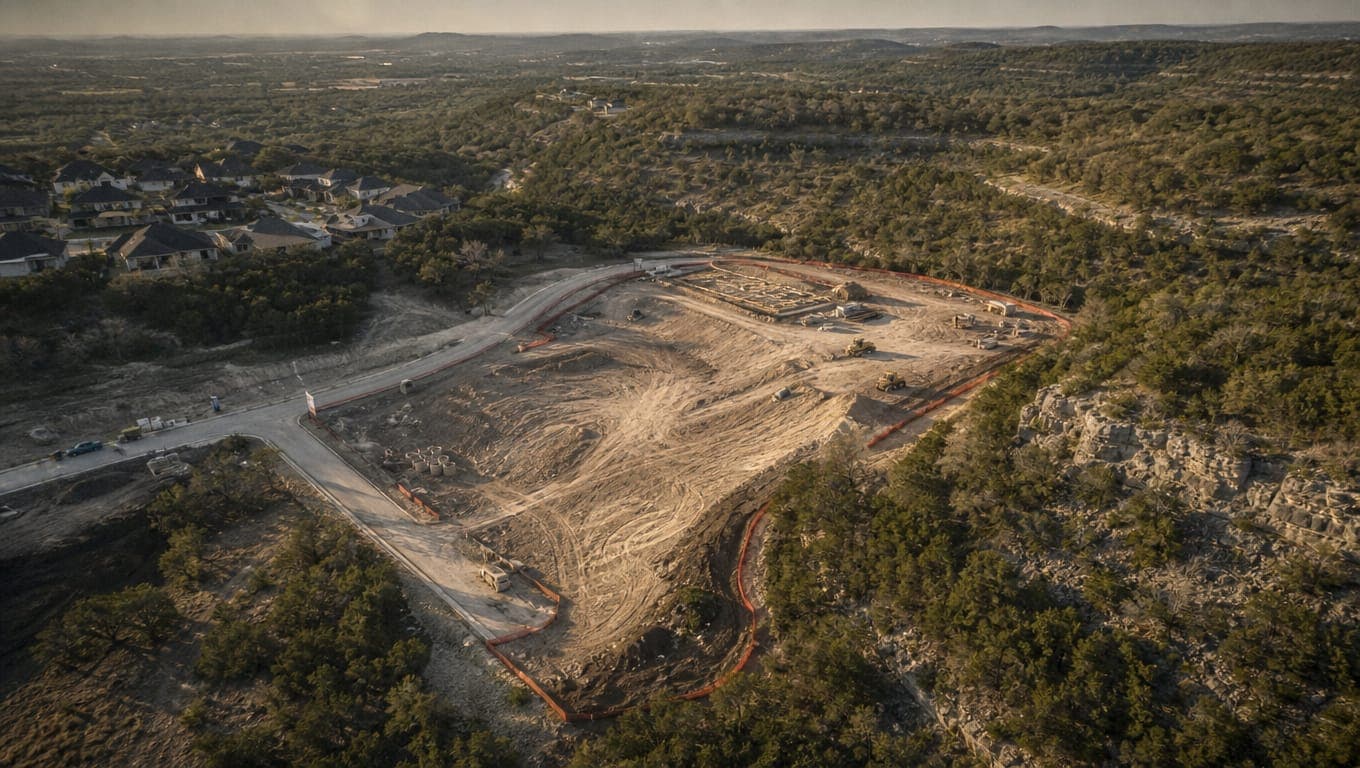
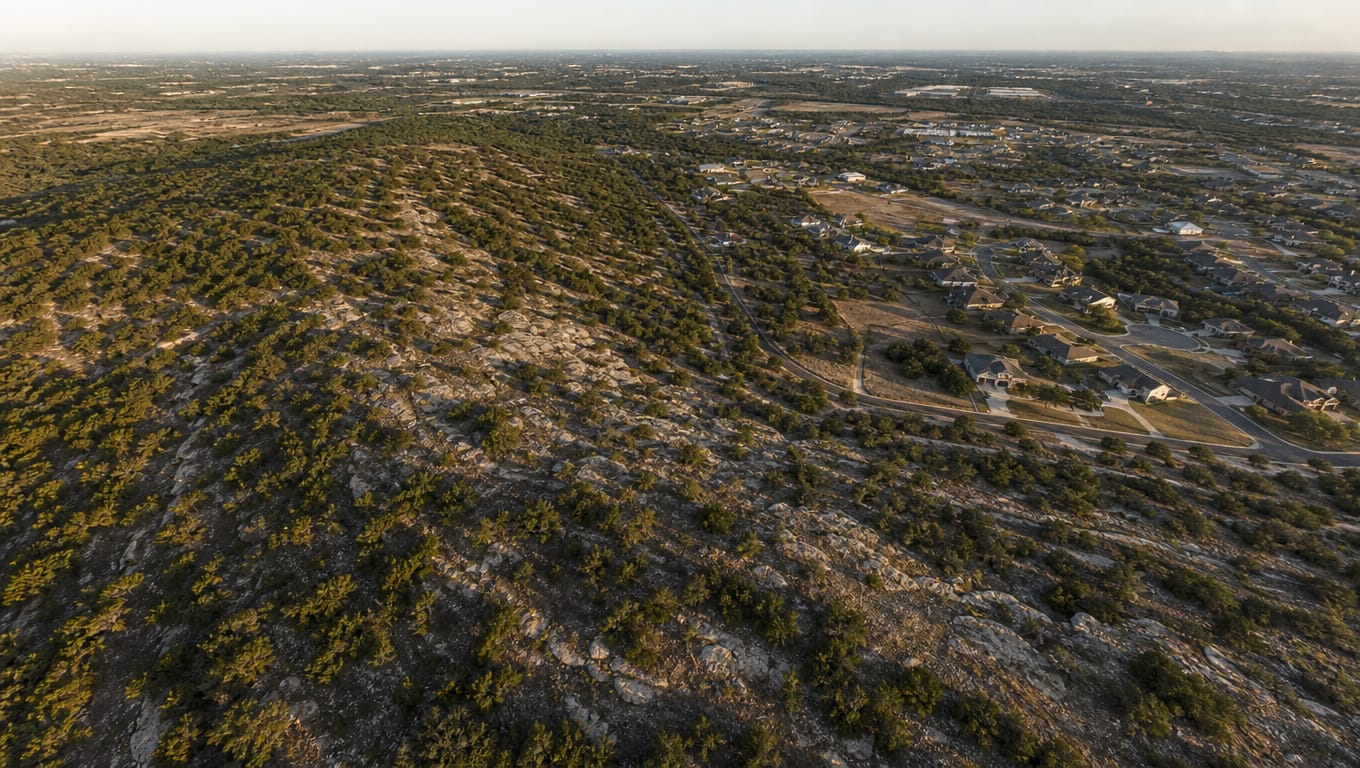
Recharge Zone. Where the water-bearing formations of the Edwards Aquifer crop out, along with nearby formations where caves, sinkholes, faults, and fractures allow water to enter the aquifer directly. This is the most sensitive zone and it carries the most requirements. A flat, unremarkable suburban parcel can sit squarely on it.
Transition Zone. Downgradient of the Recharge Zone, where geologic conditions still permit contaminants to reach the aquifer, though less directly.
Contributing Zone. The upstream catchment area whose precipitation flows downgradient toward the Recharge Zone. Larger in extent than the Recharge Zone and easy to overlook, because the site may be miles from anything that looks like an aquifer feature.
TCEQ publishes an Edwards Aquifer Map Viewer. Use it, or ask us to check the parcel for you.
WPAP or CZP: Which one applies
Readers reverse these constantly, so here it is plainly.
| Water Pollution Abatement Plan (WPAP) | Contributing Zone Plan (CZP) | |
|---|---|---|
| Applies over | The Recharge Zone | The Contributing Zone |
| Acreage trigger | Any regulated activity | Regulated activity disturbing 5 or more acres |
| Reviewed by | TCEQ Edwards Aquifer Protection Program | TCEQ Edwards Aquifer Protection Program |
| Geologic assessment | Required | Generally not, absent recharge features |
| Approval required before construction | Yes | Yes |
Note the asymmetry. Over the Recharge Zone, there is no five-acre threshold. Regulated activity is regulated activity. Over the Contributing Zone, the five-acre trigger applies.
Modifying an already-approved plan is its own submission. TCEQ publishes a form for modification of a previously approved Contributing Zone Plan (F-10259), and material design changes after approval need to go back through.
What counts as a regulated activity
A complete list of regulated activities for the Contributing Zone, including exclusions, is at 30 TAC 213.3(28) and 30 TAC 213.22(6). Read those sections rather than any summary, including this one, if the answer determines your schedule.
In general terms, regulated activity covers construction and development that could pose a threat to water quality over the aquifer: site development, roadways, utilities, commercial and residential construction, and activities involving storage or handling of regulated substances.
The exclusions are narrower than people hope, and "we are only doing a small pad" is not among them over the Recharge Zone.
If you are uncertain, that determination is worth making before it becomes a schedule problem. It is free from us and takes an afternoon.
What goes into the plan
Contents vary by plan type and by site, but a WPAP generally addresses:
- Site and project description, including acreage and proposed impervious cover
- A geologic assessment identifying sensitive features such as caves, sinkholes, faults, and fractures, prepared per TCEQ's instructions to geologists
- Temporary BMPs for the construction phase
- Permanent BMPs for water quality treatment after construction, sized and designed per TCEQ's technical guidance in RG-348
- Basin liner design where a water quality basin sits over the Recharge Zone, which has its own specification. See basin lining requirements over the Recharge Zone
- Buffer zones and protective measures around identified sensitive features
- A maintenance plan for the permanent BMPs, with responsibility assigned
- Spill response provisions
The geologic assessment is where Recharge Zone projects find their surprises. A void, cave, or sinkhole discovered during assessment changes your layout, your buffers, and sometimes your yield. Discovering it late is significantly worse than discovering it early. See karst features and cave protection requirements.
Note that the permanent BMPs in your approved plan carry ongoing obligations. SAWS inspects quarterly over the Recharge Zone within COSA jurisdiction to verify WPAP compliance, long after your contractor has gone.
The review timeline sets your schedule
Here are the numbers that should go straight into your project schedule. From 30 TAC 213.4(e):
| Stage | Duration |
|---|---|
| Administrative review | Up to 30 days |
| Technical review of an administratively complete application | 90 days |
| Worst case before approval | Roughly 120 days |
Four months. On a project where the pro forma assumed permitting was a few weeks of paperwork, that is a quarter of carrying cost, a construction season, or a missed delivery date, depending on where it lands.
And these are review periods, not queue-to-approval guarantees. A submittal requiring revisions extends beyond them.
We cannot shorten TCEQ's review, and neither can anyone else who tells you they can. What can be controlled is when the clock starts and whether it restarts.
"Administratively complete" decides your start date
Read the timeline table again and note where the 90-day technical review attaches: to an administratively complete application.
That phrase carries the whole risk. The 90-day technical clock does not begin when you submit. It begins when TCEQ determines your application is administratively complete. An incomplete submittal gets returned, and you go back to the front of the process.
Common causes of an incomplete determination:
- Missing or inadequate geologic assessment
- Incomplete BMP design detail or sizing calculations
- Missing signatures, seals, or certifications
- Fees not paid or incorrectly calculated
- Inconsistencies between the narrative, the plans, and the calculations
Each of those turns a 120-day worst case into something considerably longer. The single highest-value thing you can do on an aquifer project is submit something complete the first time.
Construction cannot commence until approval
Worth restating, because people gamble on this.
Under CGP Part II.C.5, commencement of construction at a site regulated under 30 TAC Chapter 213 may not begin until the appropriate Edwards Aquifer Protection Plan has been approved.
Not submitted. Approved.
There is no "under review" grace period, no substantial-compliance argument, and no risk-based judgment call available to you. Starting before approval is among the most serious violations in this market, and the remedy is a stop-work order rather than a corrective action. That is a schedule catastrophe on a project already under schedule pressure.
If a deadline is genuinely immovable, TCEQ does publish an extension request process for Edwards Aquifer matters. Talk to them, not to your risk tolerance.
How to sequence it
Put these on the schedule, in this order, at feasibility rather than at permitting.
- Determine your zone at feasibility. Before you close on the land if possible. The answer changes your yield, your cost, and your timeline.
- Commission the geologic assessment immediately if you are over the Recharge Zone. It feeds the plan and it can change the layout.
- Design permanent BMPs early. Water quality treatment over the aquifer is not a detail to resolve during construction documents. Liner requirements and basin siting affect the site plan.
- Submit a complete application. Budget the extra week internally to get it right rather than the extra month externally to fix it.
- Assume up to 120 days, and build the rest of your entitlement work inside that window rather than after it.
- Do the SWPPP and NOI in parallel. They are separate and can proceed alongside. See our field guide to the TCEQ Construction General Permit.
- Do not schedule mobilization until you hold the approval.
Developers who follow that sequence lose nothing to the aquifer review, because it runs concurrently with work they were doing anyway. Developers who discover it during permitting lose a quarter.
Find out before it costs you a quarter
Send us the address. We will tell you which Edwards Aquifer zone the parcel sits in, whether a WPAP or CZP applies, what the plan will need to address, and where the review belongs in your schedule. That determination is free and it takes us an afternoon.
If you need the work as well, we will follow with a written scope and a fixed price, typically inside 48 hours, and we will make sure the submittal is complete the first time. We cannot make TCEQ faster. We can stop the clock from restarting.
Request a quote or call (210) 776-6515. See our SWPPP services, and the full local picture in San Antonio, Bexar County, and Edwards Aquifer stormwater rules.
Sources
Common questions
- Do I need an Edwards Aquifer permit for my San Antonio project?
- If your regulated activity is over the Recharge, Transition, or Contributing Zone, you need an approved plan before construction may commence. Check the parcel against TCEQ's Edwards Aquifer map.
- What is the difference between a WPAP and a CZP?
- A WPAP applies to regulated activity over the Recharge Zone with no acreage threshold. A CZP applies over the Contributing Zone to activity disturbing five or more acres.
- Does my SWPPP cover the Edwards Aquifer requirement?
- No. Separate program, separate rule, separate review. CGP Part II.C.5 says so explicitly.
- How long does TCEQ review take?
- Up to 30 days administrative plus 90 days technical for an administratively complete application, under 30 TAC 213.4(e).
- Can I start construction while the plan is under review?
- No. Approval must be in hand before commencement of construction.
- What is a geologic assessment?
- An evaluation identifying sensitive geologic features such as caves, sinkholes, faults, and fractures on the site, prepared to TCEQ's instructions to geologists. Generally required for Recharge Zone work.
- Who do I contact?
- TCEQ's Edwards Aquifer Protection Program. The San Antonio Regional Office covers Comal, Bexar, Medina, Uvalde, and Kinney counties at (210) 490-3096.
The work behind this article
- Stormwater Pollution Prevention Plan (SWPPP)
A San Antonio SWPPP company that writes the plan, files the NOI, and walks the binder with your superintendent. Site-specific to your grading plan, written to TXR150000, not a template with somebody else's logo taken off.
- Stormwater Basin and BMP Maintenance
A Texas stormwater maintenance company that runs your basins and ponds on a calendar instead of on emergencies. Mowing, vegetation, sediment, trash racks, and inlets on the scheduled visit, and crews on site within 72 hours when a control is failing between them.
- Detention Pond and Basin Repair
Bathymetric survey, sediment removal, regrading, and outlet rebuild for detention ponds and retention basins that have silted in, washed out, or stopped draining the way the design drawing said they would.
Need help with stormwater compliance on a San Antonio property? We do site walks at no charge.
Request a fixed-price quoteMore field notes from the watershed.
 Compliance · 11 min
San Antonio, Bexar County, and Edwards Aquifer Stormwater Rules
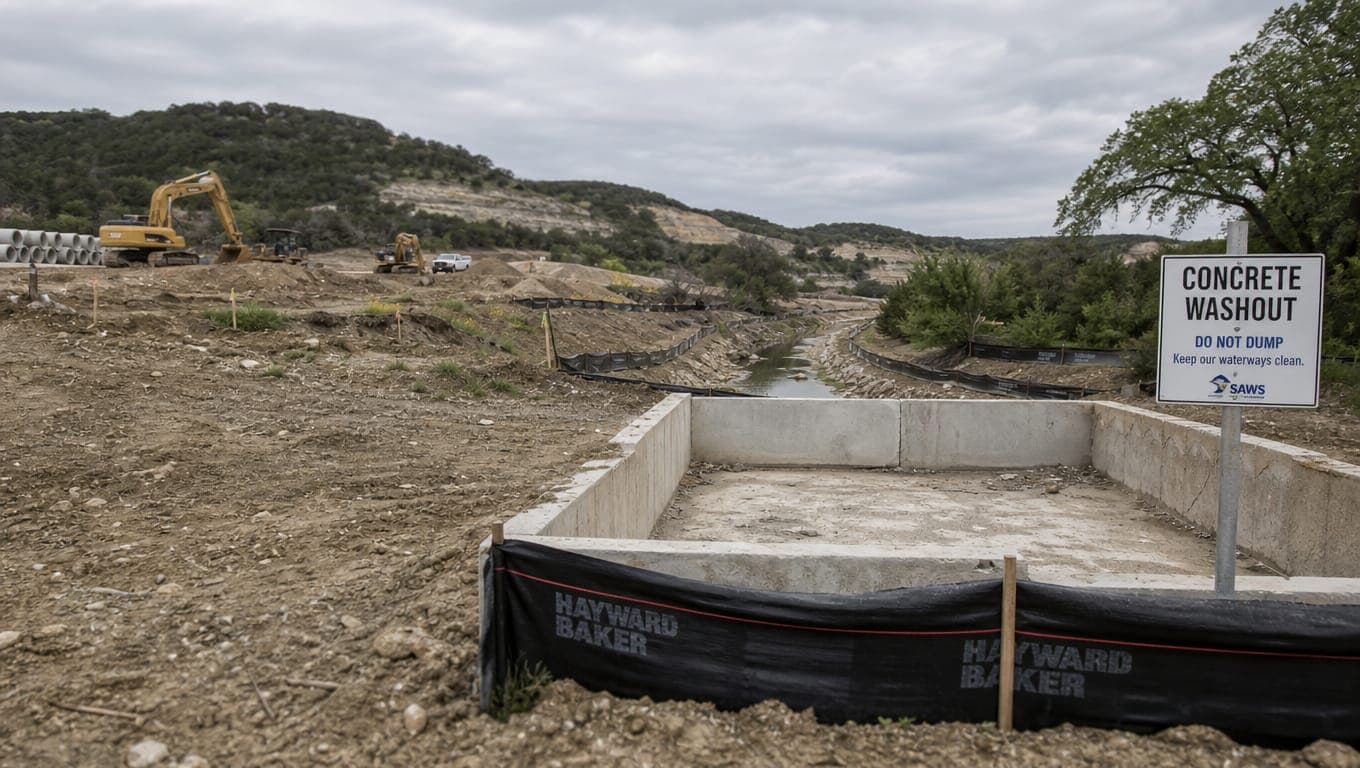
A San Antonio construction site can sit under five separate stormwater authorities at once: TCEQ for the state permit, TCEQ's Edwards Aquifer Protection Program for the aquifer overlay, SAWS and the City of San Antonio inside city limits, and Bexar County Public Works in the unincorporated area
 Compliance · 7 min
The SAWS Construction Stormwater Ordinance (2014-06-19-0472)
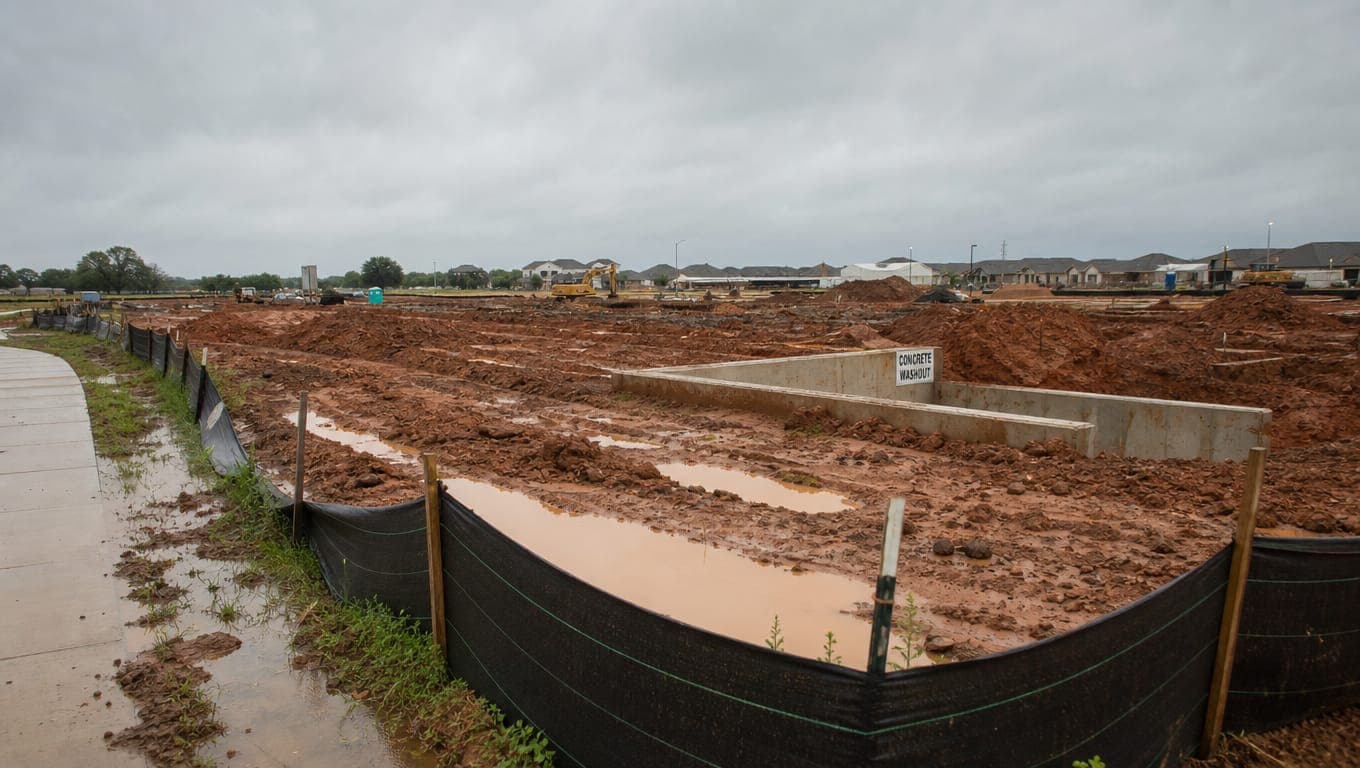
San Antonio Water System enforces construction stormwater requirements locally as an MS4 co-permittee with the City of San Antonio and TxDOT, under ordinance 2014-06-19-0472, approved by City Council on June 19, 2014. The ordinance requires a certified SWPPP, the TPDES permit posted on site, and
Get a stormwater
compliance quote.
Free site walk, written scope of work, fixed-price quote. Usually back to you within 48 hours.