
The SAWS Construction Stormwater Ordinance (2014-06-19-0472)
San Antonio Water System enforces construction stormwater requirements locally as an MS4 co-permittee with the City of San Antonio and TxDOT, under ordinance 2014-06-19-0472, approved by City Council on June 19, 2014. The ordinance requires a certified SWPPP, the TPDES permit posted on site, and
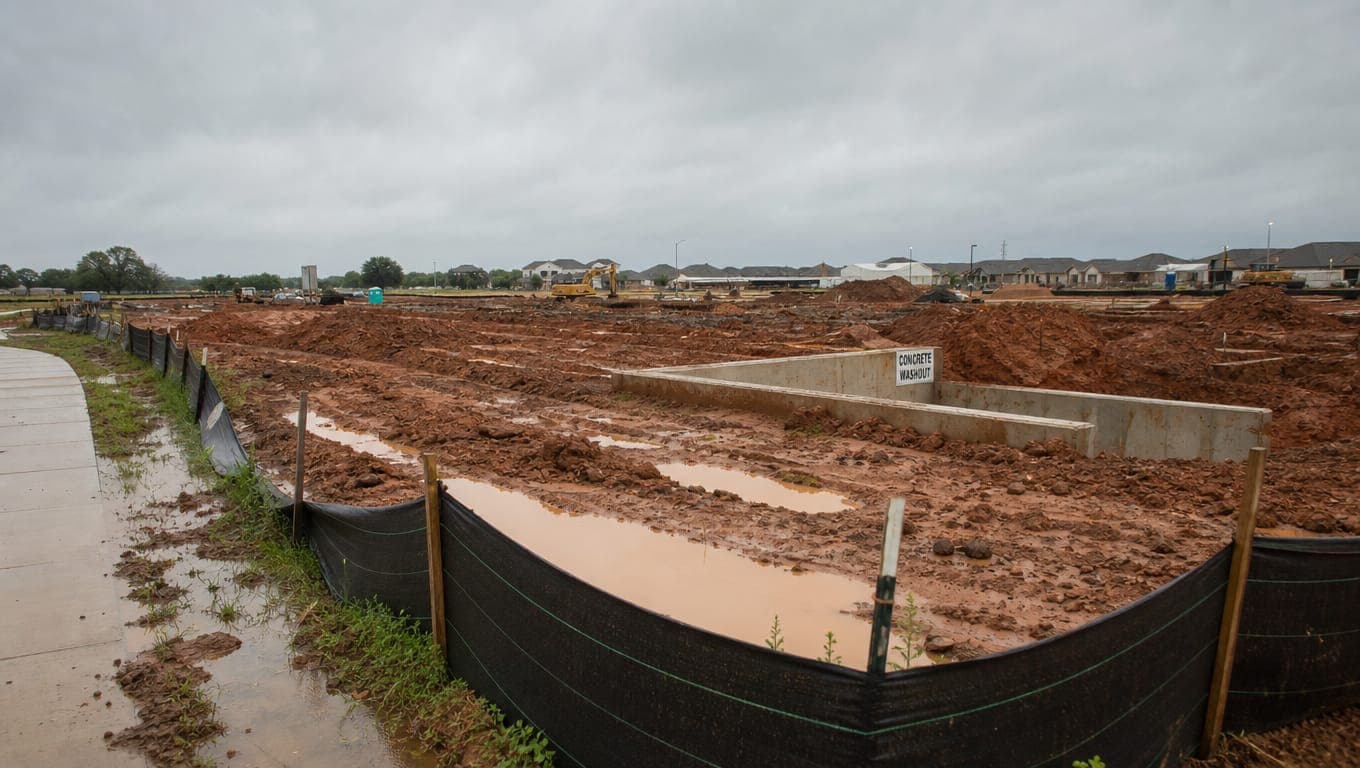
Published September 24, 2026. Last reviewed September 24, 2026. Technical review: Jim Price, CISEC, CESSWI. Founder, Stormwater Compliant LLC.
San Antonio Water System enforces construction stormwater requirements locally as an MS4 co-permittee with the City of San Antonio and TxDOT, under ordinance 2014-06-19-0472, approved by City Council on June 19, 2014. The ordinance requires a certified SWPPP, the TPDES permit posted on site, and certified stormwater inspectors producing inspection reports.
If you have arrived from Houston or Dallas wondering why the water utility is on your job site, this explains it.
Why a water utility enforces construction stormwater
The short answer: because the aquifer you are building over is the water they sell.
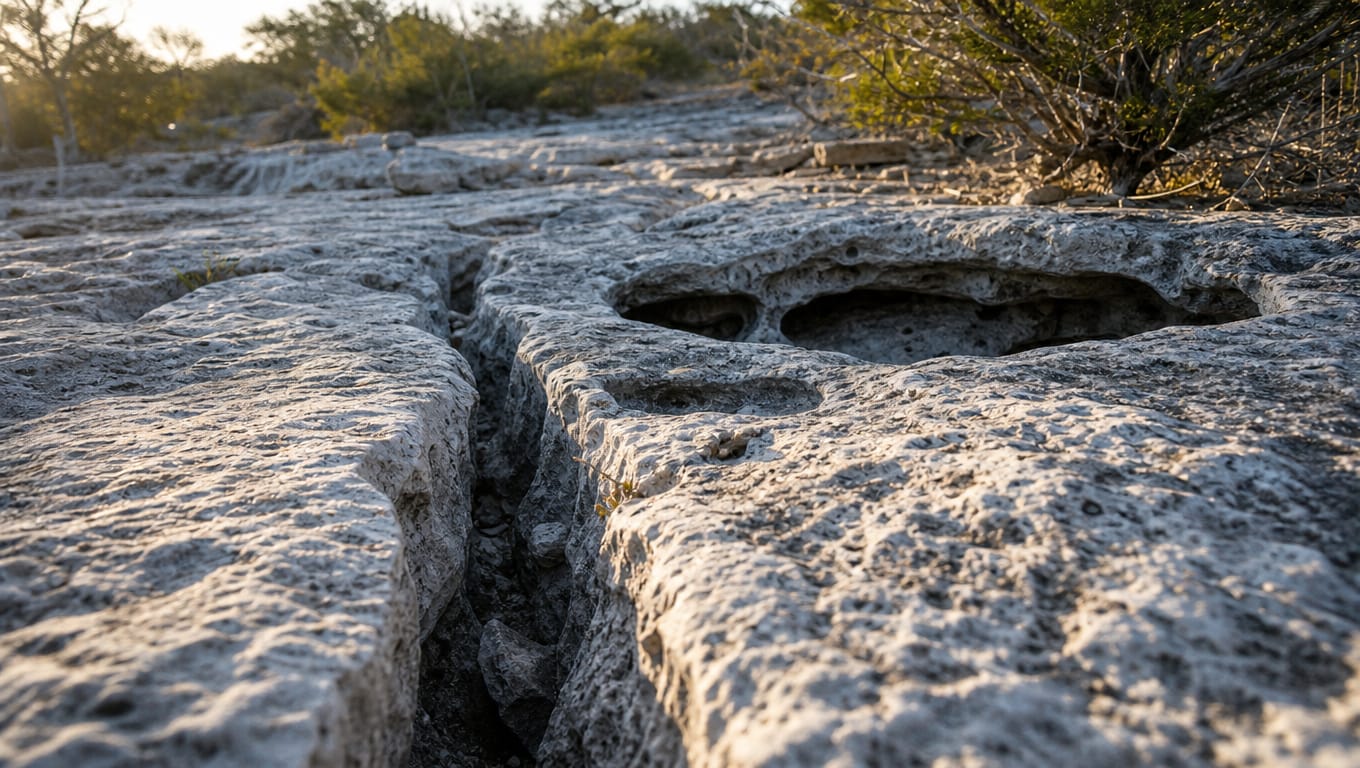
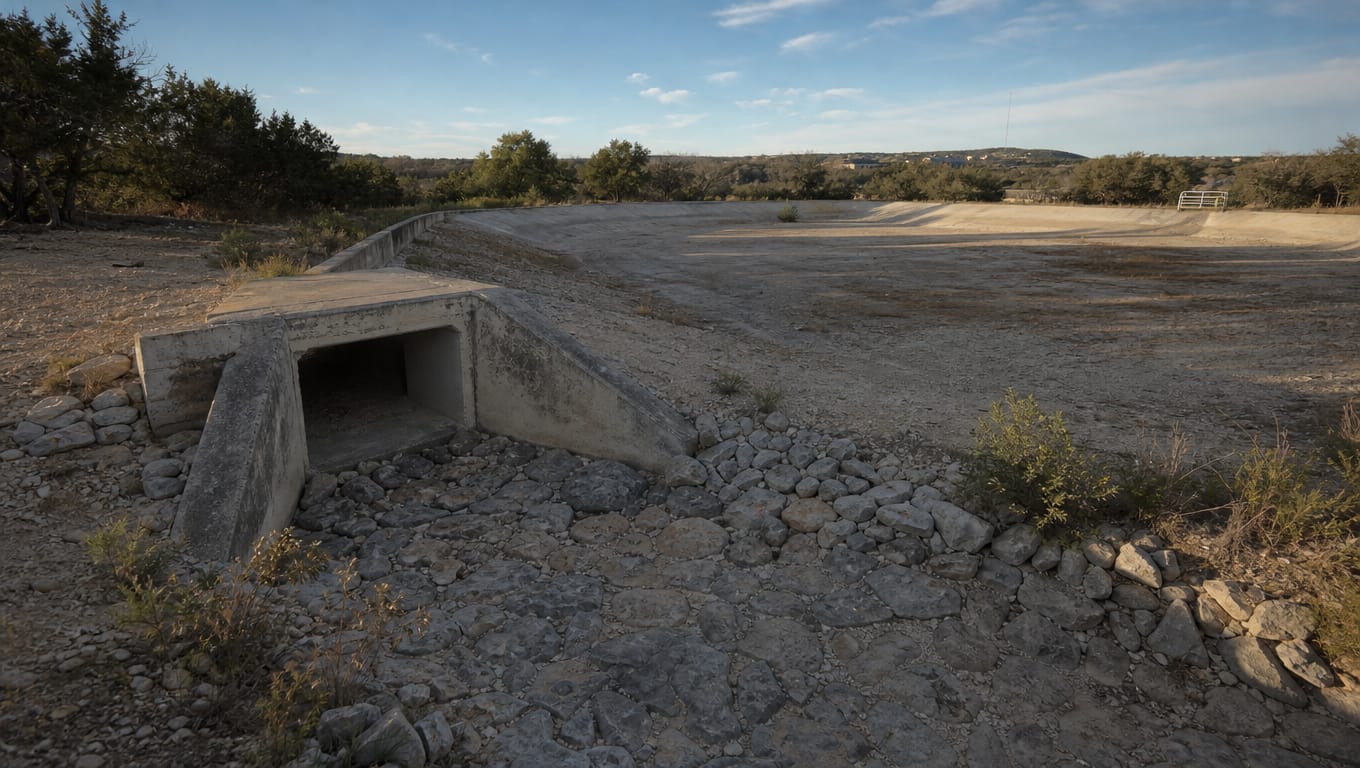
San Antonio's drinking water comes substantially from the Edwards Aquifer, and the Recharge Zone, where water enters the aquifer directly through caves, sinkholes, faults, and fractures, runs straight through the developed and developing parts of the metro. Sediment, fuel, and concrete washout leaving a construction site over the Recharge Zone do not travel through miles of soil filtration first. They can reach the aquifer quickly.
SAWS runs an Aquifer Protection and Evaluation program on the supply side for exactly this reason. Construction stormwater enforcement is the same interest, applied upstream.
That context is worth carrying onto the site. In most Texas markets, stormwater enforcement is an environmental compliance matter. Here it is also a drinking water matter, and the posture reflects that.
The co-permittee structure
The federal stormwater program requires the operator of a municipal separate storm sewer system to hold a permit and run a stormwater management program. In this region that permit is held jointly.
| Party | Role |
|---|---|
| City of San Antonio | MS4 permittee, TPDES Permit WQ0004284000 |
| SAWS | Co-permittee |
| TxDOT | Co-permittee |
Co-permittee means shared responsibility, with the parties dividing the work rather than duplicating it. In practice:
- The City handles development review: platting, drainage design, and detention under UDC 35-504, plus Chapter 34 of the City Code, which references the TCEQ construction general permit so local construction requirements track the state permit rather than diverging.
- SAWS handles much of the construction-phase enforcement: notification intake, site inspections, and compliance follow-up.
- TxDOT covers state right of way.
So when SAWS contacts you about a job site, they are not freelancing. They are executing the City's MS4 program under an ordinance the City Council adopted.
More on the whole regulatory map in who regulates stormwater in San Antonio.
What the ordinance requires
Four things, and they are cheap to satisfy if you know about them before mobilization.
1. Notification at least 48 hours before construction-related activities begin. A copy of your NOI, or your Construction Site Notice, goes to stormwaterconstruction@saws.org. Forty-eight hours ahead, not after you start. This is the single most missed item in the region and it takes about two minutes. Full detail in the 48-hour SAWS notification requirement.
2. A certified SWPPP. Your stormwater pollution prevention plan has to be prepared and certified rather than assembled from a template with an address typed in. This connects to the state permit's site-specific requirement, but the local ordinance makes it explicit.
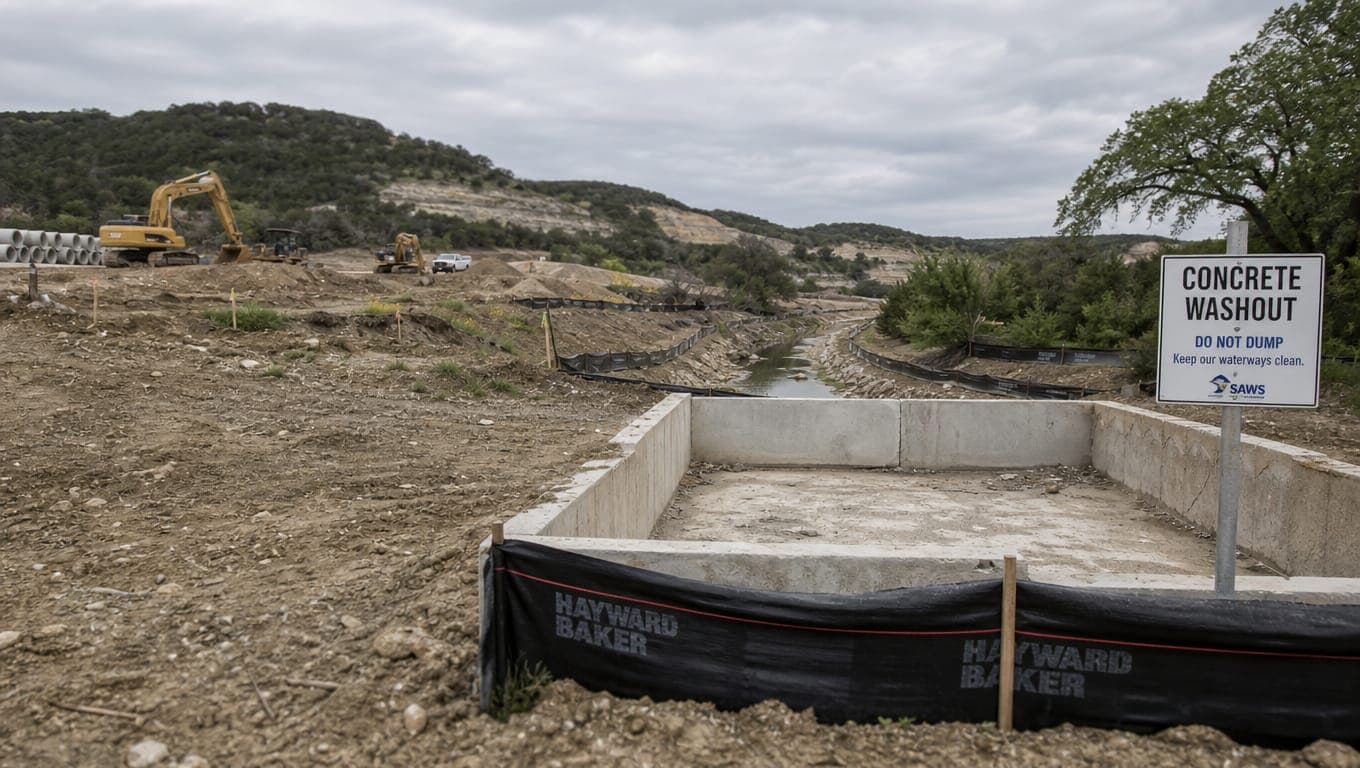
3. The TPDES permit posted on site. Alongside your Construction Site Notice. Posted where it can be read, before construction begins, and kept there.
4. Certified stormwater inspectors and inspection reports. Covered in its own section below, because this is the requirement that genuinely differs from the state permit.
A short checklist to run before mobilization:
- NOI or Construction Site Notice emailed to stormwaterconstruction@saws.org, at least 48 hours ahead
- SWP3 prepared, certified, and on site
- TPDES permit posted and readable from outside the fence
- Construction Site Notice posted, signed, with the NOI first page for large construction
- Inspection program in place with a qualified, certified inspector
- Copy of the notice to the MS4 operator, per the state permit
The certified inspector requirement
This is the part worth reading twice, because it is a real difference between the state and local layers.
The TCEQ construction general permit does not require a third-party or certified inspector. Your own qualified personnel can perform inspections. We say so plainly in how often SWPPP inspections are required, and we would say so even though it costs us work.
The SAWS ordinance reaches further, requiring certified stormwater inspectors and inspection reports.
Practically, that means a superintendent performing self-inspections may satisfy the state permit and still fall short of the local requirement inside San Antonio. Contractors who read only the state permit, which is most of them, do not discover this until it comes up.
The relevant credentials in this industry are CISEC (Certified Inspector of Sediment and Erosion Control) and CESSWI (Certified Erosion, Sediment and Storm Water Inspector). Both of ours hold them.
Two honest notes. First, if you employ credentialed inspection staff, you can satisfy this in-house. Second, if you are not certain whether your current arrangement satisfies the local requirement for your specific project, that is worth confirming with SAWS directly rather than assuming, because the answer can depend on the project and the reviewer.
Recharge Zone inspections
There is a second SAWS inspection regime that has nothing to do with your construction controls.
SAWS inspects quarterly over the Recharge Zone within COSA jurisdiction to verify compliance with the approved Water Pollution Abatement Plan. That is a permanent-BMP inspection, checking that the water quality features your WPAP committed to are present, functional, and maintained.
Three consequences that surprise people:
It continues after construction ends. Your WPAP conditions are ongoing. Quarterly inspection is a long-term relationship, not a construction-phase event.
It checks different things. A construction inspection looks at silt fence, inlet protection, and stabilization. A WPAP inspection looks at whether the permanent water quality BMP is doing what the approved plan said it would do.
It reaches owners, not just contractors. Once the builder is gone, the property owner is the one receiving the quarterly inspection.
Keeping a basin in the condition these inspections look for is ongoing work. See basin maintenance in San Antonio.
How this interacts with your state permit
The layers stack. They do not substitute.
| Requirement | Source | Note |
|---|---|---|
| SWP3 on site | TCEQ TXR150000 | Local ordinance requires it be certified |
| NOI for 5+ acres | TCEQ | Copy goes to SAWS 48 hours ahead |
| Construction Site Notice posted | TCEQ | Local ordinance also requires the TPDES permit posted |
| Inspections on the permit schedule | TCEQ | Local ordinance requires certified inspectors |
| Copy to MS4 operator | TCEQ | In this market that means the City, with SAWS as co-permittee |
| Edwards Aquifer plan approved before commencing | TCEQ, 30 TAC 213 and CGP Part II.C.5 | Separate review, up to 120 days |
| Quarterly WPAP verification over the Recharge Zone | SAWS | Post-construction, ongoing |
Satisfying TCEQ does not satisfy SAWS. Satisfying SAWS does not satisfy TCEQ. And neither satisfies the Edwards Aquifer Protection Program, which under CGP Part II.C.5 independently bars commencement of construction until your WPAP or CZP is approved.
The state layer is covered in our field guide to the TCEQ Construction General Permit.
What SAWS contact usually means
If SAWS gets in touch, it generally falls into one of four categories.
A routine inspection. Expected, especially over the Recharge Zone.
A missing notification. You started without the 48-hour email. Usually resolved by sending it and correcting the process.
An observed deficiency. Something visible from the road, most often tracked sediment or a failed perimeter control. Fix it and document the fix.
A complaint response. Somebody called. Discharge into a street, mud on the roadway, or visible sediment in a creek. These get attention quickly.
The escalation path from any of these can run to a stop-work order, which is the outcome that costs real money because the loss is schedule rather than penalty. If you are already there, see responding to a SAWS stop-work order.
The best predictor of how SAWS interactions go is whether your documentation shows a functioning program. A site with current inspection reports, dated corrective actions, and a plan that matches the ground is treated very differently from one without.
Need a certified inspection program?
Our inspectors hold CISEC and CESSWI credentials and run scheduled programs across San Antonio, Bexar County, Boerne, New Braunfels, and Seguin. Photo-documented, GPS and timestamp on every shot, report the same day, findings graded by severity.
If you are working inside the city and are not certain your current inspection arrangement satisfies the local requirement, that is a conversation worth having before someone else raises it.
Free site walk, written scope, fixed price, typically inside 48 hours.
Request a quote or call (210) 776-6515. See our 40-point stormwater inspection, SWPPP services, or the full local picture in San Antonio, Bexar County, and Edwards Aquifer stormwater rules.
Sources
Common questions
- What is ordinance 2014-06-19-0472?
- The City of San Antonio construction stormwater ordinance, approved by City Council on June 19, 2014, under which SAWS enforces TPDES construction requirements locally as an MS4 co-permittee.
- Why is SAWS involved in construction stormwater?
- SAWS is a co-permittee on the City's MS4 permit, TPDES WQ0004284000, alongside the City and TxDOT, and carries much of the construction enforcement. The Edwards Aquifer is also their water supply.
- Do I need a certified inspector in San Antonio?
- The state permit does not require one. The SAWS ordinance requires certified stormwater inspectors and reports. If you are unsure whether your arrangement satisfies it for your project, confirm with SAWS directly.
- What do I have to post on site?
- The Construction Site Notice, the first page of the NOI for large construction, and the TPDES permit.
- When does SAWS need to hear from me?
- At least 48 hours before construction-related activities begin, at stormwaterconstruction@saws.org.
- Does SAWS inspect after construction ends?
- Over the Recharge Zone within COSA jurisdiction, yes, quarterly, to verify compliance with the approved WPAP.
The work behind this article
- Stormwater Pollution Prevention Plan (SWPPP)
A San Antonio SWPPP company that writes the plan, files the NOI, and walks the binder with your superintendent. Site-specific to your grading plan, written to TXR150000, not a template with somebody else's logo taken off.
- Stormwater Inspection Services
CISEC and CESSWI inspectors, on your site every seven days while the job is live and on your MS4's schedule once it is not. One inspector, one tablet, forty checkpoints, and the report before the truck leaves the property.
- Post-Construction Stormwater
An annual program that keeps your basins, vaults, and conveyance systems documented, inspected, and in regulatory good standing.
Need help with stormwater compliance on a San Antonio property? We do site walks at no charge.
Request a fixed-price quoteMore field notes from the watershed.
 Compliance · 11 min
San Antonio, Bexar County, and Edwards Aquifer Stormwater Rules
A San Antonio construction site can sit under five separate stormwater authorities at once: TCEQ for the state permit, TCEQ's Edwards Aquifer Protection Program for the aquifer overlay, SAWS and the City of San Antonio inside city limits, and Bexar County Public Works in the unincorporated area
 Field guide · 7 min
Who Regulates Stormwater in San Antonio? A Jurisdiction Map
Seven bodies touch stormwater in the San Antonio metro. TCEQ runs the state construction permit and the Edwards Aquifer overlay. SAWS, the City of San Antonio, and TxDOT are MS4 co-permittees. Bexar County Public Works regulates post-construction in the unincorporated area. The San Antonio River
Get a stormwater
compliance quote.
Free site walk, written scope of work, fixed-price quote. Usually back to you within 48 hours.