
What the 2028 TXR150000 Renewal Could Change
The current TCEQ Construction General Permit, TXR150000, expires March 5, 2028. TCEQ opened the renewal process in 2026 and held a hybrid stakeholder meeting on June 9, 2026 at the Park 35 campus, where preliminary proposed modifications were presented. Informal comments go to SWGP@tceq.texas.gov.
Published September 14, 2026. Last reviewed September 14, 2026. Technical review: Jim Price, CISEC, CESSWI. Founder, Stormwater Compliant LLC.
The current TCEQ Construction General Permit, TXR150000, expires March 5, 2028. TCEQ opened the renewal process in 2026 and held a hybrid stakeholder meeting on June 9, 2026 at the Park 35 campus, where preliminary proposed modifications were presented. Informal comments go to SWGP@tceq.texas.gov.
This is a live process. Below is what has actually happened, what happens next, and what it means for a project that will still be running in 2028. We are not going to guess at the contents, and we explain why.
What We Know So Far
The verified record, as of the last review date above.
| Date | Event |
|---|---|
| March 5, 2023 | The current TXR150000 took effect |
| June 3, 2023 | Deadline for existing permittees to renew authorization under the 2023 permit, 90 days after the effective date |
| 2026 | TCEQ began the renewal process for the next permit term |
| June 9, 2026 | Hybrid stakeholder meeting at the TCEQ Park 35 campus. Preliminary proposed modifications presented. Informal stakeholder comments invited |
| Ongoing | Informal comments accepted at SWGP@tceq.texas.gov |
| March 5, 2028 | Current permit expires |
Everything in that table is verifiable. Anything you read elsewhere that goes further, including specific predicted provisions, is somebody's opinion.
How Permit Renewal Works
General permits run five-year terms in Texas, so this cycle is routine rather than exceptional. The sequence normally runs:
- Early stakeholder engagement. TCEQ gathers input on what is and is not working before drafting. This is where the process sits now, and it is the stage where input carries the most weight, because nothing has been committed to paper yet.
- Draft permit development. TCEQ prepares a proposed permit and a fact sheet explaining the rationale for changes.
- Public notice and formal comment period. The proposed permit publishes and a formal comment window opens, typically with a public meeting.
- Response to comments. TCEQ issues written responses and may revise.
- Adoption and issuance. The final permit is adopted with an effective date.
- Transition. Existing permittees move onto the new permit under a grace period.
The 2023 cycle is a reasonable model for the shape of this one, though not for its timing. TCEQ has not published a schedule for the remaining stages, and we are not going to invent one.
The 90-Day Grace Period
This is the mechanic that matters most for anyone holding current authorization.
When the new permit issues, a 90-day grace period applies for transitioning existing authorizations. That is the same structure used in 2023, when the permit took effect March 5 and existing permittees had until June 3 to renew their coverage and bring their plans into line with the new requirements.
Two practical implications.
Your existing coverage does not evaporate on the expiration date. There is a defined transition window. Panic is not called for.
The window is not long, and it includes plan work. In 2023 the obligation was not just re-filing. Operators had to update and implement their SWP3 to meet the new permit's requirements. Ninety days sounds generous until it lands across an active project with dozens of sites, and every consultant in the state is doing the same work in the same quarter.
If you will hold multiple active authorizations in 2028, that quarter is worth reserving capacity for now.
Why We Are Not Speculating About the Contents
We could write a confident list of predicted changes. It would rank. It would also be partly wrong, and this is a page people may rely on to make scheduling decisions.
Preliminary proposed modifications presented at a stakeholder meeting are exactly that: preliminary and proposed. They change during drafting, they change again after formal comments, and provisions that seemed settled get dropped. Publishing them as though they were forthcoming requirements would produce the same category of error as the widely repeated "7-day impaired waters stabilization deadline" that we spend real time correcting, which entered circulation because somebody published something plausible without checking. See stabilization deadlines contractors get wrong.
So here is our commitment instead. When TCEQ publishes the proposed permit, we will read it and write up what it actually says, with section citations. When the formal comment period opens, we will say so. When the final permit issues, we will publish a change summary against the 2023 permit.
Until then, this page reports the process.
How to Submit a Comment
If you work under this permit, the early stage is when your input matters most.
Informal comments on the preliminary proposed modifications go to SWGP@tceq.texas.gov.
What makes a comment useful: specificity. "The permit is burdensome" gets filed. "Part III.F.8(c)vi limits inspection schedule changes to once per calendar month, which does not accommodate projects transitioning between phases mid-month, and here is the operational problem it creates" gets read.
Who should comment: contractors and superintendents who actually implement this permit. The comment record is usually dominated by consultants, engineers, and trade associations. Direct field experience is underrepresented and disproportionately persuasive when it appears.
Watch TCEQ's stormwater construction program page for the formal comment period announcement.
What to Do Now
For most readers the honest answer is: very little, beyond awareness.
| Your situation | What to do now |
|---|---|
| Project starting and finishing before early 2028 | Nothing. You will operate and close out under the current permit. |
| Project running into 2028 | Note the transition on your compliance calendar. Plan for an SWP3 update during the grace period. |
| Multiple active authorizations in 2028 | Reserve capacity for the transition quarter. Doing 20 plan updates and re-filings in 90 days is a resourcing problem, not a paperwork one. |
| You have opinions about the permit | Comment now, at the informal stage, while drafting is still open. |
| You are not sure whether your authorization is even still open | Check first. An unterminated permit from an old project is a live obligation. See filing the Notice of Termination. |
What not to do: change your compliance program in anticipation of provisions that have not been drafted. The current permit is the current permit until March 5, 2028 or until a new one issues.
How We Will Update This Page
This is a living document. The last-reviewed date at the top is maintained, and material developments are logged below.
Update log
- August 4, 2026. Initial publication. Renewal process open, June 9, 2026 stakeholder meeting held, informal comments being accepted.
We will add entries as the proposed permit publishes, as comment periods open and close, and as the final permit issues. If you want the summary when the proposed permit lands, call us and we will send it.
Running a Project Into 2028?
If you hold authorizations that will still be active when the new permit issues, we can help you plan the transition, and when the proposed permit publishes we will tell you what it actually changes for your sites.
We have worked through three permit renewals since 2005. The transition is manageable when it is scheduled and unpleasant when it is discovered.
Request a quote or call (210) 776-6515. See our SWPPP services, or the full permit walkthrough in our field guide to the TCEQ Construction General Permit.
Sources
Common questions
- When does the current construction general permit expire?
- March 5, 2028.
- What is changing in the 2028 permit?
- Nothing is final. TCEQ presented preliminary proposed modifications at a stakeholder meeting on June 9, 2026, and the drafting process is ongoing. Anyone stating specific forthcoming requirements is speculating.
- Do I need to do anything right now?
- If your project will finish before early 2028, no. If it will still be running, note the transition and plan for an SWP3 update during the grace period.
- What happens to my current authorization when the new permit issues?
- A 90-day grace period applies for transitioning existing authorizations, the same structure used in 2023.
- How do I submit a comment?
- Informal comments go to SWGP@tceq.texas.gov. Watch TCEQ's stormwater construction page for the formal comment period.
- Where can I read the current permit?
- Directly from TCEQ. Our plain-language walkthrough is in TXR150000 explained.
The work behind this article
- Stormwater Pollution Prevention Plan
Site-specific Stormwater Pollution Prevention Plans for Bexar County construction, written to the TCEQ Construction General Permit (TXR150000) and built so your superintendent will actually open the binder.
- 40-Point Stormwater Inspection
One inspector, one tablet, 40 checkpoints. You get the report before our truck leaves the property.
Need help with stormwater compliance on a San Antonio property? We do site walks at no charge.
Request a fixed-price quoteMore field notes from the watershed.
 Field guide · 8 min
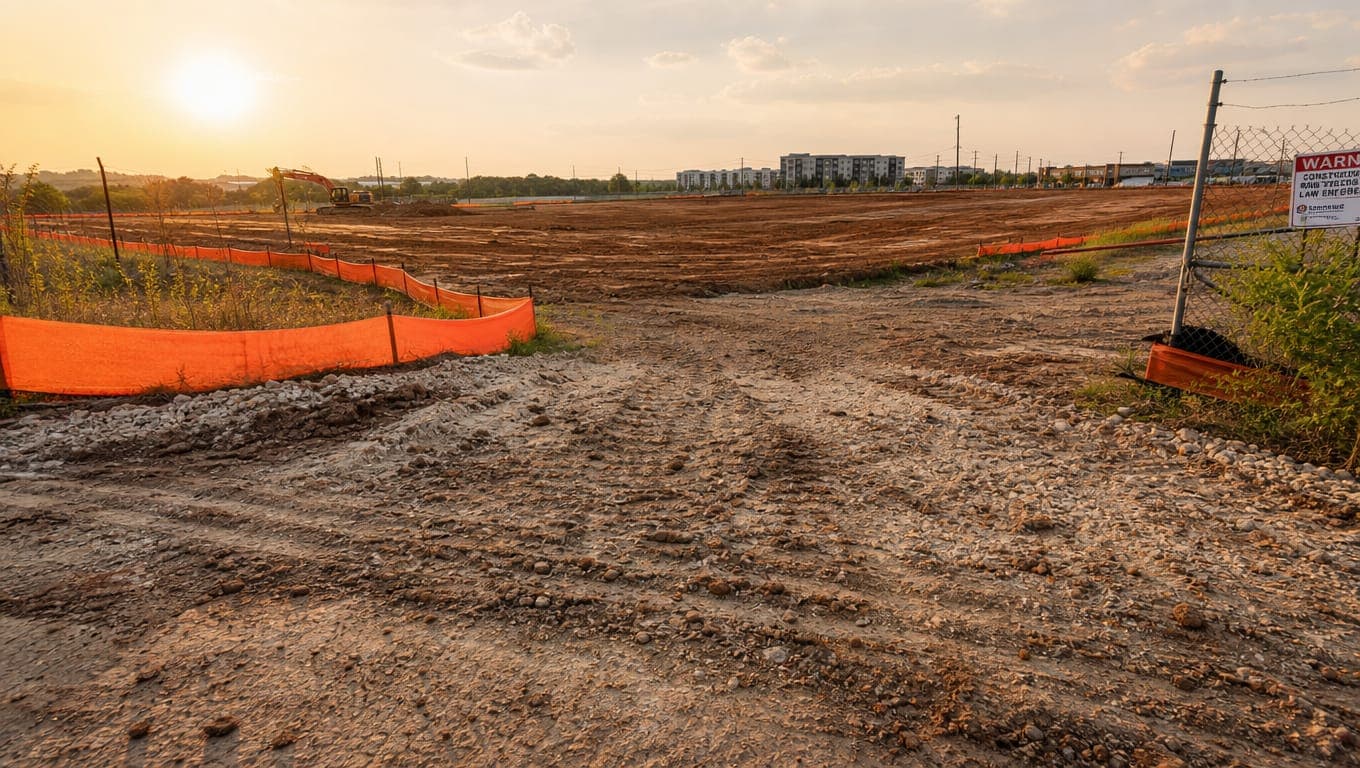
The Most Common SWPPP Violations on San Antonio Job Sites
The violations we write most often are not exotic. They cluster in two groups: documentation that was never completed, and controls that were installed incorrectly rather than not installed at all. Roughly half of what gets cited on a well-run site is paperwork, which is the part contractors
 Compliance · 8 min
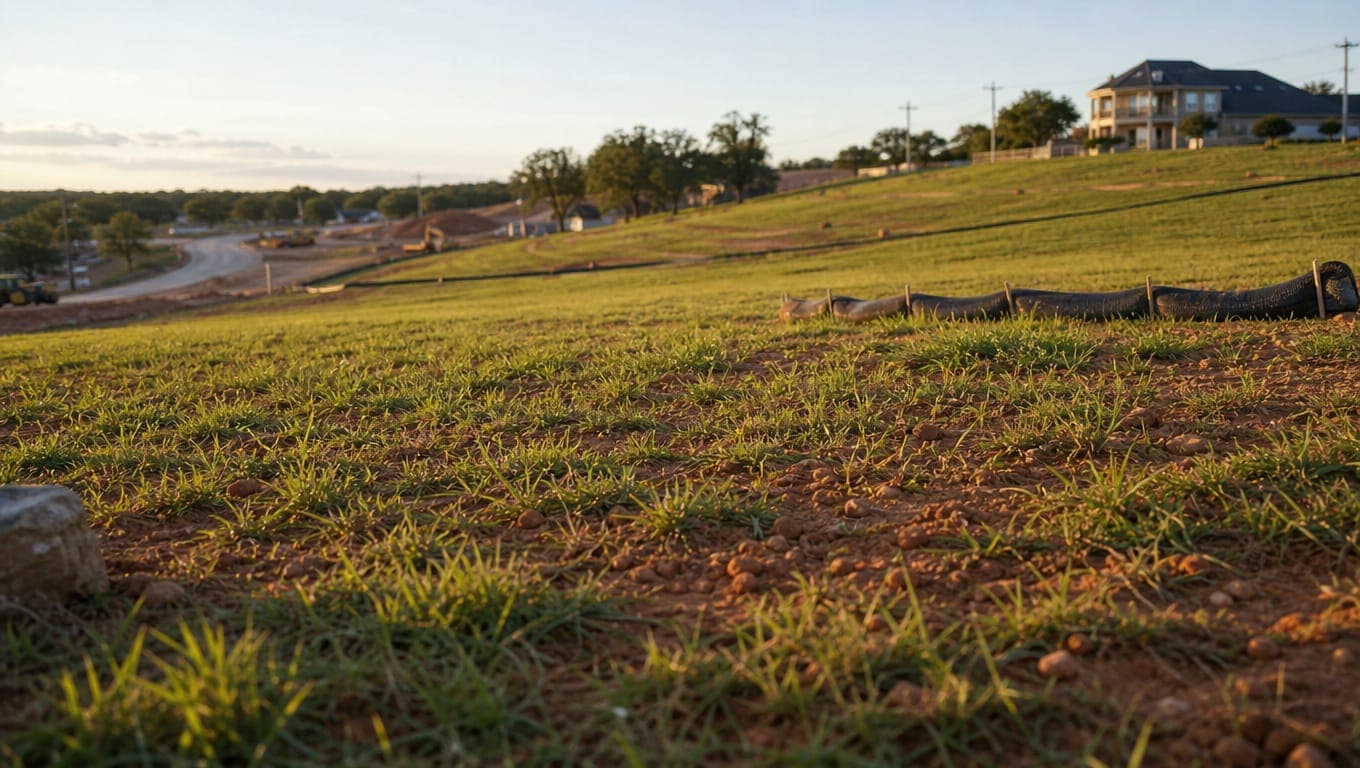
Filing the Notice of Termination
A Notice of Termination must be filed within 30 days after final stabilization is achieved, operational control is transferred, or alternative authorization is obtained. Final stabilization generally means uniform perennial vegetative cover at 70% of native background density. Permit coverage
Get a stormwater
compliance quote.
Free site walk, written scope of work, fixed-price quote. Usually back to you within 48 hours.