
TXR150000 Explained for Texas Contractors
TXR150000 is the TCEQ Construction General Permit, the statewide authorization that lets Texas construction sites discharge stormwater legally. The current version took effect March 5, 2023 and expires March 5, 2028. It applies to sites disturbing one acre or more, and it is the document that
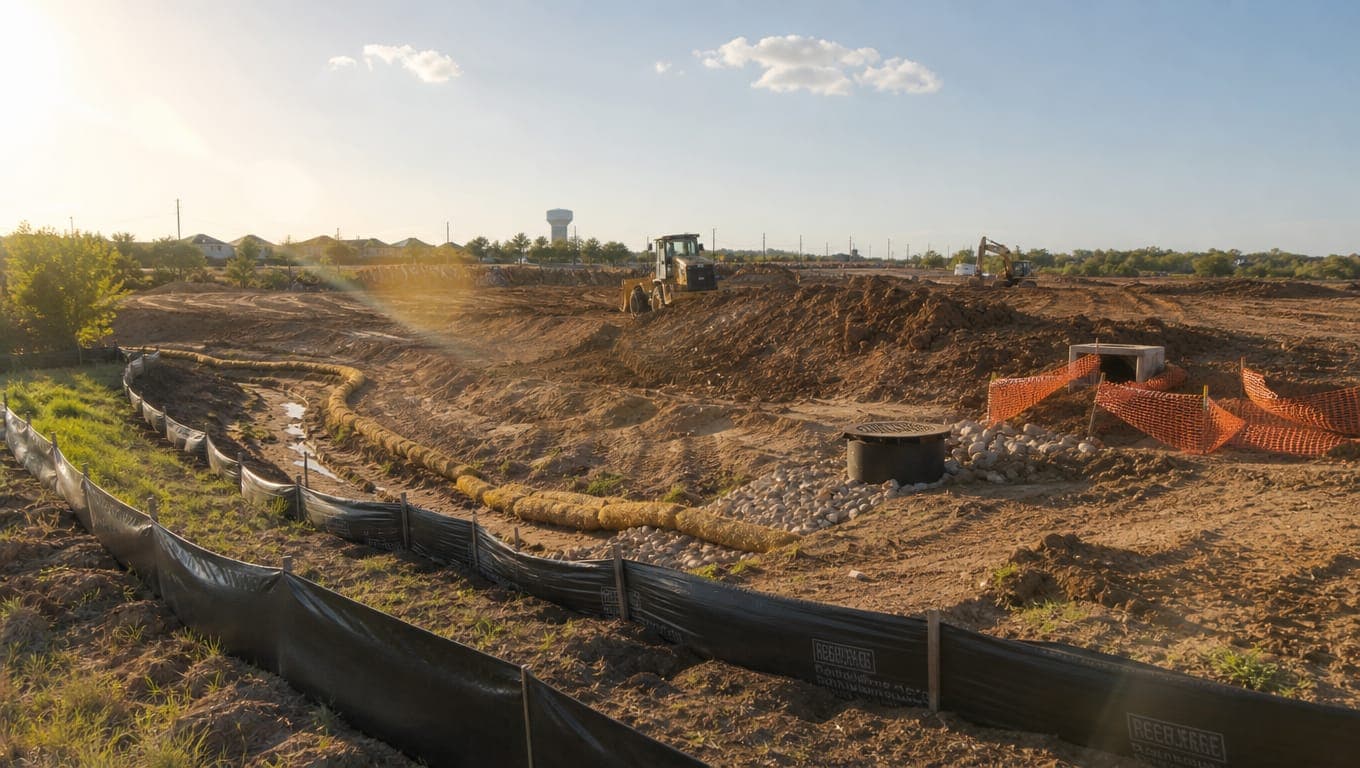
Published August 17, 2026. Last reviewed August 17, 2026. Technical review: Jim Price, CISEC, CESSWI. Founder, Stormwater Compliant LLC.
TXR150000 is the TCEQ Construction General Permit, the statewide authorization that lets Texas construction sites discharge stormwater legally. The current version took effect March 5, 2023 and expires March 5, 2028. It applies to sites disturbing one acre or more, and it is the document that requires you to have a SWPPP. If you need the inspection clock in plain English, see How Often Are SWPPP Inspections Required in Texas? for the 14-day rule, the 7-day option, and the storm-triggered inspection deadlines.
Somebody handed you this number. Here is what the document actually is, how it is organized, and where to find the part you need.
Why TCEQ and not the EPA
Stormwater discharge permitting comes from the federal Clean Water Act, through a program called NPDES. But the EPA delegates that program to states that qualify to run it themselves, and Texas is one of them. The Texas version is called TPDES, the Texas Pollutant Discharge Elimination System, and it is administered by the Texas Commission on Environmental Quality.
Practically, that means:
- You file with TCEQ, not the EPA.
- The forms you need are TCEQ forms.
- EPA's Construction General Permit, which covers other states and some federal lands, does not apply to your Texas site.
- Enforcement normally comes through TCEQ, though the EPA retains authority to act directly.
Contractors coming from other states lose real time looking for federal forms that do not apply here. If a template or a national service hands you an EPA CGP document for a Texas project, that is a reliable signal you are dealing with someone who does not work in this state. The same kind of copy-paste error shows up in stabilization timing, so we laid out the actual stabilization deadlines contractors get wrong under TXR150000.
What a general permit actually means for you
TXR150000 is a general permit. That word carries a specific meaning worth understanding.
A general permit is written once by the agency, covering an entire category of similar dischargers on standard terms. You do not negotiate it. You either qualify for coverage and accept every condition as written, or you apply for an individual permit tailored to your site.
Two consequences:
You cannot ask for different terms. If the inspection frequency is inconvenient, that is not a conversation. The elective alternatives written into the permit are the only flexibility you have.
Individual permits are rare in construction. They take far longer, cost far more, and involve public notice. Almost every Texas construction site operates under the general permit.
The other thing worth separating: the permit is not the SWPPP. The permit is the rule. The SWPPP, which TCEQ calls the SWP3, is the site-specific document the permit requires you to write, keep on site, and follow. Getting permit coverage without a real plan satisfies nothing.
How the permit is structured
The document runs past 60 pages. Here is what is in it.
| Part | What it governs | Who needs to read it |
|---|---|---|
| Part I | Definitions and permit applicability. Includes the definitions of operator, final stabilization, commencement of construction, and the recharge and contributing zones. | Everyone. Most arguments with inspectors are definitional. |
| Part II | Permit applicability, authorization, and coverage. Includes limitations on coverage, discharges to the Edwards Aquifer (Section C.5), NOI and NOT requirements, and transfers of operational control. | Anyone obtaining, transferring, or terminating coverage. |
| Part III | Requirements by operator type and the full SWP3 content requirements, including inspection procedures and frequencies (Section F.8) and erosion control and stabilization practices (Section F.2). | The core of day-to-day compliance. Superintendents live here. |
| Part IV | Effluent limitations and technology-based requirements, including erosion and sediment controls, soil stabilization (Section B), dewatering (Section C), and pollution prevention measures. | Anyone specifying or installing controls. |
| Part V onward | Standard permit conditions, retention of records, signatory requirements, and reporting. | Whoever signs the certifications. |
| Appendix A | Seasonal timeframes by county used for the low-erosion-potential path. | Only relevant if you are pursuing that narrow option. |
The structure is worth internalizing because it tells you where an argument gets settled. If an inspector says your area needed stabilization, that is Part III.F.2 and Part IV.B. If they question whether you were the operator, that is a Part I definition.
Where to look for the provision you need
Bookmark this table. It is the fastest way to check a claim, including one we have made.
| The question | Where it is answered |
|---|---|
| Am I an operator, and which kind? | Part I.B, definitions of Operator, Primary Operator, Secondary Operator |
| What counts as final stabilization? | Part I.B, definition of Final Stabilization |
| Do I need an NOI? | Part II.D and E, by construction size |
| Can I build over the Edwards Aquifer yet? | Part II.C.5 |
| How often must I inspect? | Part III.F.8(c), with linear sites at III.F.8(d) |
| Can I switch to the 7-day inspection schedule? | Part III.F.8(c)v |
| When must I stabilize? | Part III.F.2(b)iii and Part IV, Section B |
| What has to be in my SWP3? | Part III, Section F generally |
| What are the dewatering rules? | Part IV, Section C |
| When do I file the NOT? | Part II.F |
| What is the seasonal window for low erosion potential? | Appendix A |
Three of those get cited constantly and are worth knowing by number: Part II.C.5 for the Edwards Aquifer precondition, Part III.F.8(c) for inspection frequency, and Part III.F.2(b)iii for stabilization timing.
The dates that matter
Effective March 5, 2023. The current permit replaced the prior version on that date. Existing permittees had 90 calendar days, until June 3, 2023, to renew their authorization and update their SWP3 to the new requirements.
Expires March 5, 2028. General permits run five-year terms.
Renewal already underway. TCEQ opened the renewal process in 2026, with a hybrid stakeholder meeting held June 9, 2026 at the Park 35 campus where preliminary proposed modifications were presented. Informal comments go to SWGP@tceq.texas.gov. When the new permit issues, a 90-day grace period applies for transitioning existing authorizations.
If you are running multi-year work that will still be active in 2028, that transition belongs on your schedule now. We track it in what the 2028 TXR150000 renewal could change.
One caution about reading older material: guidance written for the pre-2023 permit is still all over the internet and still ranks. Check the date on anything you rely on, and check it against the current permit text.
What TXR150000 does not cover
This is where San Antonio projects get into trouble, because the permit is necessary and not sufficient.
It does not cover the Edwards Aquifer requirement. Under Part II.C.5, at a site regulated under 30 TAC Chapter 213, commencement of construction may not begin until TCEQ's Edwards Aquifer Protection Program has approved the applicable Water Pollution Abatement Plan or Contributing Zone Plan. The permit says so itself and then defers to a separate rule with separate timelines. Holding valid CGP coverage does not entitle you to break ground.
It does not cover post-construction obligations. Once your project reaches final stabilization and you terminate, permanent BMPs on the property carry ongoing maintenance requirements from the local jurisdiction, not from this permit. In unincorporated Bexar County that means a post-construction stormwater permit with recurring obligations.
It does not cover local ordinances. SAWS requires notification at least 48 hours before construction-related activities begin. That obligation exists whether or not you have read this permit.
It does not cover industrial stormwater. Once a facility is operating rather than being built, industrial discharges fall under the Multi-Sector General Permit, TXR050000.
Want someone to read it for you?
We have been working under this permit and the three that preceded it since 2005. If you have a project in San Antonio, Bexar County, Boerne, New Braunfels, or Seguin, send us the civil drawings and we will tell you exactly which provisions apply to your site, which local overlays sit on top, and what the plan will cost. Written scope, fixed price, typically inside 48 hours.
Request a quote or call (210) 776-6515. Start with the full field guide to the permit or see our SWPPP services.
Sources
Common questions
- What does TXR150000 stand for?
- It is the permit number for the TPDES Construction General Permit issued by TCEQ. There is no acronym behind it.
- Is TXR150000 the same as a SWPPP?
- No. The permit is the rule that requires you to have a SWPPP. The SWPPP is your site-specific plan.
- When does the current permit expire?
- March 5, 2028. Renewal is already in process.
- Does the EPA permit apply to my Texas site?
- No. Texas administers its own delegated program through TCEQ. The EPA CGP does not apply here.
- Do I need to read the whole permit?
- No. Part I definitions and Part III Section F cover most of what a superintendent needs. Use the index table above for the rest.
- Where do I get the actual permit?
- Directly from TCEQ as a PDF. Always take it from the source, since older versions circulate widely.
The work behind this article
- Stormwater Pollution Prevention Plan (SWPPP)
A San Antonio SWPPP company that writes the plan, files the NOI, and walks the binder with your superintendent. Site-specific to your grading plan, written to TXR150000, not a template with somebody else's logo taken off.
- Stormwater Inspection Services
CISEC and CESSWI inspectors, on your site every seven days while the job is live and on your MS4's schedule once it is not. One inspector, one tablet, forty checkpoints, and the report before the truck leaves the property.
- Post-Construction Stormwater
An annual program that keeps your basins, vaults, and conveyance systems documented, inspected, and in regulatory good standing.
Need help with stormwater compliance on a San Antonio property? We do site walks at no charge.
Request a fixed-price quoteMore field notes from the watershed.
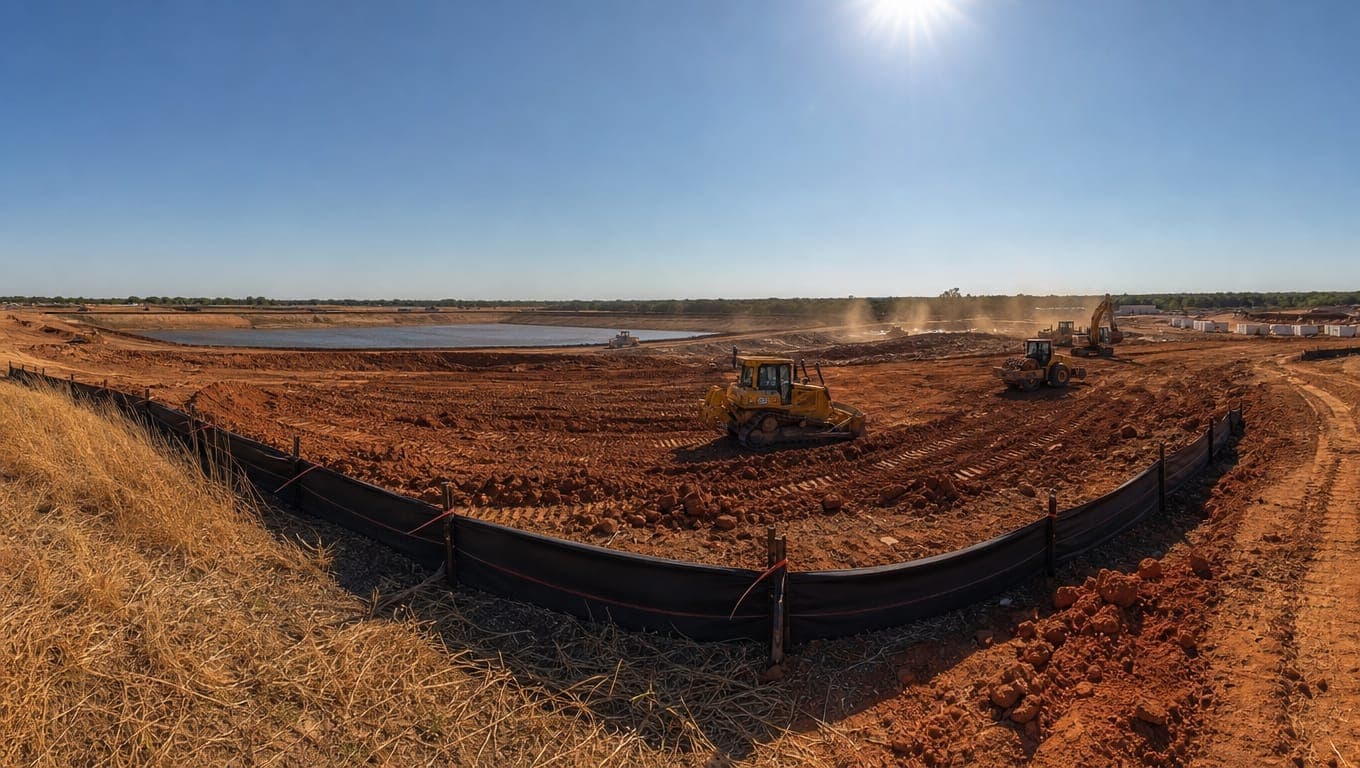 Compliance · 14 min
Texas SWPPP Requirements: A Field Guide to the TCEQ Construction General Permit
If your project will disturb one acre or more of soil in Texas, you need coverage under the TCEQ Construction General Permit, TXR150000, and a Stormwater Pollution Prevention Plan in place before construction begins. Sites of five acres or more must also file a Notice of Intent. Smaller sites
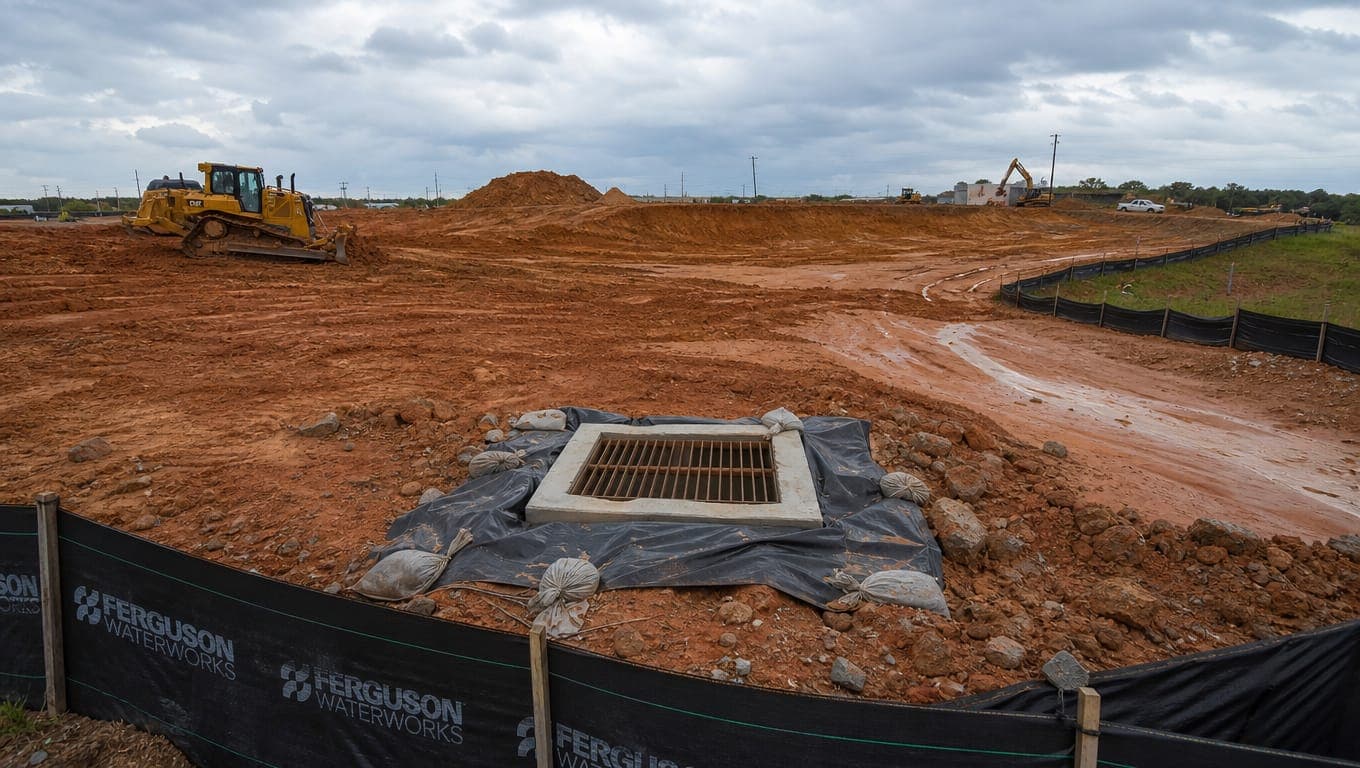 Compliance · 6 min
What the 2028 TXR150000 Renewal Could Change
The current TCEQ Construction General Permit, TXR150000, expires March 5, 2028. TCEQ opened the renewal process in 2026 and held a hybrid stakeholder meeting on June 9, 2026 at the Park 35 campus, where preliminary proposed modifications were presented. Informal comments go to SWGP@tceq.texas.gov.
Get a stormwater
compliance quote.
Free site walk, written scope of work, fixed-price quote. Usually back to you within 48 hours.