
When Is a SWPPP Required in Texas?
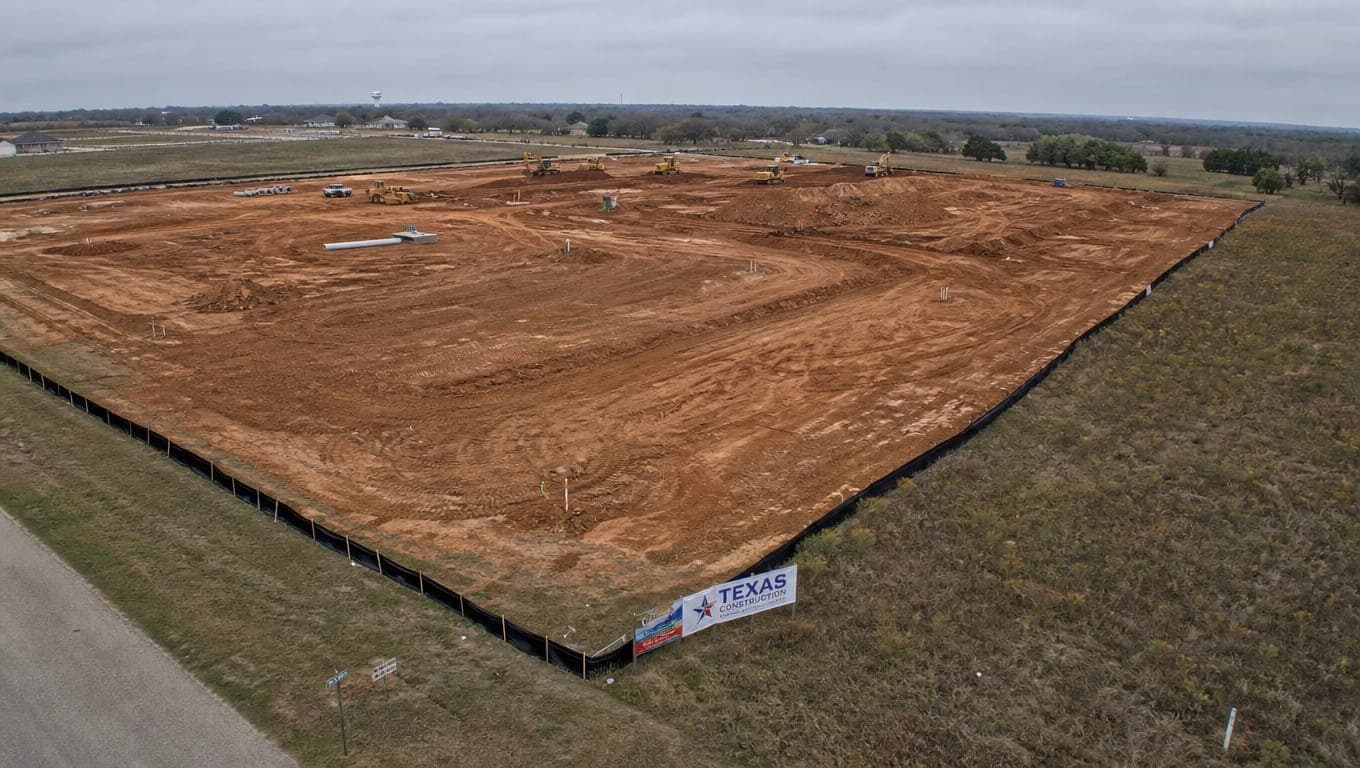
A SWPPP is required in Texas whenever construction disturbs one acre or more of soil and discharges stormwater to surface water in the state. Projects under one acre are also regulated if they are part of a larger common plan of development or sale. The plan must be in place before construction
Published August 10, 2026. Last reviewed August 10, 2026. Technical review: Jim Price, CISEC, CESSWI. Founder, Stormwater Compliant LLC.
A SWPPP is required in Texas whenever construction disturbs one acre or more of soil and discharges stormwater to surface water in the state. Projects under one acre are also regulated if they are part of a larger common plan of development or sale. The plan must be in place before construction begins. Once the plan is in place, the next question is how often you have to walk the site, see our guide to SWPPP inspection frequency in Texas.
That second sentence is the one that costs people money. Most contractors know the one-acre number. Far fewer know that their half-acre pad inside a 40-acre development is regulated all the same.
The one-acre trigger
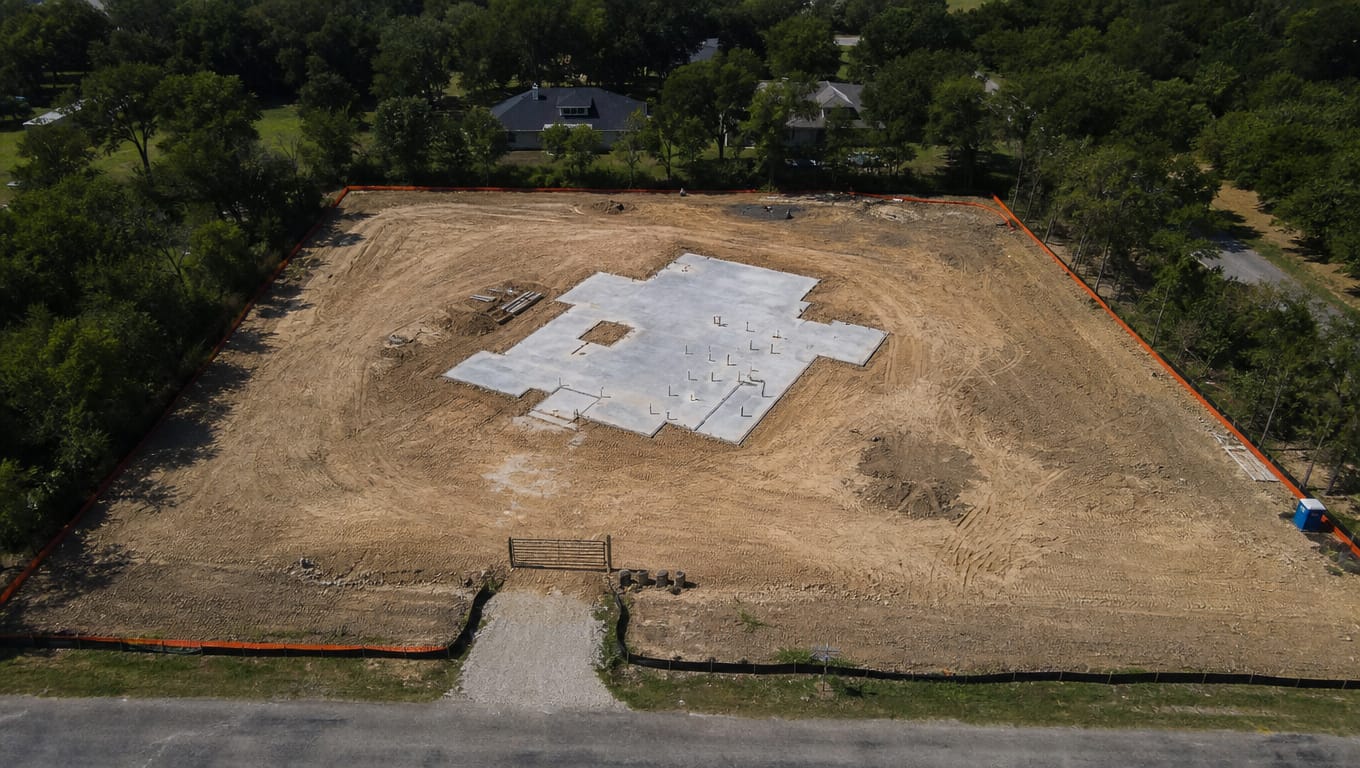
Under the TCEQ Construction General Permit, TXR150000, construction activity is regulated when it meets two conditions at once:
- It disturbs one acre or more of soil, and
- It discharges stormwater to surface water in the state.
Both have to be true. Miss either one and you are outside the permit, assuming the common plan rule below does not pull you back in.
What "disturbs" actually means
This is where the arithmetic goes wrong. Disturbance is soil disturbance, not building footprint.
Count all of it:
- Clearing and grubbing
- Grading and excavation
- Trenching for utilities
- Soil stockpiles
- Haul roads and laydown yards
- Staging and parking areas that get scraped
- Any construction support activity on adjacent ground
A 30,000 square foot building on a two-acre parcel is not a 0.69-acre project. If you cleared the whole parcel to build it, you disturbed two acres.
We have stood on sites where the superintendent calculated acreage off the slab dimensions and came up half an acre short of what a tape measure said. That is not a technicality an inspector will forgive, because the acreage determines which filings were owed before ground broke. If you need the permit language behind that call, see TXR150000 Explained for Texas Contractors.
The rule that catches sub-acre lots
Here is the provision that produces most of the surprise violations we respond to.
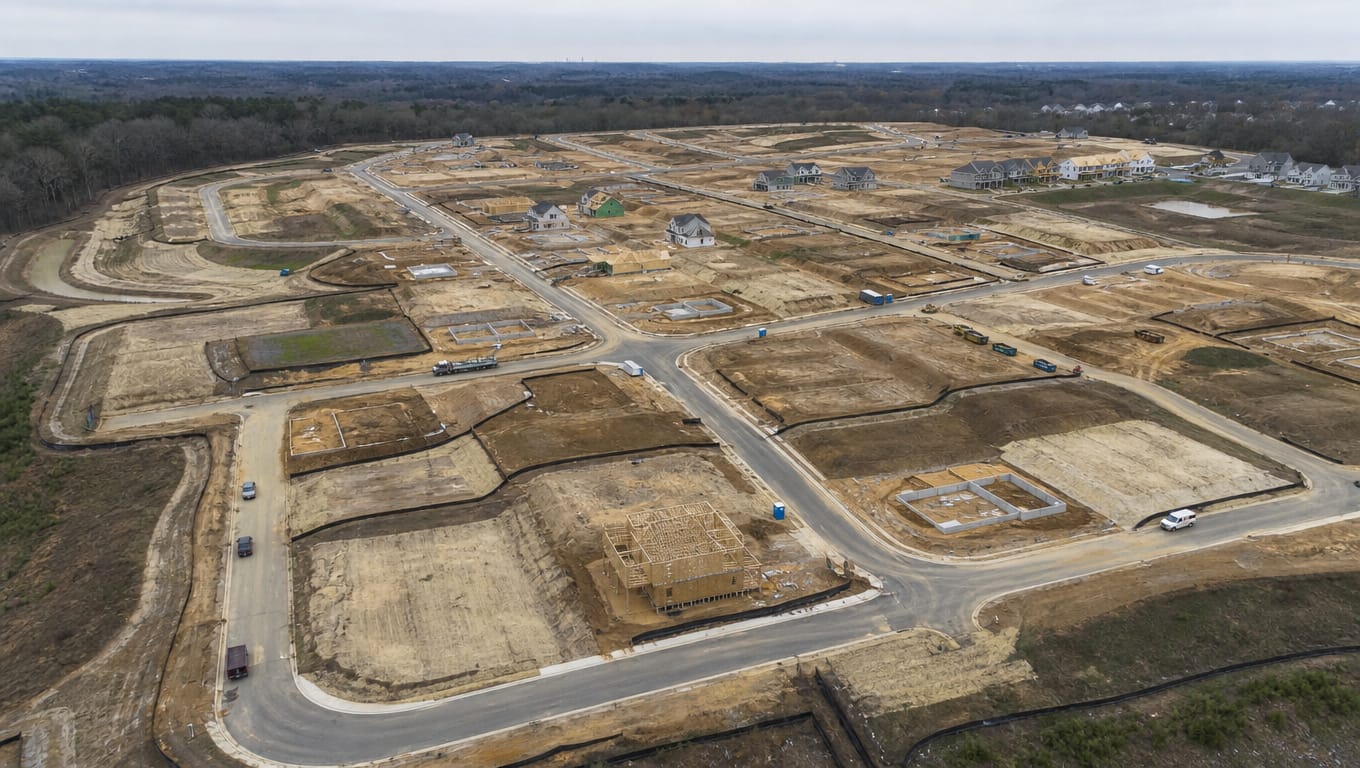
The acreage test does not evaluate your parcel in isolation. It evaluates the larger common plan of development or sale. If your project sits inside a development that totals one acre or more, your project is regulated, regardless of how small your own piece is.
A "larger common plan" means a contiguous area where multiple separate construction activities are happening under one plan. A recorded plat, a master development plan, a phased site plan, or a marketing plan selling lots in a single development all qualify.
Three examples from real sites
| Scenario | Own footprint | Regulated? | Why |
|---|---|---|---|
| Homebuilder framing on one lot in a 60-lot subdivision | 0.18 acre | Yes | The subdivision is the common plan. The builder is an operator on a regulated site. |
| Restaurant pad inside a completed, fully stabilized retail center built ten years ago | 0.6 acre | Generally no | The original development reached final stabilization and the permit was terminated. This is a standalone project now. Verify the prior permit actually closed out. |
| Phase 3 of a business park, where Phases 1 and 2 are still under construction | 0.9 acre | Yes | Active phases of one master plan. The total controls. |
The middle case is the one worth a phone call rather than a guess. If the original development never filed a Notice of Termination, the permit may still be open, and "the original developer handled it" is not a defense that survives an inspection.
The practical rule: if you are working inside a subdivision, a business park, a phased commercial development, or anything with a master plat, assume you are regulated until someone produces evidence otherwise.
If this describes your project, we can tell you in an afternoon. Send the site plan and the plat and we will give you a written determination. Request a quote or call (210) 776-6515.
Does your site discharge to surface water?
Readers routinely assume that no creek on the property means no discharge. That is not how the condition works.
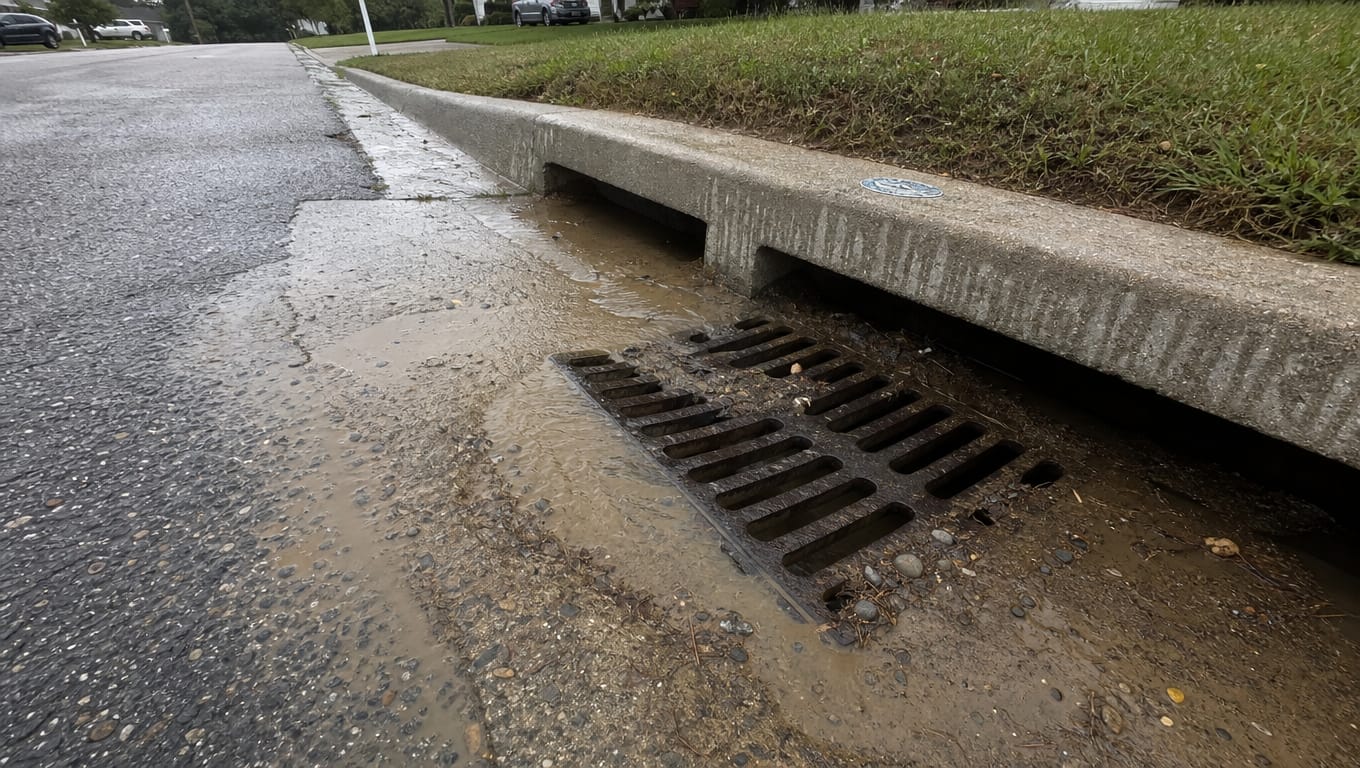
"Surface water in the state" covers rivers, creeks, lakes, and the vast majority of drainage features you will encounter. Critically, it includes water that reaches those features indirectly. If your site drains to a street inlet, and that inlet feeds a municipal storm sewer that outfalls to a creek, you are discharging to surface water in the state.
In practice, in the San Antonio metro, nearly every developable site discharges to surface water through the municipal separate storm sewer system. Genuinely closed sites with no outlet at all are rare, and if you think you have one, that determination is worth having in writing before you rely on it.
What changes at five acres
Once you are regulated, the size of the disturbance determines what you file.
- 1 to under 5 acres (small construction activity): develop and implement the SWP3, post a signed Small Construction Site Notice (TCEQ-20963) at least two days before construction begins, and provide a copy to the operator of any MS4 receiving the discharge. No Notice of Intent. No fee.
- 5 acres and up (large construction activity): everything above, plus an electronic Notice of Intent through STEERS ($225 electronic, $325 paper), the Large Construction Site Notice (TCEQ-20961), and a Notice of Termination within 30 days of final stabilization.
The full comparison is in the 1-acre vs 5-acre rule, explained.
The genuine exemptions
There are fewer than people hope.
Under one acre and not part of a larger common plan. The real exemption. Verify the common plan question before relying on it.
Routine maintenance that maintains original line and grade. Resurfacing an existing parking lot without changing the subgrade contour is typically not regulated construction. Rebuilding it is.
Agricultural activity. Ordinary farming and ranching operations sit outside the construction permit, though construction on agricultural land, such as pipeline installation, does not.
Emergency response. Immediate work to protect life or property during an emergency is treated differently, but the exemption is narrow and expires when the emergency does.
There is also a limited low potential for erosion path using Form TCEQ-20964, which requires the project to be initiated and completed within a seasonal window defined in Appendix A of the permit for the site's location, with final stabilization completed no later than 30 days after the end of that window. In San Antonio's rainfall regime it applies to very few projects, and misjudging it means you built without coverage. If your job is already moving dirt, the next question is how fast you have to stabilize it, and our guide to stabilization deadlines contractors get wrong covers the 14-day clock Texas uses.
What happens if you guess wrong
The enforcement path does not usually start with a fine. It starts with someone noticing.
A TCEQ investigation, a records review, or a verified public complaint produces a Notice of Violation. From there it can escalate through agreed orders, stop-work orders, and administrative or civil penalties. TCEQ administrative penalties reach a statutory maximum of up to $25,000 per day per violation, and industry sources commonly cite up to $32,500 per day for TPDES CGP non-compliance.
But the number that actually damages a project is rarely the penalty. It is the stop-work order. A week of lost schedule on a commercial build, with crews standing down and a completion date in a contract, costs more than the fine attached to it. On top of that, an unpermitted site that discharges sediment onto a neighboring property creates a civil exposure that has nothing to do with TCEQ at all.
The determination is cheap. The correction is not.
The two-minute decision tree
Work through it in order.
- Will the project disturb soil? Clearing, grading, excavation, trenching, stockpiling, haul roads. If no, stop. You are not regulated as construction.
- Add up all disturbed area, including support activity. Not the building footprint. The whole scraped area.
- Is that total one acre or more? If yes, go to step 5.
- Is the project part of a larger common plan of development or sale? Subdivision, phased development, master plat, business park. If yes, go to step 5. If genuinely no, and you have verified it, you are outside the permit.
- Does stormwater leave the site and reach surface water in the state, directly or through a storm sewer? In the San Antonio metro this is almost always yes.
- You need a SWPPP in place before construction begins. Now determine whether you are small construction (1 to under 5 acres) or large construction (5 acres and up) to know what you file.
- If your site is over the Edwards Aquifer Recharge or Contributing Zone, you also need an approved Edwards Aquifer Protection Plan before construction can commence, under Part II.C.5 of the permit. That is a separate TCEQ review with its own timeline, and it can add months.
That last step is the one that wrecks San Antonio schedules. Full detail on the whole permit is in our field guide to the TCEQ Construction General Permit.
Not sure? Send us the site plan.
If you have a project in San Antonio, Bexar County, Boerne, New Braunfels, or Seguin and you are not certain whether it is regulated, send us the site plan and the plat. We will give you a written determination, and if you do need a plan, a fixed-price scope and timeline with it.
Getting this answered before you break ground costs nothing. Getting it wrong costs a schedule.
Request a quote or call (210) 776-6515. More about our SWPPP services.
Sources
Common questions
- Do I need a SWPPP for a project under one acre?
- Not on its own. But if it is part of a larger common plan of development or sale totaling one acre or more, it is regulated regardless of your individual footprint.
- Does a single-family homebuilder in a subdivision need one?
- Yes, in almost every case. The subdivision is the common plan, and the builder is an operator on a regulated site. Builders can participate in a shared SWP3 covering their areas rather than writing a separate plan.
- My site has no creek on it. Am I exempt?
- Almost certainly not. Discharge to a street inlet or storm sewer that eventually reaches a creek still counts as discharging to surface water in the state.
- When exactly does the SWPPP have to exist?
- Before construction begins. Not before the inspection, not before the first rain. Coverage and the plan precede ground disturbance.
- Who is responsible, me or the owner?
- Both may be. The permit assigns obligations to "operators," and there can be primary and secondary operators on the same site. If there is no primary operator, the secondary operator becomes the primary. See multi-operator sites and who holds the liability.
- Does the plan have to be filed with TCEQ?
- No. The SWP3 stays on site. What gets filed, for large construction only, is the Notice of Intent.
The work behind this article
- Stormwater Pollution Prevention Plan (SWPPP)
A San Antonio SWPPP company that writes the plan, files the NOI, and walks the binder with your superintendent. Site-specific to your grading plan, written to TXR150000, not a template with somebody else's logo taken off.
- Stormwater Inspection Services
CISEC and CESSWI inspectors, on your site every seven days while the job is live and on your MS4's schedule once it is not. One inspector, one tablet, forty checkpoints, and the report before the truck leaves the property.
- Stormwater Basin and BMP Maintenance
A Texas stormwater maintenance company that runs your basins and ponds on a calendar instead of on emergencies. Mowing, vegetation, sediment, trash racks, and inlets on the scheduled visit, and crews on site within 72 hours when a control is failing between them.
Need help with stormwater compliance on a San Antonio property? We do site walks at no charge.
Request a fixed-price quoteMore field notes from the watershed.
 Compliance · 14 min
Texas SWPPP Requirements: A Field Guide to the TCEQ Construction General Permit
If your project will disturb one acre or more of soil in Texas, you need coverage under the TCEQ Construction General Permit, TXR150000, and a Stormwater Pollution Prevention Plan in place before construction begins. Sites of five acres or more must also file a Notice of Intent. Smaller sites
 Compliance · 7 min
The 1-Acre vs. 5-Acre SWPPP Rule, Explained
Texas construction sites disturbing 1 to under 5 acres are "small construction activity": they need a SWP3 and a posted Small Construction Site Notice, but no Notice of Intent and no fee. Sites of 5 acres or more are "large construction activity" and must also file an electronic NOI ($225) and a
Get a stormwater
compliance quote.
Free site walk, written scope of work, fixed-price quote. Usually back to you within 48 hours.